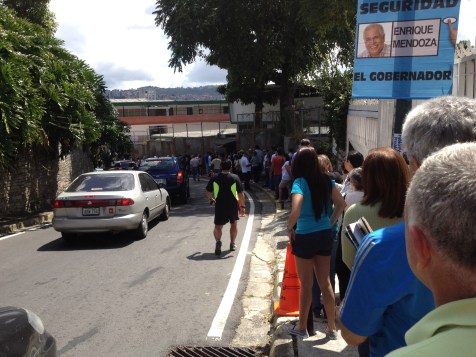
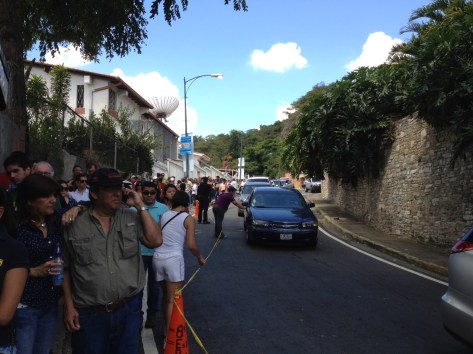
Send any pictures of primaries from Venezuela or abroad to: devilexcrement@gmail.com, show us what is happening
Observations focused on the problems of an underdeveloped country, Venezuela, with some serendipity about the world (orchids, techs, science, investments, politics) at large. A famous Venezuelan, Juan Pablo Perez Alfonzo, referred to oil as the devil's excrement. For countries, easy wealth appears indeed to be the sure path to failure. Venezuela might be a clear example of that.
Send any pictures of primaries from Venezuela or abroad to: devilexcrement@gmail.com, show us what is happening
Send any pictures of primaries from Venezuela or abroad to: devilexcrement@gmail.com, show us what is happening

Send any pictures of primaries from Venezuela or abroad to: devilexcrement@gmail.com, show us what is happening
Colegios Madre Matilde (Top and Bottom) and San Ignacio (Middle):
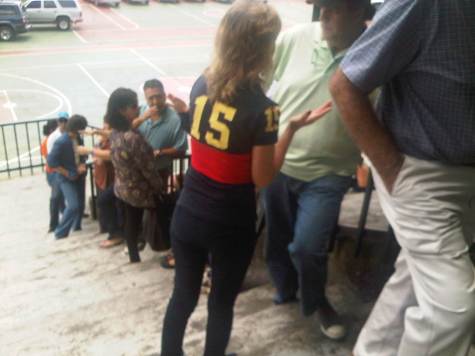
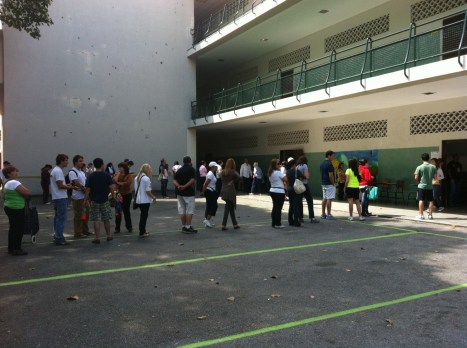

Send any pictures of primaries from Venezuela or abroad to: devilexcrement@gmail.com, show us what is happening
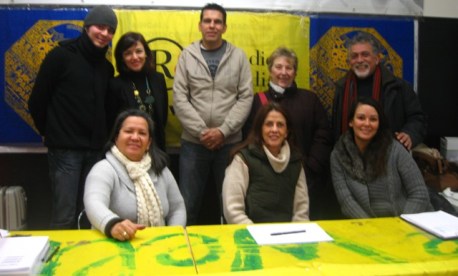
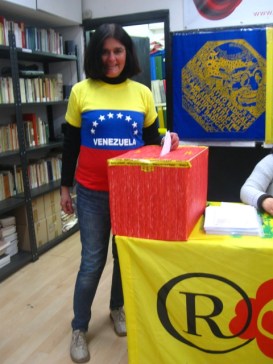
Send any pictures of primaries from Venezuela or abroad to: devilexcrement@gmail.com, show us what is happening
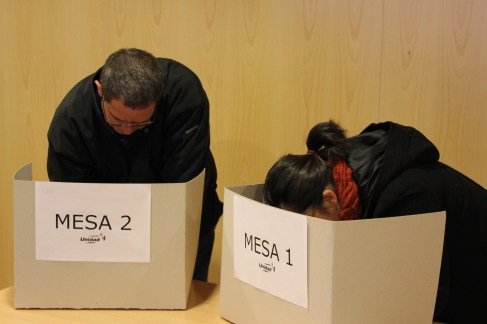
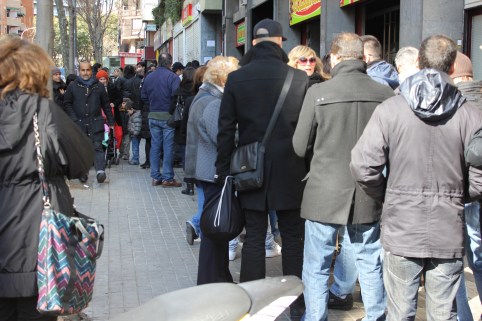

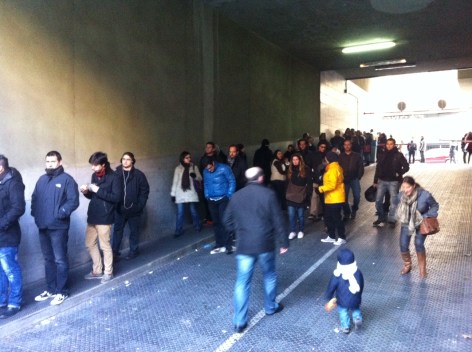
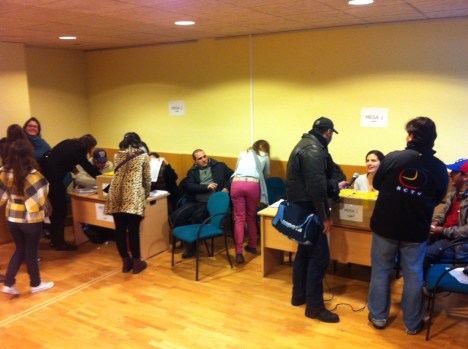
Send any pictures of primaries from Venezuela or abroad to: devilexcrement@gmail.com, show us what is happening
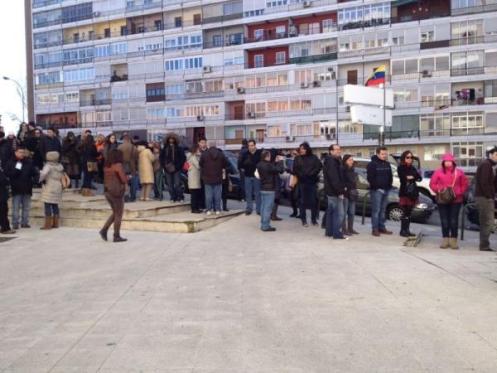
Well, the opposition primaries already started with the centers in Sydney, Melbourne and Adelaide receiving voters and some of them already counting!


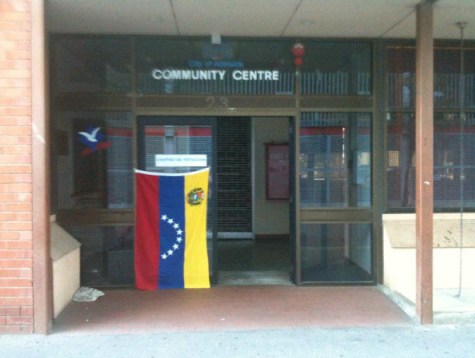
Send your pics tomorrow, from Venezuela and Abroad, show us what is happening!!!!
Email to devilexcrement@gmail.com

I have always believed in the concept of primaries. Political parties in Venezuela have been for too long vehicles for the man in charge to promote himself. If there was something that did not work in the Fourth Republic, it was that part of the democratic process. In fact, it was tried a few times, once, with Luis Beltran Prieto in 1968 winning, the result was not liked because Prieto represented the left wing of Accion Democratica. The result was not respected, the party divided and Gonzalo Barrios became AD’s candidate. The second time in 1993, Oswaldo Alvarez Paz surprisingly beat Eduardo Fernandez, who had set up the primary to be anointed, only to see the people reject him. Alvarez Paz thought he was unbeatable, not understanding Fernandez had lost, he had not really won. Because he did not agree with Carlos Andres Perez’ impeachment, Alvarez Paz left the country to rest, he was out of sight and Caldera came back to Venezuela, grabbed the limelight and won the Presidential election against Paz, one of the two politicians he had groomed to succeed him. The other was Fernandez.
After this, the primary process at any political level was seldom used, leading to political parties where all decisions are made at the top,which stops new and young faces from rising. Remarkably, the 2000 Constitution says that anyone running for political office has to be elected by the rank and file, but like so many things in Venezuela, this has been ignored by the Courts and the politicians.
But primaries are good, because they force candidates to define themselves, allow anyone that can find some funding to run and have your ideas exposed to everyone and candidates have to work hard to meet the people,walk the streets and campaign. In time, some rise, some drop in popularity, forcing decisions on the candidates that define the race. It is a natural selection process which also allows unknowns to be recognized, setting themselves up for a future race.
While I certainly hope the primary process has helped the opposition, there is still a long way to go for it to be considered a success, but I think it has worked rather well, even if the candidates have avoided strong confrontations with each other. Diego Arria had his voice heard, once, in that wants to see Chavez pay for his human rights violations and the second time in placing the focus on the difficulties that an opposition Government is going to have. Maria Corina Machado managed to get some respect with her direct confrontations with Chavez and showing she knows the numbers. Pablo Medina had his pro-union stance heard and fought to the end, gaining a visibility and respect from the opposition that he had never had. Finally, Leopoldo Lopez was allowed to register, but his campaign never gained the traction required. He withdrew and took the risky option of backing one of the other candidates, redefining the race.
I liked Lopez the most. I liked how he went and set up a national network, I like his intuition, his long term thinking, his broader economic vision, his knowledge, his experience and his direct questions. But still, I have more radical economic views than him, in terms of proposing change. And, of course, he is not a candidate any more.
I liked Diego Arria’s decision to run on principles and stay that course. That is how you build political ideas in a country. Remarkably, Arria seems to understand that “other” Venezuela, the rural one that votes for Chavez, better than the other candidates. That came through a couple of times in the debates, but Arria did not define things beyond his main goal, otherwise I could have said I would vote for him. (I actually can’t vote, still registered in Venezuela, where I plan to be next October 7th. for the presidential election)
Then there is Maria Corina Machado. Great race, great words, truly shook up Chavez with her words and managed to shine in the debates. However, she has little managerial experience (Please don’t bring up Sumate), little national structure and to me, she did not try to create much beyond herself.
Which leaves the two Governors, Henrique Capriles and Pablo Perez. In both cases, I disliked the fact that they ran as if they were running for reelection. They talked about satisfying the needs of the population, solving problems and providing services, but neither of them ever gave even much of a hint of the vision they had for the country and the few words devoted to it were not exactly aligned with my thinking. You can promise jobs, but please tell me how you will go about it, Venezuela is complex and requires many types of new jobs.
Pablo Perez was to me a disappointment. He is not only stiff, but he is not that articulate and even his delivery is faulty. In the debate I watched live, I scored him almost at the same level as Pablo Medina, which tells you he did not excite me at all.
Henrique Capriles was also stiff, but was more articulate, more precise. Still concentrated too much on the solving problems for the people without telling me much about his vision for the country. He made statements about the economy that I did not like. But he has experience managing a difficult municipality and a difficult state. The tempo and strategy of his campaign has been exquisite. And while I don’t agree with his less confrontational style with Chavez, it seems to work rather well. I wish it did not, but it certainly does and his political intuition has worked rather well.
And here, I will insert a personal note. I have many friends who are involved in Capriles’ campaign. They are all competent, devoted, hard working and I am sure many of them will occupy positions in a Capriles administration. That alone gives me some comfort in the future of a possible Capriles presidency. BTW, they all tell me Capriles is much, much better in person. Never met him.
But more importantly, at least to me, is that it is time for a new generation to take control and run the country in a more modern way. Capriles and Lopez backing him represent that. The old political parties, the cogollos and those that trapped the country in the Cuarta into an impossible path, should move aside.
And even more critically, we need a strong mandate on Sunday and I will vote to try to give it to Capriles. I think he will win, win big too. Pablo Perez could have beaten Capriles two months ago using his voting structure to get out the vote, but Leopoldo’s own structure tipped the balance strongly on Capriles side. Pablo Perez will not be close, Maria Corina will not do well. Those are my predictions.
Then comes the harder part, the winner has to beat Chavez. And I also believe that Capriles is the better prepared candidate to defeat the Autocrat. The soft style seems to work, even if I don’t understand why. If I was interested in politics, that would not be my style at all. Maybe that is why I am not, nor could be a politician. It is a long campaign between now in February and then in October, but the stage seems to be set.
So, now you know how the Devil would vote, even if you don’t have any idea who the Devil you would vote for. Whatever your choice is, go do it, in the end that may be the most important thing. If the opposition gets 1.5 million plus voters, it will scare the daylights out of Chavez, forcing him to change strategies and by now we all know he is better at setting the debate than reacting to it.
Please, go and vote!
Well, when I said last night to stay tuned because something more was coming from the Receiver of Illaramendi’s funds, I really did not think it would be so soon, but via the same source as yesterday, as well as Setty’s publishing of the suits against Venezuelan Moris Beracha and an even smaller one for “only” US$ 7.6 million, the receiver for Illarramendi’s funds, topped his own record in less than 24 hours, claiming Beracha and affiliated companies received US$ 171 million in illegal payments and transfers.
That is 4.8 times the amount of the suit against Juan Montes I wrote about last night.
Pretty soon, the Receiver will not be able to top himself, the funds had, after all, only US$ 540 million, hard to fraudulently take more than that.
But you never known with these clever Venezuelans. Stay tuned, just in case.
But there is no mincing of words in the accusation:
“For nearly five years, Moris Beracha (“Beracha”) and his affiliated entities, described below, (the “Defendants”) participated in numerous, suspect transactions with Francisco Illarramendi (“Illarramendi”) and the Receivership Entities. Beracha and these affiliates received exorbitant fees, excessive and outlandish rates of interest, kickbacks and other improper payments. Beracha and his entities received this money as Beracha knowingly served as Illarramendi’s source of liquidity to perpetuate Illarramendi’s Ponzi scheme and pay debts and redemptions as they came due. Beracha’s funding came in various forms, including the loaning of money for short periods of time at annual interest rates often exceeding 80%, and the introduction to Illarramendi of investors and important Venezuelan government officials, bankers and financiers who could engage in transactions with Illarramendi. Beracha provided the money or access to money that kept Illarramendi and his scheme afloat.”
and I particularly liked this one:
“Finally, upon information and belief, Beracha assisted Illarramendi with the payment of millions of dollars in bribes to at least one Venezuelan government official. The totality of Beracha’s involvement clearly shows that he was someone who knew about the massive fraud in which Illarramendi was engaged.”
as well as the conclusion:
“The Receiver’s investigation is ongoing. To date, in total, the Receiver has identified approximately $171,675,738 in fraudulent transfers to the Defendants, comprising investor proceeds and other monies that must be recovered for distribution to Illarramendi’s victims and creditors”
Jeez, US$ 171,675,738
These Venezuelans really know how to think big, no?
The rest of the document, I will not bore you with it, the small number of comments shows you are not as interested as I am, show each of the steps taken by Beracha and his companies, 4A Star Corp, Frctal Management, Fractal Factoring Fund, Fractal Holding, Hermitage Coinsultants, La Signoria, etc. etc. to, according to the Receiver, fraudulently transfer assets from Illarramendi’s funds.
Last nights’ brief was more fun, more picturesque, this one is more dense, more legalese. But the result is the same, the Receiver accuses a Venezuelan and in this case, some of his companies, of fraud.
And in Venezuela, little is being said, PDVSA is fine, The National Assembly thinks this has nothing to do with them and the silence in the press, so far, is quite total.
It’s called self-censorship…
Note added: From Setty, more suits:
Against Illarramendi, for “Only” US$ 300 million.
Against Francisco Lopez and relatives: US$ 29 million
Against Odo and Nacy Habeck: US$ 7.6 million
I wrote a few posts last year about the Ponzi scheme set up by Francisco Illarramendi and his MK funds, which involved money invested from PDVSA’s pension plans (One, Two, Three). Our friend Setty has also devoted a few posts to it, here is one, there are many others. The jist of this case, was that Illarramendi, a former PDVSA adviser and consultant, set up some investment funds that did not work out well and then were involved in a series of complex transactions to hide the losses, which included using PDVSA funds as investments, but also using PDVSA to make transactions. PDVSA pension funds/Savings Plans lost US$ 475 million or so, if my memory serves me right, in the process, but somehow nobody in Venezuela was responsible, as both The Board of PDVSA and the Venezuelan National Assembly found that there was no responsibility for the loss within the company, exonerating every one.
Only in Venezuela and the revolution can there be so much irresponsibility, US$ 475 million missing and it was nobody’s fault.
But today, the receiver for the MK Funds, the funds that were involved in the Ponzi scheme, the man who is in charge of trying to recover the investors money, brought suit in US Court in Connecticut against “Juan Montes, corporate manager of finance, investments and property insurance at PDVSA and its pension funds” for receiving bribes and other fraudulent transfers in the amount of…drum roll…US$ 35,744,561. Yeap, you read it right thirty five million dollars…in bribes…in only five transactions.
Only in Venezuela…
Just to make it clear and put it in black and white: The PDVSA funds lost almost half a billion dollars and just one PDVSA official, functionary, whatever, received bribes in the process for US$ 35.7 million dollars. Pocket change, no? No wonder investigators found nobody responsible.
Such are the ways of the Chavez revolution.
I will not go into all the details of the accusation, you can read the document above, it reads like a detective story, but essentially, Illarramendi is accused of using fake emails and ID’s to have Montes help him in investing the money and setting up the transactions, so that the funds could make money and hide or try to hide the huge losses in his investment funds. Montes took the fifth amendment on all the charges. The case may go to a jury trial.
Other people are mentioned, but not accused, of helping Illarramendi funnel the bribes to Montes through their banks/companies/structures. It does not sound like the case or the story ends here. Stay tuned.
At this point, let me clarify something. In the above document, the receiver, not an expert on Venezuelan financial affairs, mentions the “permutas” made by IIlarramendi’s funds with PDVSA to make money to cover its losses. But these were not “permutas” in the traditional sense, from what I have been able to gather. In the now forbidden “permuta” market, you would swap a bolivar denominated security for a dollar denominated security. But in the defunct “permuta” market, the difference between the “buy” and the “sell” prices was typically small Bs. 0.05 or Bs. 0.1 at most.
But what the receiver seems to be saying is that PDVSA sold dollar securities for Bolivars to Illarramendi’s funds at the official rate of exchange and Illarramendi’s funds resold those dollars at the parallel rate of exchange, essentially arbitraging the Government via PDVSA. The difference was as much as Bs. 4, 5 or even Bs. 6 per dollar depending on when these transactions took place. Just recall that when the Government banned the permuta market, the “official rate” was at Bs. 2.6 per dollar , while the parallel rate was near Bs. 8 per dollar.
And this is where these bribes apparently came from, from the huge difference between the two. Buy a million dollars with Bs. 2.6 million, sell the dollars for say, Bs. 8 per dollar, the difference (8-2.6)=Bs. 5.4 million was pure profit. 207% profit to be more precise.
And we are to believe nobody else knew about this at PDVSA? Only Montes knew? He could have access to “official dollars” with nobody knowing?
Yeah, sure…

 Unknown Feed
 The Devil's Excrement