Archive for the 'Venezuela' Category

PDVSA bonds and Central Bank Law changes: Printing money to address the political problem

October 25, 2009

printing_money_for_aig

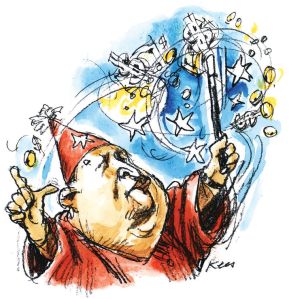
While all of the attention was on Chavez’ press conferences on water and electricity, the Government was toying with the economy, setting us up for a crash like never before as the country’s debt goes up and the mishandling of the economy reaches new levels of irresponsibility as the Chavez administration continues to look for stop gap measures that will one day come to haunt it.

Recall PDVSA was issuing a trio of bonds that were not very attractive if your goal was to acquire foreign currency. With this issue, PDVSA would have outstanding bonds in the amount of US$ 13 billion, up from barely US$ 4 billion when Chavez took over. Those bonds were retired by the Government because they were issued under US regulations which requires filings by PDVSA for which the Board was responsible. They have now been replaced by US$ 7 billion in bonds issued under US law, but not registered in the US and the Petrobonos which are issued under Venezuelan laws. That means that investors would have to go to Venezuelan Courts in any dispute, which makes these bonds less attractive to foreigners (i.e. they yield more than the others)

While people were expecting the Government to change the terms to make the bonds more attractive, the Government took a different route. First of all, it made the interest payments tax exempt, which they were not when the bonds were first announced. The Government was going to withhold 4.95% of all interest payments, which implied that the coupons (The amount paid by the bonds every six months on their face value) would actually be lower. This was solved by given the interest payment (not capital gains) tax exempt.

But more importantly, the Government also announced that the bonds would not count as part of the foreign currency position of banks. Let me explain this for the uninitiated: In Venezuela, banks can only have a certain percentage of their equity in US$, that amount is set at 15%. Therefore, banks can not cover (hedge) themselves against the devaluation of the swap market except for a fraction of their equity. They can protect themselves form a devaluation of the official rate of exchange by buying bonds called TICC’s which are denominated in US$ but only trade in Bolivars and their face value will chnage only if there is a devaluation of the official rate of exchange.

So, what the Government did was to make the new Petrobonos exempt from this limit. What this means is that these are extremely attractive for local banks, not as a away of buying dollars and making a profit, but as a way of protecting themselves against future devaluations of the parallel swap rate. This means that banks will buy these bonds in US$ instead of buying Bolivar denominated bonds, which yield the same or less than the Petrobonos. But on top of that the Petrobonoz give the banks devaluation protection.

What is so laughable about this is that ten days earlier when Giordani, Merentes and Rodriguez held their Ferrari press conference, they said exactly the opposite. At the time they talked about limiting how much banks had in Government paper, so that they would lend more. That is long term policy under Chavez: Less than two weeks.

As if this were not enough, the illustrious Deputies of the National Assembly rushed a bunch of changes to the Central Bank’s Law. The first one, surprise, surprise, was to allow the Central Bank to buy PDVSA’s debt, something that was expressly forbidden before. This alone guaranteed that the placement would be successful, even if it has yer to become law. Additionally, the Central Bank will now be able to accept Venezuela’s bonds as guarantees for loans from the Central Bank. (The Central Bank is expressly barred from financing the Government). Finally, the changes force the Central Bank to establish what is an “adequate level” of foreign reserves every six months and transfer the excess to the development fund Fonden. But then, in the most creative change to the Law, it allows for Fonden to sell dollars to the Central Bank for Bolivars. Thus, the Law will allow each dollar to be converted into Bolivars many times, which guarantees that some time in the future there will be an explosive devaluation of the currency.

Why? Because every time the Central Bank gets foreign currency, it creates Bolivars for the Government. Thus, suppose PDVSA gives the Government US$ 1 billion, immediately, the Central Bank creates Bs. 2.15 billion in local currency. This has gotten so bad, that the IMF gave Venezuela US$ 3.5 billion in drawing rights, which increased the countries reserves by 11% and the last week in September monetary liquidity went up 10%, i.e. the Bolivars were created and these are not even dollars the Central Bank has, these are special drawing rights that Venezuela can use when it wants.

The problem is, that then the Central Bank gives Fonden dollars from the reserves, so that the Bolivars that were created have not backing. There are currently Bs. 7.4 for each dollar in the Central Bank. This is in part what has created what the Government calls “structural” inflation, these huge number of Bolivars is not backed by dollars or the result of higher production, thus there are too many Bolivars chasing few goods, which results in more inflation. This is simply printing money to survive a few more months. At that time a new “solution” will be found or tried.

Except now the Government will even have more freedom to create Bolivars as the Fonden will be able to convert the same Dollars back into new Bolivars: A recipe for disaster! When? That is the tough question. There is no experience in doing that, but clearly the official rate of exchange can not stay at Bs. 2.15 per dollar with so many Bs. around looking for dollars. The more Bs. they create holding the reserves constant, the bigger the adjustement will one day be.

And on top of that, allowing the Central Bank to buy PDVSA bonds simply becomes a way to circumvent the fact that the Central Bank (which is broke by the way) can not finance the Government. It will now do it indirectly via PDVSA. Of course, the President of the Central Bank Nelson Merentes, a Mathematician, sees no inflationary effects from all this, because he has no clue. Somehow they blame the “structural” inflation as the source of the problem, without realizing that they created the “structure” that makes Venezuela the country with the highest inflation in the Americas at close to 30%, when everyone’s has fallen into single digits. This is simply the result of printing money and now they set up the tools to print even more.

So, tomorrow they will gloat at having placed all of the bond (they did today already), as the new bonds yield in the gray market close to 17% in a world of dropping yields. But even to sell it all, they had to all these shenanigans that we will all have to pay for one day.

Of course, the day it all explodes, the Government will blame the US or some external power for it. The newly appointed Minister of Electric Energy sent his first public interview talking about the foreign campaign against PDVSA, rather than addressing the huge problem created by the inaction of the Chavez administration in the last eleven years. This is no surprise, his only qualification for the new position is his political loyalty to Hugo Chavez. He is a former oil industry worker, with no qualification for the position other than being in charge of the Energy Sub Committee of the National Assembly.

And therein lies the problem: For Chavez, it is all a political problem, but the problem is really technical and managerial and a Mathematician in the Central Bank and an oil worker in the Ministry of Electrical Energy will not solve the problems we face any more than they have in the past eleven years.

Both areas wlll simply implode or explode in their faces and Venezuelans, particularly the poor, will pay the full price. And Chavismo will pay the “political” one.

The Strange story of the FBI, a Los Alamos physicist and the Venezuelan Government

October 24, 2009

cienti630x23

This is a rather strange story. It has the elements of truth and the elements of deception. It sounds too far fetched to be true, but has the components of veracity. It is the story of Pedro Leonardo Mascheroni, a physicist who worked at Los Alamos for many years and may be accused of treason for passing classified information to the Venezuelan Government or someone claiming to represent it. The story has too many inconsistencies to be the truth, but at the same time, has many consistencies that suggest there is some truth to the whole thing. We may never know.

Pedro Leonardo Mascheroni is a US citizen and Physicist of Argentinean origin. He has been a somewhat controversial figure, critical of the US fusion program, but also critical of the US weapon program. He was dismissed from Los Alamos many years ago and sued the Regents of the University of California, which runs the Los Alamos Lab. He lost the suit and was not reinstated. He has been repeatedly described in the New York Times as a “rebel scientist” dismissed from the labs as a security risk, but defended by the Head of Security of the same labs. And here the contradictions begin, as the same Head of Security suggested that the firing of Mascheroni created a national security risk if he went back to Argentina, while others claim all of his work and even the report on his firing were public.

And Mascheroni himself seems to have said contradictory things, as he stated in 1991 that he would never let weapons data fall into unfriendly hands, but then he says that he was the one to  first approach the various Governments (reportedly including the Venezuelan one) trying to sell his ideas on fusion. He then says that the Venezuelan Government wanted him to produce a study on how to build a nuclear weapons program and he decided to do it to show to the Chavez Government that this was too expensive. Instead he wanted to have Venezuela show some interest in his fusion ideas (the same ones that in 1991 he was fighting to be able to publish, but was unable to do so, so they can’t be too public) as a way of getting the US to be interested in them.

He then proceeds to tell a story of communicating via post office boxes in secret and collecting $20,000 in cash from his supposedly Venezuelan contact and then bickering over how to pay him the $800,000 for his report and never getting it. Then, the FBI detains his contact with his report on fusion (not on whether Venezuela should or not build a nuclear weapons program) which triggered the raid on Mascheroni’s home and the suspension of his wife at Los Alamos where she works and has a high security clearance. He was told that he would be charged with treason, but has yet to be charged and held a press conference to tell his story on Thursday.

And thus the inconsistencies. Mascheroni paints himself as an altruistic and idealistic scientist trying to get his ideas across, but his work  seems to be more on smaller fusion systems using lasers, which is far removed today from being or getting to be a useful weapon. At the same time, he claims to be dealing with openly available information, but meets in secret and charges or tries to charge large amounts of money for his work, but then claims he did not touch the money and was keeping it for the authorities.

The official story also has holes or gray areas in it. If the “Venezuelan” contact was detained, why is it that he is not named or mentioned or has not been charged? Was the FBI visit just a fishing expedition or do they know more than they are letting on? Was Mascheroni set up by the US Government? So  far, the evidence seems to point this way to me, given the fact that all of the news minimizes the Venezuelan connection and the inconsistencies mentioned above.

Finally, there is the inconsistency in my mind that given that there are nuclear experts in so many countries that could provide the same advice for a fee (Including Mascheroni’s own Argentina), why would the Venezuelan Government approach someone living in the US with all of the potential complications it could entail, including the fact that it could be a set up? I think they have learned something from Maletagate and Antonini, they are not dumb.

Thus, I don’t buy it yet. I don’t think Mascheroni is the idealist he is trying to project, nor do I think the Chavez Government is involved. Too many inconsistencies for my taste.

But there may be lots we don’t know yet.

Blameless till the end, Teflon Hugo works the crowd…

October 22, 2009

Eleven years of neglect can not replace the media show that Hugo Chavze started last week to establsih what a great job he is doing and how it is all our fault:

According to Hugo, a shower should only take three minutes. As if many Venezuelans these days could even take a shower, as water rationing has become the rule everyday. And even if Chavez suggests you get in the shower right away without waiting for the water to get hot, he seems to ignore that there are electricity problems in most of the country, so that in order to take a shower you need many things to happen. First you need to have running water, something that does not necessarily happen in the barrios, but Hugo is so out of touch he is trying to blame the people for the problem. Then, if you are lucky enough to have running water, you need to actually be getting the water before you can take a shower. Finally, with all of the blackouts, you also need the electricity to get the heater going before the water can get hot.

But Hugo should read more about how many people have running water (electricity is very common, running water is not) and not about the Ginny index that Giordani has been telling us (and him!) about. In any case, the whole issue has become a joke, everyone wondering how much you can sing in three minutes and shower and get cleaned without being stinky (hediondo) at the end. That is why #3minutes has become such a popular topic in Twitter (that CIA tool according to Golinger , la Novia de de Venezuela)

Meanwhile, everyone wonders whether soon the name will be changed to XXIst. Century Communism, as Hugo clearly says that long showers or jacuzzis have no place in communism. Because he must think that the savage capitalism with Government intervention that he promotes, is somehow communism. I guess you need a jacuzzi like the one he has in order to understand it all. Or staying in nice Venice hotels

Chavez realizes nobody watches VTV or TVES…

October 22, 2009

Hugo seems to be realizing so many things are screwed up here he complains about all of the TV talk shows in VTV and that nobody watches TVES which replaced RCTV (including stealing its equipment)

Hugo: Nothing works!

From charlatan to charlatan: Venezuela has lots of Coltan

October 19, 2009

minerali_coltan

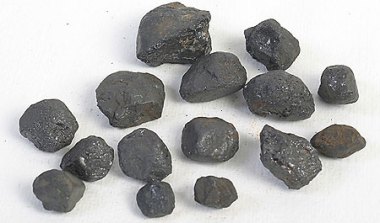
The charlatanic rage in Venezuela has  a name: Coltan. Ignorance is like that. Show some shiny stones to the indians and they will sell your wife to you in exchange for them. Tell a Government that only believes in magical solutions, that they have the mythical El Dorado or a Rosetta stone and they will believe it. Even worse, they will hold a press conference to talk and tell the world about it.

Call it blue gold, tell the world that without coltan, there are no cell phones or video games. Keep talking, Coltan may save Venezuela, just like Chavez. Except…

The world market for Coltan is only around US$ 2 billion, so no matter how huge the deposits may be, it will pale in comparison with Venezuela’s gold, diamond and oil deposits. Because Australian companies are quitting producing Coltan because the price of Coltan ore is actually low, it is the finished product that is worth something.

Because Coltan is the mineral that contains Niobium (formerly Columbite) and Tantalum, two transition metals that are worth little as metals (They are superconductors, but useless as such). I once visited a coltan mine in Brazil, they were desperate to find an alternate use.

But the only use known for it is to turn it into oxide (A great process, stick a fuse in and the stuff melts under a reaction which is exothermic, i.e. it sustains itself, the stuff melts, you have a spigot and collect it  you get pure Tantalum Oxide or Niobium Oxide)

And the only thing you do with the oxide is make capacitors. We are not talking chips, oscillators, memories, we are talking good old capacitors (condensers if you are older), used in circuits to store charge. Both Tantalum Oxide and Niobium Oxide have high dielectric constants, which allows you to have more capacitance or ability (capacitance!) to store charge since the capacitance of a Capacitor is proportional to that constant.

But you see, companies that produce Coltan ore, or Tantalum Oxide, find electronics to be only a marginal busines and it’s currently a money losing one. So, imagine a money losing business run by Chavistas.

You get the picture.

But by now Chavez is an expert, we are told Coltan is to blame for Congo’s (Zaire, Rwanda?) instability. Coltan is the future of humanity. After the uranium that we are helping the Iranians find, prospect or whatever.

Coltan is like the revolution, but mineral…so, you can sell it.

or something like that.

Here we go again: We now get a trio of PDVSA bonds

October 18, 2009

In Spanish here

CorporateBond-main_Full

No sooner had we settled the Venezuela 2019 and 2024 bonds, which investors received last Tuesday, that PDVSA announced last Friday that it would issue three bonds in a combo maturing in 2014, 2015 and 2016 with coupons of 4.9%, 5% and 5.125% respectively. Each buyer will buy a combo composed of $1,300 of the 2014, $1,300 of the 2015 and $40o of the 2016. They will be sold to investors at a price of 138% in Bolivars but at Bs. 2.15.

Thus, while the whole of emerging markets countries issued around US$ 20 billion in September and not one issue exceeded US$ 2 billion, Venezuela began October by issuing US$ 5 billion and now is ready to issue another $3 billion. Of course, PDVSA could decide to issue more if it wants. Except…

that it would have to change the terms if it wants the issue to be succesful, because as it stands, buying dollars via the PDVSA bonds is more expensive than going to the parallel swap market.

Let me remind you how this works (Version for Dummies here) :

1) You buy $3,000 in bonds denominated in $ for Bs. In this case you pay $3000 x Bs. 2.15 x 1.38= Bs. 8,901 for the combo

2) The bonds are not worth $3,000 in the international markets, they sell at a discount, i.e. less than 100%. Let’s assume the combo (more on this later) sells at an average of 55% of its face value, then you get $1,650 for your bonds if you sell them right  away.

3) Since you paid Bs. 8.901, then each $ cost you Bs. 5.39  (8,901/1,650) which is according to the swap market value, which I am not allowed to print, more expensive than doing a permuta swap according to this page.

So, whether it is a good deal or not boils down to what is the value of the bonds in the international markets. Since the bonds don’t exist yet, we have to use other existing bonds as a guide or a guesstimate or what their price should be.

PDVSA has four bonds out there: the 2011 zero coupon Petrobono (zero coupon means no interest, you get 100% of face value on maturity) a 5.25% coupon bond maturing in 2017, a 5.375% coupon bond maturing in 2027 and a 5.5% coupon bond maturing in 2037.

The new PDVSA bonds are closer in nature to the 2011 Petrobono because in contrast to the 2017, 2027 and 2037 issues, which were issued under New York law, these bonds are all issued by PDVSA under Venezuelan law. What this means is that foreign investors don’t like them as much. For some reason, they don’t trust our Courts as much as those in New York. Wonder why?

Because the new bonds mature after 2011, the first thing we can say is that they should all yield at least the same as the 2011 bond, if not more.

Why?

Well, usually (there are exceptions that I will not go into) the longer maturity of the bond the more investors want to be paid for it. This can be understood simply as saying the longer I have to look into the future, the fuzzier it is, the harder it gets to predict.

In PDVSA’s case, if you are uncomfortable that it will pay you in 2011, imagine if you had to wait three more years! Or five!

Thus, a first approximation would be to say they all yield the same as the Petrobono 2011, which on Friday was yielding 16.8%. This is the most optimistic case. If this were the case, using Excel you can calculate that the 2014 bond would be worth 60.8%, the 2015 56.4% and the 2016 53%. Which means that you would get for the combo $1,735.8 or you would be buying each dollar at Bs. 5.14. Does not sound that attractive, right? It gets worse…

Because this is the best case scenario. In reality these bonds should not only yield more, but when they begin trading they will yield even more as the market absorbs them. As an example, the 2019 and 20124 bonds issued two weeks ago, have always yielded at least 1% above similar Venezuela bonds and are still above them.

Additionally, the longer bonds should yield more, even if the difference is small. Using as a guide Venezuela’s bonds, the 2016 yields 0.7% more than the 2014.

Thus, I think you can assume safely:

1) The 2014 will yield at least 1% more than the 2011 because of markets and you have to add 0.35% per year. Thus the 2014 should be at 16.8%+1% (markets)+1.05% (longer maturity 0.35% per year) for a total yield of 18.85%

2) The 2015 should be 0.35% above that or at 19.2%

3) The 2016 should be 0.35% above that or at 19.55%

This gives a value for each dollar of Bs. 5.69 per US$, 13.8% above the close on Friday.

Definitely not worth it.

Why did they do this? Because PDVSA thinks the bonds should trade higher. They are probably assuming they should trade with Venezuela’s bonds or its own New York issued bonds. But markets say this is not the case.

Thus, unless PDVSA changes the 138% factor to make it more attractive, the issue should fail. People are not dumb.

Unless there is a hidden agenda somewhere and there is always an edge with the robolution when it comes to these bond issues. I haven’t figured out where this one could be. Maybe PDVSA will start buying the Petrobonos like crazy tomorrow and drive down the yield sharply to make the comparison more attractive (Remember I am assuming Friday’s prices in all this, if the Petrobono goes up in price the numbers would improve)

We shall see, I will keep you posted. For now, stay away from this.

Brazil’s Bndes loan to Venezuela: Too much ado about nothing

October 16, 2009

empty promises

A few months ago I got all worked up about the terms of a loan negotiated between the Chavez Government and Lula’s Government. Essentially, Brazil’s development bank Bndes was going to lend Hugo US$ 4.3 billion, which was going to be guaranteed by oil fields and was going to be  used mostly to pay back projects by Brazilian companies in Venezuela which were owed a lot of money.

I found the whole thing offensive, because the microphone was left on and Chavez told Lula that Brazilian companies would not be nationalized (In contrast with Argentinian ones, for example). Even worse the guarantee was in the form of oil fields, precisely where Chavez has been more vocal about supposedly protecting Venezuela’s sovereignty.

But I forgot that this is a Government incapable of completing or delivering on a project. Thus, while Chavez did talk to Lula about this and in his own imaginary word he came out and announced the details of what had been discussed, this has ended up like most Chavez projects of the last eleven years:

Nothing has happened…

You see, Brazil’s Bndes is a professionally run private Government company. It has a credit rating, has to generate revenue. Thus, if you want money, you have to justify it. And maybe they could lend Venezuela the US$ 4.3 billion, but someone on this side would have to ask for it and justify it. Lula may back it, but if Chavez and his Government don’t do the work, just forget it. Because in the end Bndes issues bonds to raise funds for its projects and it does it in international markets, fulfilling all requirements and insuring that that its credit rating is not affected.

But according to my sources, there was simply no follow up after Chavez’ visit. Bndes would have considered a request. More so, if the money was going to go to pay Venezuela’s debt with Brazilian companies and if arranging the loan would have had a nice guarantee like an oil field Petrobras could be interested in some day.

But after Chavez left, nobody ever came back with a proposal. Not even a letter. There was absolutely no follow up. It was like hundreds of Chavez’ projects just fluff, hot air. Like resigning if there were street kids in 2003 (There are more now!). Or his recent promise to kill himself if there were poor in Venezuela in 10 years. It was just another bombastic announcement. There was not follow through or consideration for follow through. It was just…Chavez being Chavez.

So, erase my rant from May 27th., it was just another unfulfilled promised by the revolution. It was just more hot air. More of the promises that Hugo lives for and never delivers.

It was much ado about nothing…

Why was the Margarita Hilton nationalized?…Hugo was pissed off!

October 14, 2009

20091013_TALC1_1_1_F1Easy…because Hugo was pissed…

Chavez was pissed off, because he had to ask for “permission” from its rightful owners (Audio here), to hold his Dictators Summit there…

In his own  Dictatorial words:

“They took possession of assets like these (Read: They built it! I have no clue how to build anything, have been trying for 11 years) and they continue to earn money there from tourism and all that (Casinos!) and they try to place conditions on the revolutionary Government (Reservations? What are you talking about? Profits? Humbug!) I do not accept it! (I am a Dictator, therefore I have temper tantrums) Then I said, let’s expropriate and there it is: Expropriated. (Jeje I am powerful, no?). And I am going to change it’s name (Hugo Chavez sounds prentetious, but I can resuscitate some unknown patriot or even my grandpa, maybe Fidel or how about my horse?)

There you have it, straight from his neurons to his tongue…Hugo, the Dictator!

(Just imagine the same mental process: “Put Cedeño in jail, I like that woman, how can she be his girlfriend?”)

Blackouts Jorge Giordani by Teodoro Petkoff

October 13, 2009

blackout

Blackouts Jorge Giordani by Teodoro Petkoff

These guys that govern Venezuela don’t seem to convince themselves that they have spent almost eleven years trying to destroy the country. They always speak as if they had taken over barely last month. This mini reporter was listening to Minister of Planning Jorge Giordani and he could not help but jump when the Professor explained that the crisis in the electric sector and the avalanche of blackouts that is flooding the country was the result of a lack of investment. He was saying that this was part of a plan by the “IVth.” To dismember CADAFE and sell it in parts to the private sector. Imagine that, cried Giordani

Even if we suppose that such plan had existed, which never did and doubly never existed and that it was true that there was no investment at all in the electric sector in the twenty years before Chávez and that dams like Macagua Uno and Two had been born by spontaneous generation and that it was the Paez Government and not Caldera´s, the one that contracted the Caruachi dam, let’s imagine that Electricidad de Caracas never invested a cent in expanding its generation capacity, and even then- Haven’t eleven years been sufficient to revert that behavior of prior Governments? Where were you eminent planner, all of these years? Are you coming now, like a country fair charlatan to invent the wheel? You have been in charge of Cordiplan (The Ministry of Planning) for a bunch of years and it never occurred to you to to point out what you are pointing out now? Eleven years, Giordani, eleven years is what this bunch of useless and incompetent of whom you are part, have been governing the country and you still have the gall of blaming previous Governments for your own irresponsibility! No, my dear Jorge, you guys are not only responsible for the holes in the streets-that you now ant to baptize with the names of the Mayors that Chacumbuele* has put there. But the blackouts are also yours.

In fact, the blackouts have, among others, your own name, Blackouts Giordani, like Potholes Jorge Rodriguez are those that exist  in the vicinity of the street where this mini reporter is your neighbor.

*Chacumbele is a nick name Petkoff uses for Chávez , in the song Chacumbele killed himself after falling in love with a woman.

The revolution looks to outside enemies while refusing to look at its own dramatic failure

October 12, 2009

obama_chavez_castro

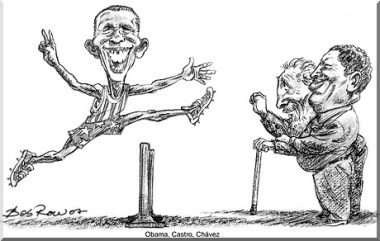
Somehow it is difficult to adjust to the fact that the reference frame for the revolution is not that Venezuela succeed, but that the “Empire” fail. Minister Giordani, for example, spent the first half hour of his economic press conference on Thursday, telling us how out of 250 million people in the US (wrong!), 50 million had lost their homes (wrong!) and how they are now living in “tent cities”. Then he tells us how in contrast with the US where less than half of the population have social security (wrong!), in Venezuela 95% of the population does (wrong its around 20%).

But it really does not matter. These guys are proud of 27% inflation, while they predict the demise of the US$ or the US economy, while the Bolivar has done worse in the last five years than the US$ and the US economy is likely to grow more the last quarter of 2009 than the Venezuelan one and ditto for 2010.

And then the People’s Ombudswoman Gabriela Ramirez, the same one that rarely shows up to defend the “people” of Venezuela, holds a press conference minutes after Obama gets awarded the Nobel Prize, to tell us that this is an insult to human. rights. The truth is, she is an insult to human rights in Venezuela and organizations like Provea, who have been at defending rights for years and this is what they get. Because in the nine years since the creation of this position, Venezuelans have had two “Ombudsmen” who were more devoted to defending the Government than the rights of the people. And are quick to hold a press conference to attack Obama, but seldom talk about the horror of the daily homicides in Caracas and Venezuela.

Or take health care, for example. Chavez has revived his “Barrio Adentro” mission, because there are elections coming up. He brought 2,000 “Doctors” from Cuba to fill the empty space in the modules he installed in 2004-2004. The question is where did 7% of the GDP of the country go for three years, if so much money went to Barrio Adentro and it wasn’t even working properly. Do I hear Cuba anyone? Yes, Cuba seems to be more important than Venezuela. Or its people.

And funny how this is the same week that the Government announces electricity rationing for Caracas, for the first time in a long time, we hear that the Venezuelan Government will spend US$ 80 million in producing electricity in Bolivia.

And obviously, Chavez was too sick to hold his variety show Alo Presidente, but had to take a poke at the Nobel Peace Prize for Obama. I mean, this is not the Physics Nobel Prize, that has gone to the best physicists most of the time. This is the Peace Prize, the same one that Arafat and Jimmy Carter won. And Kofi Annan. And Al Gore. And Oscar Arias and Rigoberta Manchu.

And yes, Nelson Mandela did win it. And Aung San Suu. But Gandi did  not, nor Havel. So how can I get upset about Obama winning it, with that track record?

Clearly, neither Chavez nor Piedad deserved it. They left their Prize in the jungles of Colombia. Uribe had a lot to do with that.He didn’t deserve it either.

But what hurts is not whether Obama won it or not. It’s that a US President did. Because the US is the enemy, the same way that China will be the enemy for Chavez in 50 years when that country becomes the most important power in the world and the most capitalist at that. Or that Cuba with its gigantic failure in 50 years, is a friend. Nobody is asking for results or consistency, just ideology.

Because what Chavez fails to understand is that Brazil and Chile in Latin America and China, Korea, Malasya, Hong Kong and all those Asian countries are becoming powers, not by following hair brained ideologies, but by embracing capitalism from A to Z, going through the H of hard work and the T of taxation.

But don’t tell our socialist brainiacs that. The President of our Central Bank, a math Ph.D. told us last week how next year they will have a priority list for CADIVI outflows by needs and by sectors. Brilliant! It has taken XXIst. Century Socialists leaders five years of exchange controls and a couple of Ph.D.’s being in charge to come out with the bright idea of having a budget. How did they ever think of that!

Maybe they should be awarded the Economics Prize for thinking of the revolutionary idea of using an Excel spreadsheet to establish priorities for giving out billions of dollars. I bet this guy gets the Venezuelan National Science prize. And I am not kidding. Write it down.

But these are the people ruling and running Venezuela. Incompetent fools concerned more about the failure of others than our own success. The same ones that justify getting rid of 27 scientists because they are retired despite the fact that they are all younger than all of the Nobel Science winners of this year, all of whom are all still active in their own countries.

But they sing the demise of the “Empire” as the local subway system has not been running in its entirety for days, electricity is going to be rationed in Caracas for the first time in decades, inflation is going to be 27% in 2009, 45 of the Venalum cells are down when the standard used to be that four was bad, two of the three most important highways going into Caracas were shut down for hours last week, the largest maternity in Caracas is running at 20% of its capacity, homicides will run at almost 15,000 in 2009…

Should I go on?

But they talk about wealth redistribution, while they all send their kids to private schools and their families to private hospitals. And they have bodyguards and fancy cars (and wish for Ferraris) and use fake statistics to prove that poverty has remained the same in the ten years of the revolution. Yes, it has improved since 2004, but did you hear oil prices went up? Or that the country’s debt soared. And all they have accomplished is to take us back to 1998. And they call it a revolution!

Meanwhile they celebrate the demise of the US as a world power and condemn Obama’s Prize.

But refuse to acknowledge their dramatic failure.