Beware this is a very long post!
Preamble
Somehow foreign readers come around to tell us that Chavez
is different, because he “cares” about the poor, wants to “redistribute” wealth,
is not part of the “elites” that have governed our country, because he is very
“popular”, he wants to eliminate corruption and is a “break” from the past. I
wonder how much this people know about Venezuela’s forty years of political history
prior to Chavez.
Indeed Chavez is different, but not for the reasons given
above. He is different because he is strident, because he is confrontational,
because he is militaristic, he is different, because he controls everything and
just imagine, because he has governed for more years continuously than any
President in what people like to call Venezuela’s modern democratic
history. Yes, he is charismatic, he is also a good communicator, but he is
probably the President that has taken populism to the highest levels of
irresponsibility in Venezuela.
The last Dictator
But let’s look back a little bit. Venezuela’s modern democratic political history begins
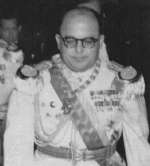
in 1958, when Dictator Marcos Perez
Jimenez was overthrown. Perez
Jimenez
was overthrown because people were fed up with the human right
abuses of his Government. They were very prosperous times however, as
Perez
Jimenez’ militaristic Government took what would now be called a market
approach to the economy, the Government was a builder of public works,
a
regulator and a promoter of investments in the country. Couple this
with oil and this wroked very well at the time. But human rights abuses
were rampant, political parties were persecuted, the national police
tortured
political enemies and dissent and protest were not allowed. The economy
grew,
immigrants from Europe arrived in droves to
work in this land of opportunity and there was a lot of corruption but mostly within the
closed circle surrounding the President, mostly with the military inner circle. Universities
were not allowed to grow as fast as the rest of the educational system, great
infrastructure was built, inflation was low and elections were joke in a country with
roughly 8 million people.
The First Election:
Let’s get democracy going (1958-1963)
After the overthrow of Perez Jimenez, the country was ruled by a Junta which
scheduled elections. There were three candidates. Accion Democrática, the
social democratic party of the “poor”, the party that had a headquarters in all
towns of Venezuela
with more than 1,000 inhabitants, the party promising to redistribute the land,
fielded Romulo
Betancourt. Betancourt, a Marxist, had
participated in the coup that overthrew Medina Angarita in October 1945.
Betancourt was a populist as a candidate, not as President, but he was facing
former Admiral Wolfgang
Larrazabal, one of the military officers who overthrew
Perez Jimenez, who in that election was an even more of a populist than
Betancourt. Larrazabal was backed by the Communist party and URD, whose leader had actually
won an election during Perez Jimenez’ time but was simply ripped off. Finally,
there was Rafael Caldera, representing the social Christian party (COPEI), the
party of the middle class and the wealthy elite. The intellectual elite was
probably mostly backing Larrazabal, via the Communist party and URD.
Well, neither of the parties backed by the “two” elites won.
The party of the poor, the popular party of the people, won handily with 49% of
the vote. Larrazabal came in second with 34% and Caldera, the party of the
wealthy elite, came in a distant third with 16% of the vote. Score one for the
populists, score one for Marxism, score one for those with a past overthrowing
someone (they came in one-two) and score half a point for former military.
Sound familiar?
But let’s move on.
The second election:
A nice man runs Venezuela
(1963-1968)
The Betancourt years were rough, there were three coup
attempts, an attempt on Betancourt’s life, he banned the Communist party, Fidel
Castro kept trying to overthrow him, there was agrarian reform (more land was
distributed in his five years than Chavez has expropriated or given away in
seven), oil prices went down forcing the President to cut the budget by 10% at
a time of no inflation, his party split for the first time, corruption was low, but
Betancourt was set in establishing democracy in Venezuela by handing over power
democratically and retiring from politics. And he did.
In 1963, there were six candidates, two for AD, which split
into two factions, one led by Ramos Gimenez which was supposed to represent
better the rural poor. Raul
Leoni, a man darker than Chavez by skin color
(which was and is not that relevant in Venezuela, but seems to have a sort of
romantic significance to some foreigners when they defend Chavez) was the
candidate of the party of the people and the poor, running a campaign much like
Betancourt, promising continuity in handing over land, benefiting the poor,
redistributing the wealth and establishing democracy. He faced Jovito Villalba,
the old leftist leader from URD. Rafael Caldera once again was a candiadte. Arturo Uslar Pietri
of “sowing the oil” and literary fame and that Venezuelan rarity, Larrazabal
trying to revive his fleeting popularity of 1958 and German Borregales, running
as the only “right wing” candidate.
Despite the split in AD, Leoni won with 33% of the vote, because
the middle class and the wealthy and intellectual elites split between Uslar
(16%) and Caldera (20%), Larrazabal did badly (10%), Ramos Jimenez faltered
(2%) and Borregales the right wing candidate got all of 9,000 of the almost
three million votes. Score another one for the poor, the disenfranchised that
now had a franchise, land reform and democracy. Big losers were the right, the
middle class, the intellectuals and the military. (An American may have thought
it was a victory for race, nobody cared down here about Leoni’s color)
The third election: First and last
win for the middle class and the elite (1969-1973)
Leoni’s period had been one of stability and some prosperity
as his Government began the first expansion of the Government state industries,
labor unions gained power, social security was started and lots of basic
infrastructure was built. It was a time of peace and Leoni became known as a “good man”
and a good President.
AD tried to impose democracy from the base, had primaries
won by Luis
Beltran Prieto Figueroa, from the extreme left wing of AD. Betancourt, from
his self-imposed exile in Bern,
banned his win and named close friend Gonzalo
Barrios as the AD candidate. Barrios was an educated party man, the main
objections to him was he was single (get it?) and that he had lost the primary. He was
facing Rafael Caldera once again, the candidate of the elites and the middle class,
but this time turned into more of a populist, offering to build 100,000 houses a year
for the poor, his background as a labor lawyer and his appeal to the young and
women. Borregales was once again around and Miguel Angel Burelli Rivas an intellectual, split
the vote of the middle class. But AD could not recover from its division.
Caldera won by 30,000 votes and 29% of
the vote, Barrios had 27.5%, Burelli 12%, Prieto 17% and the rest far behind.
The “right” represented by Borregales got 12,000 votes, despite there being almost
one million new voters. Barrios, graciously accepted defeat, despite the fact
that there were sufficient irregularities to raise doubts, it was his finest
moment. Score a victory for the middle class, really it’s only one in all these
years, a win for the wealthy elite, populism and the church. The poor and the people
lose, democracy loses. as the first primary ever turned into a fiasco and the
right, once again was non-existent. There was a small victory for militarism
as former Dictator Perez Jimenez was elected to the Senate; he is denied the
win on a technicality.
The fourth election:
CAP and the great Venezuela
(1974-1978)
Caldera’s term was characterized by his “pacification” of
the country, whereby he pardoned former guerilla members and the policies of extending
development to all corners of the country. But he never overcame his elitist
image, his somewhat arrogant behavior and the fact that he was the first
President to use the media heavily, with his weekly program Habla el Presidente
(sound familiar?). But he was too long on promises and not that long on
delivery as oil prices stagnated, he did not deliver on his housing promises (a
mistake never to be made by any candidate), expanded Government bureaucracy
dramatically and AD regrouped by going back to the grassroots and yes, focusing
on the poor, their “people”.
COPEI picked Lorenzo Fernandez to succeed Caldera, Fernandez
was his Interior Minister, a quiet man, white and elitist, who was picked by
the party over the more populist and leftwing Luis Herrera Campins, some say
over suspicious circumstances. AD meanwhile, had been plotting its return for
five years. Carlos Andres Perez, Betancourt’s former Minister of the Interior,
became the first presidential candidate in Venezuela to use the media full blast.
Add to that that he spent five years going around the country and ran an electrifying
populist campaign.”El hombre que camina” (The man who walked”) who sold himself
to everyone, but mostly to the poor as their savior. There were many other candidates;
including the first candidacy by newly formed party MAS (Movimiento al
Socialismo) a splinter group from the communist party. Its first Presidential
candidate? None other than our current Vice-President Jose Vicente
Rangel. But it was a two man race all the way, Carlos
Andres Perez (CAP) polarizing the electorate with his promises,
his populism and his extremely active campaign giving him 49% of the vote
versus Fernandez’ 35% and the other ten (Yes, ten!) candidates splitting the
rest. No wonder Venezuelan women say all
men in this country want to be President!
Score another one for the poor and populism, the elite
loses, nationalism wins. The Government can do it all. Yeah! Yeah!
Fifth Election: Back
to the poor (1978-1983)
If CAP was electrifying as a candidate
he dazzled everyone
in his first year in power. Even before being sworn in, he announced
the
nationalization of the oil and iron industries (Chavez did not do it,
which is sometimes claimed abroad eve by his supporters) which he
planned to redistribute
(sound familiar). This was followed by a flashy first 100 days, where
very
visible things were accomplished, from cleaning the cities to buying to
hundreds
of new buses for public transportation to daily announcements about new
industries that would diversify the country’s economy. CAP created the
Venezuelan
investment fund to “save” for the future (and spent most of it within
two years), the Corporacion Venezolano de Fomento
(CVF) to develop the country, creating thousands of new industries, the
steelworks were expanded, the aluminum industry was started (with no
bauxite at
the beginning, simply cheap electricity), thousands of schools and high
schools
were built, a couple of hundred hospitals, 10,000 Venezuelans were sent
to
study abroad and dams were built to guarantee electricity and water for
at
least a couple of decades. Even full employment was decreed by CAP’s
statist
first Government, as each restroom and elevator in the country was
decreed to
have a person running it. Full employment did indeed set in. CAP truly
believed
oil prices were high to stay, they could never drop. (Umm, reminds you
of
somebody, no?)
But it was all too much, too fast. The Government grew and
expanded too much, salaries were increased yearly by decree and the ugly head
of corruption showed up quite visibly for the first time ever. CAP tried to
become an international leader for the third world, giving away boats to
Bolivia, oil to Central America and promoting a “:new economic order”. (Eerie,
no?). Oil prices dropped, inflation went up, unemployment grew, after three
years of expansion and growth; everything came to a halt as oil prices dropped.
CAP cut the budget and his former Minister of the Interior Luis Piñerua, an
uneducated man became AD’s candidate. Meanwhile, COPEI’s left wing took over
the social Christian party with the candidacy of Luis Herrera Campins,
Luis Herrera ran as the “President for the poor”, promising
to improve the barrios, campaigning only in the barrios, a man from the plains,
a simple man, who would use popular sayings at every stop to draw attention of
the poor to his candidacy, trying to change the usual image of his party.
Piñerua on the other hand just promised to be honest ( to counteract the
corruption image of his party) and defended his lack of education, promising to
jumpstart growth and prosperity. There were ten candidates again, but Luis
Herrera trumped AD 46% to 43%. Once again, the most populist candidate won.
Another victory for the poor, populism and the middle class and the elite were
likely divided between the two options. Jose Vicente Rangel was MAS’s candidate
once again, but got less than 5% of the vote, the other seven candidates are
hard to recall. Diego Arria, a CAP Minister and Governor, tried to appeal to
the middle class elite and got 70,000 votes, out of more than five million.
Abstention was less than 12%, up from 3.5%! People were worried about this
“development”. On his first day, Luis Herrera blasted CAP: “I receive a mortgaged
country” he said, his popularity jumped, but it would not last.
Sixth Election: It’s
been downhill since then (1983-1989)
Luis Herrera enjoyed during his first two years an oil
bonanza that did not happen again until the Chavez era. Oil prices jumped from
$16 per barrel to $30 per barrel. Keeping his promise to redistribute the
wealth, Luis Herrera increased salaries between 30% and 50% immediately; there
were once again visible signs of corruption while the Government had little to
show for all its wealth. It was the last time that oil income per capita went
up in twenty years and it showed. Venezuelans of all levels felt poorer as oil
dropped, but the Government kept spending. The currency which had been
essentially constant for the last twenty years, until a de facto currency
conversion system was eliminated by CAP, was devalued violently from Bs. 4.3 to
the US$ to Bs 8 on the first day and eventually to Bs. 12 by the end of Luis
Herrera’s period. All Venezuelans were suddenly poorer, much poorer and Luis
Herrera, the COPEI President of the poor, was to blame. Exchange controls were
imposed and Venezuelan politicians discovered them as a source of power and
yes, wealth, in the form of levels of corruption never seen until then in Venezuela.
For the next election, AD internally picked medical doctor and party
apparatchik Jaime Lusinchi
as their candidate. He ran under the slogan “Jaime is like you”, a man of the
people, a man of humble origins. Meanwhile, on COPEI’s side, Rafael Caldera
retook over his party and tried to bring it back to his origin, Rafael Caldera should
be back after the ten year Constitutional hiatus! Beacuse he is better, he is good Oh, yes, there were thirteen
candidates in total, including Teodoro Petkoff as candidate of the socialist
party MAS, it was time to forget about Rangel who after all, was not even a
loyal part member. And it showed, Rangel immediately jumped shipped and set up
camp separately as candidate for another leftwing party MEP. But it was all
irrelevant, the “people” picked the man like them, Jaime Lusinchi, giving him
55% of the vote and a huge 3.7 million votes, more than Chavez ever got in his
two elections, despite the fact that there were less than seven million
eligible voters, versus Chavez’ more than 11 million.
CAP II: Populism,
realism, coups and impeachment (1989-1994)
Jaime Lusinchi rode on a wave of fiscal spending, populism
and borrowing that allowed him to maintain his popularity until his last day in
office. He maintained exchanged controls throughout his five years in office, subsidizing
food and essentials with a separate exchange rate that was less than half of
that as the more “available” rate. Imports were subsidized massively. When
funds were running short, he would tell foreign banks that he could not pay and
the debt had to be refinanced. His private secretary was his mistress,
corruption ballooned through the exchange control office, and little was done
in terms of infrastructure and nothing in terms of improving the structure of
the state. But he had sixty percent plus popularity when he left office on the
back of fiscal spending and direct aid programs like the “Barrio Modules” and
direct scholarships to the poor (sound
familiar?), even if he lost his popularity rapidly after leaving office.
But CAP was waiting in the wings using the same strategy as
in 1973-1974, visit every town, promise the world and “with the Adecos you live
better”. Caldera tried to be a candidate again (he knew that job!), but finally
had to give way to his younger successor Eduardo Fernandez, who was not that
young by then. There were 23 candidates, including Alejandro Pena Esclusa for the
“right”; he got less than three thousand votes. CAP was too energetic, too
charismatic, too much of a populist and he promised the world, he won handily
with 3.8 million votes (53%) versus Fernandez 40%, Petkoff was a distant third
with 2.5%.
CAP had been audacious in his campaign promises despite his
understanding that the country’s finances were a mess. But he had contacts and
the next President of the United
States had promised he would get the aid he needed. Except
that Dukakis lost four weeks before CAP won and no aid was forthcoming. There
was only one option as the country’s Treasury only had $300 million the day CAP
was “crowned” as the new President of Venezuela. He walked the streets that
day, the President of the people, ever the populist and ever popular. Ten days
later he had an agreement with the IMF that would lend him the money to prop up
the country’s finances, but which required removing exchange controls, some
subsidies, including gasoline’s, and restructuring the tax and pension systems. Two
weeks later protests over the increase in the price of gas led to more than 300
dead as violence and looting became widespread as TV became a sort of feedback
mechanism and the Government did little to stop the “Caracazo”. By the time time CAP decided
to stop in third day, the Army had to be brought in.
In the next year, CAP introduced the biggest
decentralization reform ever in the country’s history. Governors would be
elected, not named, so would Mayors. Bills were introduced to privatize the
phone company, electric companies, steel industry and aluminum industry. A
pension bill was introduced. But CAP was
too cocky and began fighting with his party, which felt threatened by the reforms.
The economy grew strongly for one year, but on February 1992, four Lieutenant
Colonels attempted a coup, three were successful with their military
objectives, the fourth, Hugo Chavez, was not. But he got to go on nationwide TV
to surrender. That minute of fame changed history with his famous “For now, we
have not achieved our objective”. He turned his personal failure into a collective
defeat, which later would change his life and would make him a winner.
The next year, as CAP’s popularity decreased, a US$ 20
million “fishy” transaction was discovered and used to impeach him. Venezuela was
in limbo for many months as the proceedings progressed and all of the reforms
were left aside. CAP was impeached and his term completed by Ramon J. Velasquez..
As the elections approached, Eduardo Fernandez thought he
had the candidacy locked up, so he invented a primary in which the whole
country could participate as a way of stopping Caldera who was out of the
country. He lost and popular Governor of Zulia state Oswaldo Álvarez Paz won. Claudio
Fermin seized the opportunity and became AD’s candidate. Causa Radical leader
Andres Velasquez ran his own campaign and Rafael Caldera arrived in the country
and managed to obtain the backing of the more leftwing parties ranging from MAS, to the
communist party, MEP and URD. Amazingly enough, the former candidate of the elite
and the middle class transformed himself into the leader of the Venezuelan
left overnight. Only Causa R did not support him. Caldera ran a very populist campaign, promising
the impossible, and a litle more. Velasquez ran a very responsible campaign, in my own opinion,
with very specific proposals rather than empty promises. Fermin surprised
everyone coming in second, also running a serious campaign. Caldera won with 30%, Fermin was second with 23%, Álvarez
Paz, the candidate of the middle class and the elites came in third with 22%
and Velasquez was fourth with 21%. Once again of the two candidates of the “poor”
the one with the highest dose of populism had won. I am sorry Velasquez lost, Venezuela would
be different, but that brand of populism that scared the middle class away from
him because he was too radical hurt him too much, Caldera was the safe choice.
Ha!
Caldera II: A tale of
two Governments (1994-1998)
Caldera’s Government had two stages. In the first, he ran
the country with stubbornness and with his close circle of friends He imposed exchange
controls quickly igniting a huge financial crisis that devalued the currency
from around Bs. 100 to Bs. 5000 in less than two years. But inflation kept growing
and he could not stop it. Then one day exactly half way through his term, he
got rid of his buddies and named Teodoro Petkoff as Minister of Planning. He
changed course, removed controls, negotiated with everyone a pension bill (yes,
the same one as in 1991), privatize CANTV, the steel industry and pushed
forward the oil opening. But oil prices began collapsing and there was little
growth despite a period of optimism. Then the Russian and Asian crisis came and
it was game over for any hope for Petkoff or Caldera’s party Convergencia to
field a good candidate. They didn’t.
The leading candidate was former Miss Universe and Mayor of
Chacao Irene
Saez. Laughed at initially as Mayor, she quickly converted her success (and her
looks) into a leading role. Meanwhile, Lt. Colonel Hugo Chavez who had been pardoned
by Caldera and could thus run for President, was calling for a boycott of the
election and the overthrow of the Government. And then he met Luis Miquilena,
an 80 year old former union leader that convinced him he could win the
election. Chavez bought it. Miquilena brokered a deal to have MAS back Chavez
and give his candidacy legitimacy. All left wing parties backed Chavez. (Few support him today). AD
kicked Fermin out of the party so that one of its founders, 80 years old could
run. Carabobo Governor Salas Romer ran under his own party. Chavez was the candidate
of the poor, the populist, he won. He promised to eliminate corruption,
redistribute wealth and land, give us more democracy, reduce crime, and reduce
poverty. He did not promise a “revolution”. He won with 56% of the vote versus 40% for Saals Romer
Chavez has not delivered on his promises and he has already been in power longer
than all of those Presidents. Much like the earlier Presidents a new “elite” is rising
associated with the deals and the corruption of the Government. Corruption is simply staggering. Chavez
continues to be a populist, promising today what he promised seven years ago
but has not delivered.
So my friends and readers if you manage
to get through this
long rant, I ask: Is Chavez any different? Is he a break from the past?
Is he
more popular? Has he delivered more? Have the “elites” by wealth or the
intellectauls ran this country much? Or is Chavez as popular as Jaime
Lusinchi, as
incompetent as Luis Herrera, as irresponsible as CAP, as much of a
dreamer as
CAP, as impractical as all of them, without the vision of Betancourt,
without
the kindness of Leoni, without the intelligence of Caldera and as cynic
as most
of them?
The truth is that maybe the elites left
politics too much to the politicians, as if it were a nuisance. This
post is my answer, but please don’t come telling me that Chavez
is the first to offer to change the lot of the poor, or to care for the
poor, or
that he is doing what he promised, or he is a break from the past. To
me, he is
more of the same, but militaristic, strident, autocratic and concerned
with the
well being of Hugo Chavez and his political movement alone.And that, in
my book, makes him much worse. And he is as he has destroyed what
little institutionallity and checks and balances this country had.
That’s not the way to build a better society.
(This is my own personal view of the last fifty years; I am
sure that in writing this long post I may have made small mistakes. But I am sure
I have described the politicians correctly in the context of their claims, times,
promises and values. If not, please let me know why. Thank you)


 The Devil's Excrement