Nationalizing CANTV: Another stupid revolutionary idea

August 8, 2004

In 1991, the Venezuelan Government, whose President then was Carlos Andres Perez, privatized the telephone company CANTV. AT the time, CANTV was a fixed line company run by the Government in a very inefficient way. It would sometimes take three or four tries to get a dial tone and sometimes years to get a line. Today the company has almost 3 million fixed lines, almost 3 million cell phones and is an ISP and provider of data networks. You can get a phone in less that two weeks in all towns with less than 5,000 people and service is quite good.


CANTV was purchased by a GTE-led consortium in a bidding process in which qualified bidders handed in sealed bids. Everyone expected a consortium led by local Cisneros Group to win the bid as GTE and its partners kept a very low profile, learning from its experience in losing a similar process in the Dominican Republic. In the end GTE handsomely outbid the Cisneros bid, offering US$ 1.88 billion for 40% of the company. Today 40% of the company is worth in the open market about 900 million dollars.


In 1996, during the Caldera Government, the Government sold off roughly 44% of the shares of the company in an IPO with simultaneously listings in Caracas and New York. The price was $ 23.60 per ADR (the type of stock sold in the New York Stock Exchange), lower than the equivalent US$ US$ 29 paid by GTE.  Today the stock stands at US$ 20.31.


The deal as not as bad as it seems for the buyers. While the company is worth much less today, the company has paid some nice dividends, mostly in the last four years. Moreover, the control group, today led by Verizon since it acquired GTE, has probably sold equipment to CANTV at a profit. But it certainly was not a good deal.


For the Government it was a very good deal. It got US$ 1.88 billion in 1991 and another US$ 1.4 billion in 1996. It got rid of a company that was losing money, was inefficient and corrupt. Additionally, it imposed a tax of 5% on all revenues by the company, independent of whether it made money or not. In 2001, the Chavez Government opened the telecom sector completely to competition, approving a law that had been in the works since 1996.


The telecom opening has not been that succesful due to the political instability of the country. There are three large wireless companies, including CANTV’s Movilnet; there are competitors in data and very little competition in fixed line where CANTV is practically the sole player.


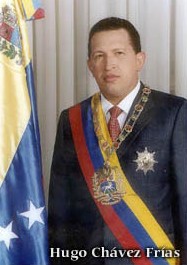
All of this comes to mind, because Chavez has been threatening with intervening the company if it participates in a fraud in the upcoming referendum, since it provides the data network over which all of the results would be transmitted. Chavez has even said that he has the decree ready without explaining what exactly an intervention means.


I have always believed that the sale of CANTV had been a good example of why the Government should not run for profit operations. The benefits of selling it are there for everyone to see in both service and financial terms. Thus, I was quite shocked when on Thursday MVR Deputy and former President of the National Assembly William Lara, said that the Government should “recover’ CANTV. Lara said that this is possible within the framework of Venezuelan laws, adding:” This is a company that is at the service of Venezuela and not associated to the interests of multinationals. What we are proposing is that it should be a strategic objective after August 15th”.


Lara explained that CANTV should have never been sold and the Government should, without harming shareholders, take the company back. Now, I would let our readers judge the merits of this proposal. However, to dedicate over US$ 2 billion to execute what sounds like a simple ideological point seems to me to be utterly irresponsible to say the least. Additionally, Lara did not clarify if the Government would buy the whole telecom sector. Given that CANTV was a monopoly in 1991 and there is so much competition today, if Lara’s plan was ever put into effect, my money would be on the competitors eventually taking over most of telecom activities in Venezuela and CANTV being reduced to a minimum in the hands of an inefficient, corrupt and overregulated Government. Another bad and stupid “revolutionary” idea proving these guys have no clue on how to run a country.


Hopefully the “Si” will win and stop this crazy idea.


Nationalizing CANTV: Another stupid revolutionary idea

August 8, 2004

In 1991, the Venezuelan Government, whose President then was Carlos Andres Perez, privatized the telephone company CANTV. AT the time, CANTV was a fixed line company run by the Government in a very inefficient way. It would sometimes take three or four tries to get a dial tone and sometimes years to get a line. Today the company has almost 3 million fixed lines, almost 3 million cell phones and is an ISP and provider of data networks. You can get a phone in less that two weeks in all towns with less than 5,000 people and service is quite good.


CANTV was purchased by a GTE-led consortium in a bidding process in which qualified bidders handed in sealed bids. Everyone expected a consortium led by local Cisneros Group to win the bid as GTE and its partners kept a very low profile, learning from its experience in losing a similar process in the Dominican Republic. In the end GTE handsomely outbid the Cisneros bid, offering US$ 1.88 billion for 40% of the company. Today 40% of the company is worth in the open market about 900 million dollars.


In 1996, during the Caldera Government, the Government sold off roughly 44% of the shares of the company in an IPO with simultaneously listings in Caracas and New York. The price was $ 23.60 per ADR (the type of stock sold in the New York Stock Exchange), lower than the equivalent US$ US$ 29 paid by GTE.  Today the stock stands at US$ 20.31.


The deal as not as bad as it seems for the buyers. While the company is worth much less today, the company has paid some nice dividends, mostly in the last four years. Moreover, the control group, today led by Verizon since it acquired GTE, has probably sold equipment to CANTV at a profit. But it certainly was not a good deal.


For the Government it was a very good deal. It got US$ 1.88 billion in 1991 and another US$ 1.4 billion in 1996. It got rid of a company that was losing money, was inefficient and corrupt. Additionally, it imposed a tax of 5% on all revenues by the company, independent of whether it made money or not. In 2001, the Chavez Government opened the telecom sector completely to competition, approving a law that had been in the works since 1996.


The telecom opening has not been that succesful due to the political instability of the country. There are three large wireless companies, including CANTV’s Movilnet; there are competitors in data and very little competition in fixed line where CANTV is practically the sole player.


All of this comes to mind, because Chavez has been threatening with intervening the company if it participates in a fraud in the upcoming referendum, since it provides the data network over which all of the results would be transmitted. Chavez has even said that he has the decree ready without explaining what exactly an intervention means.


I have always believed that the sale of CANTV had been a good example of why the Government should not run for profit operations. The benefits of selling it are there for everyone to see in both service and financial terms. Thus, I was quite shocked when on Thursday MVR Deputy and former President of the National Assembly William Lara, said that the Government should “recover’ CANTV. Lara said that this is possible within the framework of Venezuelan laws, adding:” This is a company that is at the service of Venezuela and not associated to the interests of multinationals. What we are proposing is that it should be a strategic objective after August 15th”.


Lara explained that CANTV should have never been sold and the Government should, without harming shareholders, take the company back. Now, I would let our readers judge the merits of this proposal. However, to dedicate over US$ 2 billion to execute what sounds like a simple ideological point seems to me to be utterly irresponsible to say the least. Additionally, Lara did not clarify if the Government would buy the whole telecom sector. Given that CANTV was a monopoly in 1991 and there is so much competition today, if Lara’s plan was ever put into effect, my money would be on the competitors eventually taking over most of telecom activities in Venezuela and CANTV being reduced to a minimum in the hands of an inefficient, corrupt and overregulated Government. Another bad and stupid “revolutionary” idea proving these guys have no clue on how to run a country.


Hopefully the “Si” will win and stop this crazy idea.


Nationalizing CANTV: Another stupid revolutionary idea

August 8, 2004

In 1991, the Venezuelan Government, whose President then was Carlos Andres Perez, privatized the telephone company CANTV. AT the time, CANTV was a fixed line company run by the Government in a very inefficient way. It would sometimes take three or four tries to get a dial tone and sometimes years to get a line. Today the company has almost 3 million fixed lines, almost 3 million cell phones and is an ISP and provider of data networks. You can get a phone in less that two weeks in all towns with less than 5,000 people and service is quite good.


CANTV was purchased by a GTE-led consortium in a bidding process in which qualified bidders handed in sealed bids. Everyone expected a consortium led by local Cisneros Group to win the bid as GTE and its partners kept a very low profile, learning from its experience in losing a similar process in the Dominican Republic. In the end GTE handsomely outbid the Cisneros bid, offering US$ 1.88 billion for 40% of the company. Today 40% of the company is worth in the open market about 900 million dollars.


In 1996, during the Caldera Government, the Government sold off roughly 44% of the shares of the company in an IPO with simultaneously listings in Caracas and New York. The price was $ 23.60 per ADR (the type of stock sold in the New York Stock Exchange), lower than the equivalent US$ US$ 29 paid by GTE.  Today the stock stands at US$ 20.31.


The deal as not as bad as it seems for the buyers. While the company is worth much less today, the company has paid some nice dividends, mostly in the last four years. Moreover, the control group, today led by Verizon since it acquired GTE, has probably sold equipment to CANTV at a profit. But it certainly was not a good deal.


For the Government it was a very good deal. It got US$ 1.88 billion in 1991 and another US$ 1.4 billion in 1996. It got rid of a company that was losing money, was inefficient and corrupt. Additionally, it imposed a tax of 5% on all revenues by the company, independent of whether it made money or not. In 2001, the Chavez Government opened the telecom sector completely to competition, approving a law that had been in the works since 1996.


The telecom opening has not been that succesful due to the political instability of the country. There are three large wireless companies, including CANTV’s Movilnet; there are competitors in data and very little competition in fixed line where CANTV is practically the sole player.


All of this comes to mind, because Chavez has been threatening with intervening the company if it participates in a fraud in the upcoming referendum, since it provides the data network over which all of the results would be transmitted. Chavez has even said that he has the decree ready without explaining what exactly an intervention means.


I have always believed that the sale of CANTV had been a good example of why the Government should not run for profit operations. The benefits of selling it are there for everyone to see in both service and financial terms. Thus, I was quite shocked when on Thursday MVR Deputy and former President of the National Assembly William Lara, said that the Government should “recover’ CANTV. Lara said that this is possible within the framework of Venezuelan laws, adding:” This is a company that is at the service of Venezuela and not associated to the interests of multinationals. What we are proposing is that it should be a strategic objective after August 15th”.


Lara explained that CANTV should have never been sold and the Government should, without harming shareholders, take the company back. Now, I would let our readers judge the merits of this proposal. However, to dedicate over US$ 2 billion to execute what sounds like a simple ideological point seems to me to be utterly irresponsible to say the least. Additionally, Lara did not clarify if the Government would buy the whole telecom sector. Given that CANTV was a monopoly in 1991 and there is so much competition today, if Lara’s plan was ever put into effect, my money would be on the competitors eventually taking over most of telecom activities in Venezuela and CANTV being reduced to a minimum in the hands of an inefficient, corrupt and overregulated Government. Another bad and stupid “revolutionary” idea proving these guys have no clue on how to run a country.


Hopefully the “Si” will win and stop this crazy idea.


Public Service Announcement: Bring your passport to vote!

August 6, 2004


I have been told to spread the word that US consulates are asking registered voters to show their visa in their passport as proof of residence in order to vote. Thus my dear friends: Don’t forget to bring your passport to vote, anywhere in the world!


A public service announcement from your friendly blogger!


Sipublisi, free images for the

August 6, 2004


You can download many images for the “Si” from webpage sipublisi. Use them to make pamphlets, leaflets, t-shirts, whatever you want, they are good and they are free. Si!


Above, two of my favorites.


When Lucas Rincon speaks, is he listening?

August 6, 2004

Minister of Interior and Justice, Lucas Rincon, best remembered for his words in April 2002: “The President was asked to resign and he accepted it”, said yesterday:


“Los indicios que manejamos, y provienen de los organismos de inteligencia, me hacen pensar en que puede existir la probabilidad de hechos violentos antes, durante y después del referéndum”


or


“The indications we are handling and are coming from intelligence organizations, make me think that there is a probability of violent acts before, during and alter the referendum”


His intelligence turned out to be right when minutes later Chavistas attacked opposition groups in Plaza La Candelaria. Let’s see if he does anything about it now!


When Lucas Rincon speaks, is he listening?

August 6, 2004

Minister of Interior and Justice, Lucas Rincon, best remembered for his words in April 2002: “The President was asked to resign and he accepted it”, said yesterday:


“Los indicios que manejamos, y provienen de los organismos de inteligencia, me hacen pensar en que puede existir la probabilidad de hechos violentos antes, durante y después del referéndum”


or


“The indications we are handling and are coming from intelligence organizations, make me think that there is a probability of violent acts before, during and alter the referendum”


His intelligence turned out to be right when minutes later Chavistas attacked opposition groups in Plaza La Candelaria. Let’s see if he does anything about it now!


When Lucas Rincon speaks, is he listening?

August 6, 2004

Minister of Interior and Justice, Lucas Rincon, best remembered for his words in April 2002: “The President was asked to resign and he accepted it”, said yesterday:


“Los indicios que manejamos, y provienen de los organismos de inteligencia, me hacen pensar en que puede existir la probabilidad de hechos violentos antes, durante y después del referéndum”


or


“The indications we are handling and are coming from intelligence organizations, make me think that there is a probability of violent acts before, during and alter the referendum”


His intelligence turned out to be right when minutes later Chavistas attacked opposition groups in Plaza La Candelaria. Let’s see if he does anything about it now!


The “Si” of the left by Demetrio Boersner

August 6, 2004

This article from today’s Tal Cual should be read by all foreign leftists who sympathize with Chavez and think they understand what he stands for andwhat is happening in Venezuela:


The “Si” of the left


By Demetrio Boersner


The Venezuelan left, conformed by its more important social and political groups, is firmly aligned with all of the other forces that defend freedom, within the Democratic Coordinator, in its fight for the victory of the “Si” in the recall referendum next August 15th. Besides the “adeco” social democrats, who stand to the left of center within a relatively moderate position, the progressive wing of the Coordinadora encompasses the parties Alianza al Bravo Pueblo, Bandera Roja, Movimiento al Socialismo (MAS), Solidaridad and Union. It also includes Causa R, a popular workers party.


It also counts with the backing of the Venezuelan Confederation of Workers (CTV) which continues to be recognized internationally as the largest and most representative union group of the Venezuelan working class, despite the failed efforts of the regime to counterbalance it with a Government sponsored union organization with the right to be recognized.


With a progressive and popular wing of such dimension and quality, the Coordinadora Democrática denies with facts the fake idea, spread across the whole world by the billionaire campaign of Chavismo, that it only represents the burgeois, the middle class and other “privileged” groups


Fortunately, there are few groups and individuals within the labor movement and of the inetrnational left that allow their brains to be washed by the propaganda of the Venezuelan militaristic populism. The International Federation of Free Union Organizations (CIOSL), almost all of the International Secretariats of Professional Unions, the workers confederations of the main industrial countries of the world and the union leaders of the Social Forum of Porto Alegre have condemned the “caudillismo chavista”. Eminent spokesmen of the international anti-globalization movement, such as Naomi Klein, have deplored any surge of veneration towards “great leaders” within the new left.


The International socialist organization and its member parties are faithful to the true teachings of its founders and classical thinkers, in the sense that all Bonapartist populism is a worse enemy for the workers that any conservative regime or liberal-Manchesterian regime that respects political freedom. With even greater vehemence, those classic thinkers condemned all authoritarian deformations, personalist and volunteerist within the labor movement.

National and internationally, today, the same as yesterday, the true left says “SI’ to revoking the presidential mandate of Hugo Chavez Frias.


Blogging, looking and hoping for our own happy ending

August 6, 2004

Two years ago I started this blog as a curiosity and as an experiment, it has become a commitment. This was my second or third post, trying to describe what was happening in Venezuela:


Banana Republic 101 Part II: A fable in 4,5 maybe six Acts: Too many bananas or not enough republic? Act I


Imagine a far away country, let’s call it Little Venice, the economy is growing at a 10.5% clip after many years of little growth, but most politicians dislike the President. One night in February, four lowly colonels attempt a coup. Their plan is to establish a militaristic regime to redistribute wealth. On the first day they plan to have trials of all politicians, will eliminate the Constitution and expand their revolution to the whole Continent. Fortunately, while three of the colonels succeed with their military objectives, the fourth one, let’s call him Victor, fails when he holes up in an apparent act of cowardice.


Victor is the only one of the four colonels to appear on TV  that night to call on all his co-conspirators to give up the fight. All four are jailed and pardoned three years later by the new President.


Of the four colonels, one dies, another one, call him Pancho, becomes a Government official and later runs for Governor. Victor goes around the country calling for a people’s revolt and speaking against democracy. Suddenly, two years later, he decides to run for President. One year before the elections, the front runner is a former Miss Universe turned politician, followed by an eighty year old politician. As election time approaches, the Miss Universe drops sharply in the polls, the old politician is not doing well and a former Governor let’s call him Henri is the only threat to Victor’s chances. Two weeks before the elections, the other two candidates drop out, turning their votes to Henri. Victor wins easily with 56.2% of the vote with Henri a distant second with 39.97%. The rest don’t even count. Victor celebrates his victory as crowds gather to cheer him. Seems like a happy ending.


Right now we are looking for our own happy ending. It seems like it has been longer than two years, it has been a lot of work, but it also has been quite gratifying to see so many people interested in what I have to say. This is what bloggers have in common, we think we have something to say. I do hope we have a happy ending and my audience decreases as I write about more mundane and boring subjects. Thank you all for your attention!