Archive for the 'Venezuela' Category

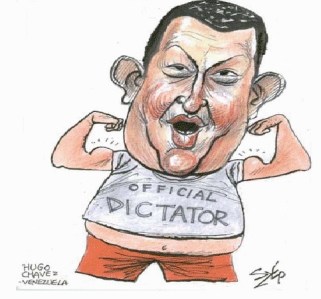
IACHR report on Venezuela: And you really thought Venezuela was a democracy?

February 24, 2010

Since the report is long, I wanted to summarize the highlights from the Interamerican Commission on Human Rights report on Democracy and Human Rights in Venezuela. Despite the Venezuelan Government’s refusal to allow a visit since 2002, the Commission felt it could still analyze the Venezuelan situation in order to comply with its mandate.

Here are some highlights, for those that still want to believe or defend that Venezuela is a democarcy:

  • The Commission also finds that in Venezuela, not all persons are ensured full enjoyment of their rights irrespective of the positions they hold vis-à-vis the government’s policies.
  • The Commission also finds that the State’s punitive power is being used to intimidate or punish people on account of their political opinions.
  • The Commission’s report establishes that Venezuela lacks the conditions necessary for human rights defenders and journalists to carry out their work freely.
  • The IACHR also detects the existence of a pattern of impunity in cases of violence, which particularly affects media workers, human rights defenders, trade unionists, participants in public demonstrations, people held in custody, campesinos (small-scale and subsistence farmers), indigenous peoples, and women.
  • The IACHR’s report indicates that mechanisms have been created in Venezuela that restrict the possibilities of candidates opposed to the government for securing access to power. That has taken place through administrative resolutions of the Office of the Comptroller General of the Republic, whereby 260 individuals, mostly opposed to the government, were disqualified from standing for election. The Commission notes that these disqualifications from holding public office were not the result of criminal convictions and were ordered in the absence of prior proceedings, in contravention of the American Convention’s standards.
  • The Commission also notes how the State has taken action to limit some powers of popularly‐elected authorities in order to reduce the scope of public functions in the hands of members of the opposition.
  • The IACHR also notes a troubling trend of punishments, intimidation, and attacks on individuals in reprisal for expressing their dissent with official policy.
  • The Commission notes a trend toward the use of criminal charges to punish people exercising their right to demonstrate or protest against government policies.
  • The IACHR considers that the right to demonstrate in Venezuela is being restricted through the imposition of sanctions contained in provisions enacted by President Chávez’s government. The Commission describes cases of people facing criminal charges for which they could be sentenced to prison terms of over twenty years in connection with their participation in antigovernment demonstrations. In the Commission’s view, this practice constitutes a restriction of the rights of assembly and freedom of expression guaranteed in the American Convention, the free exercise of which is necessary for the correct functioning of a democratic system that includes all sectors of society.
  • The rules for the appointment, removal, and suspension of justices set out in the Organic Law of the Supreme Court of Justice lack the safeguards necessary to prevent other branches of government from undermining the Supreme Court’s independence and to keep narrow or temporary majorities from determining its composition.
  • Since judges are not appointed through public competitions, judges and prosecutors are freely appointed and removable, which seriously affects their independence in making decisions.
  • The Commission also describes how large numbers of judges have been removed or their appointments voided without the applicable administrative proceedings.
  • The numerous violent acts of intimidation carried out by private groups against journalists and media outlets, together with the discrediting declarations made by high‐ranking public officials against the media and journalists on account of their editorial lines and the systematic opening of administrative proceedings based on legal provisions that allow a high level of discretion in their application and enable drastic sanctions to be imposed, along with other elements, make for a climate of restriction that hampers the free exercise of freedom of expression as a prerequisite for a vigorous democracy based on pluralism and public debate.
  • The Commission observes with particular concern that there have been very serious violations of the rights to life and humane treatment in Venezuela as a result of the victims’ exercise of free expression.
  • The IACHR notes that recent months have seen an increase in administrative proceedings sanctioning media that criticize the government.
  • The Commission has also verified the existence of cases of prior censorship as a prototype of extreme and radical violations of freedom of expression in Venezuela.
  • The report also analyzes the impact on the right of free expression of the proceedings initiated in July 2009 toward the possible cancellation of 240 radio stations’ broadcasting concessions, and of the decision to order 32 stations to cease transmissions.
  • The Commission calls the attention of the Venezuelan State to the incompatibility between the current legal framework governing freedom of expression and its obligations under the American Convention.
  • The Commission also stresses that the offenses of desacato (disrespect) and viipendio (contempt) contained in the amendments to the Penal Code in force since 2005 are incompatible with the American Convention in that they restrict the possibilities of free, open, plural, and uninhibited discussion on matters of public importance.
  • The Commission also deals with the major obstacles faced by human rights defenders in their work in Venezuela. It also notes with concern that witnesses and relatives of the victims of human rights violations are frequently targeted by threats, harassment, and intimidation for denouncing violations.
  • The IACHR also finds that inadequate access to public information has hindered the work of defending human rights in Venezuela.
  • One of the issues relating to human rights in Venezuela of gravest concern to the Inter‐American Commission is that of public insecurity.
  • The IACHR’s report identifies certain provisions in the Venezuelan legal framework that are incompatible with a democratic approach to the defense and security of the State.
  • During 2008, the Ombudsman’s Office recorded a total of 134 complaints involving arbitrary killings arising from the alleged actions of officers from different state security agencies. It also recorded a total of 2,197 complaints related to violations of humane treatment by state security officials. In addition, it reports receiving 87 allegations of torture and claims it is following up on 33 cases of alleged forced disappearances reported during 2008 and 34 reported during 2007.
  • Homicides, kidnappings, contract killings, and rural violence are the phenomena that most frequently affect the security of Venezuela’s citizens.
  • Information made available to the Commission indicates that in 2008, there were a total of 13,780 homicides in Venezuela, which averages out to 1,148 murders a month and 38 every day. The victims of these killings include an alarming number of children and adolescents.
  • The Commission’s report also notes with extreme concern that in Venezuela, violent groups such as the Movimiento Tupamaro, Colectivo La Piedrita, Colectivo Alexis Vive, Unidad Popular Venezolana, and Grupo Carapaica are perpetrating acts of violence with the involvement or acquiescence of state agents.
  • The Commission also continues with its observations on the alarmingly violent conditions within Venezuelan prisons.
  • The laws and policies pursued by the State have not been effective in guaranteeing the rights of women, particularly their right to a life free of violence.
  • The Commission notes in its report that impunity is a common characteristic that equally affects cases of reprisals against dissent, attacks on human rights defenders and on journalists, excessive use of force in response to peaceful protests, abuses of state force, common and organized crime, violence in prisons, violence against women, and other serious human rights violations.
  • On the other hand, in this report the Commission highlights the Venezuelan State’s major achievements in the fields of economic, social, and cultural rights, through legally recognizing the enforceability of the rights to education, to health, to housing, to universal social security, and other rights, as well as by implementing policies and measures aimed at remedying the shortcomings that affect vast sectors of the Venezuelan population.
  • The IACHR notes that the Missions have succeeded in improving the poverty situation and access to education and health among the traditionally‐excluded sectors of Venezuela’s population. Nevertheless, the Commission expresses concern at certain issues relating to the Missions as an axis of the government’s social policies.
  • The Commission notes that Venezuela is still characterized by constant intervention in the functioning of its trade unions, through actions of the State that hinder the activities of union leaders and that point to political control over the organized labor movement, as well as through rules that allow government agencies to interfere in the election of union leaders.

There you have it, the IACHR demonstrates that Venezuela is no longer a functioning democracy through the neglect and intimidation of a Government that discriminates its citizens even when they are in agreement with its policies. And, despite the Dictator’s claims, most of his policies show atotal disregard for the “people” that he claims to love so much.

The Falcon and the Strongman: Henry vs. Hugo

February 23, 2010

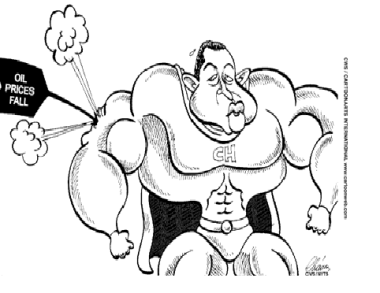
Somehow I feel like I have to make a comment about Henry Falcon even if I really don’t want to. To me Falcon’s resignation from Chavez PSUV party has little to do with the opposition and a lot to do with Chavismo. Few may not remember that when Chavez created PSUV Falcon was ready to split from Chavez and join the opposition. But at the time Falcon decided he did not have the individual strength to challenge Chavez, maybe fearing that the Comptroller could ban him from running for Governor.

But this is 2010 and Falcon, in contrast with others with little to show individually (read Diosdado) has probably decided that the Strongman has weakened and it is time to throw his independent gauntlet into the fire.

Which in the end has little to do with the opposition, not because the opposition may not embrace him, but because he probably does not see himself in that role, it is one thing to run for Governor of Lara as a candidate for both the opposition and the left, it is another to see himself as the candidate for a post-Chavismo era of the progressive forces that may join him in this effort.

Personally, I find Falcon to be infinitely better than what we have, but he is still a populist left wing politician that in my mind will not take Venezuela in the direction I want it to go. However, he would seems to be a democrat, has respect for human rights and believes that all sectors of society have to talk to each other. To me, that may not be enough to vote for him, but certainly enough to shut down this blog if he became President.

That a politician of Falcon’s rank dares to take this step is a very significant departure for Venezuelan politics, over what we have seen in the last few years. Falcon is still hedging his bets against the strongman by staying in PPT’s ranks, as irrelevant a party on the left as there may be in Venezuela today. He would have been better off joining Podemos, except maybe Chavez’ ire may have been magnified a few orders of magnitude. But Falcon’s departure is certainly to rattle Hugo in his labyrinth, accustomed to have nobody oppose him.

The attacks on Falcon have begun, he has already been called “right wing” by Tarek William Saab, a stupid remark if I ever heard one. But Chavismo is accustomed to fight the “other” side and these bouts will take the Dictator’s time and energy and will rattle many who sympathize with Falcon within Chavismo.

These are cracks, which are no longer tiny, like when Podemos split with the Government, but are becoming significant as the economy deteriorates and Chavez’ popularity drops.

In the end, this is not about the opposition, it is about Chavismo having more discussions, more democracy and that can’t be all bad.

Whether Chavez intends to fight Falcon or not is yet to be seen, the next few days will tell us whether Falcon has become a pariah or whether Chavez will reach out to him and PPT in the knowledge that he may be needed in 2012 to preserve Chavismo in power.

The far reach of Chavista incompetence in financial matters touches Uruguay

February 22, 2010

The ability of Chavismo to waste money due to sheer incompetence and idiotic idealism is simply remarkable. Not content with wasting money in nationalizing companies that now give losses, or wasting money in nationalizing banks in Venezuela, the latest failure of Chavista management reaches now Uruguay and unfortunately, those responsible for this silly investment remain today in positions of power in the Government’s financial system.

The story begins in 2006 when Uruguayan coop bank Cofac went under and Venezuela’s development bank Bandes decided to take over the institution which had about 35 branches and some 120,000 depositors. You may wonder what Venezuela is doing helping a country with a higher GDP per capita than Venezuela and little poverty, but that is one of the mysteries of Chavismo, the ability to waste money abroad when people suffer at home, but I digress.

So, some genius at Bandes (more on whom later) decided to save this coop bank in Uruguay, rather than use the money here. It was a time of higher (relative) oil prices and Chavismo spreading around Latin America and the world. Bandes financed the institution, taking over all of its workers and assuming all deposits. Bandes Venezuela created Bandes Uruguay to help small industries in that country in a bank with “solidarity” at the core of its basic concept.

Except that four years later Chavista management, the same one that lost Banco Industrial’s capital three times in eleven years managed (surprise, surprise!) to lose in 2009 alone US$ 22.5 million while the banks’ capital is US$ 30 million. The bank also lost money in 2007 and 2008, what did you expect?

By now, Uruguayan authorities are talking, once again, about Venezuela capitalizing the bank (The alternative is bankruptcy). Of course, it does not look like the bank will do well in the future anyway.

And who, you may wonder, was the man (military, of course!) at Bandes that decided on this strategy of helping Uruguay with this investment? None other that Captain Hernandez Behrens, then President of Bandes and who has been Superintendent of Banks for almost two years presiding over the demise of eleven banks. Moreover, reportedly Chavez decided to eat his financial bolibourgeois class to save Hernandez Behren’ behind.

Maybe it wasn’t worth it…

Cuban doctors sue Venezuela and Cuba for “modern slavery”

February 22, 2010

Seven Cuban Doctors and a nurse sued Cuba, Venezuela and PDVSA in a US Court for conspiring to force them to work as “modern slaves” as payment for the oil that the Venezuelan Government provides that country.

Those being sued “willfully and arbitrarily” placed these medical doctors and the nurse under “conditions of servilism for debt” turning them into economic slaves and converting them into political promoters according to the suit.

The suit allegs that they travelled to Venezuela under false pretenses and threats and were forced to work without time limits in Chávez’ Barrio Adentro program. The suit alleges that “free and innocent people ” were placed under contidions of forced labor, captivity and as servants in exchaneg for payment of the country’s debt.  The suit also accuses the Venezuelan Government of persecuting, threatening and forcing the doctors to return to Cuba, blocking them from moving to other countries. They also said they practiced medicine illgeally in Venezuela in violation of the country’s laws (Sovereignty anyone?)

Another wonderful tale of the robolution, including PDVSA, Hugo “who cares so much for the people” Chávez and the bearded devil from Cuba.

(Note: The article notes that there is a precedent of Cuban citizens forced to work for a company to pay Cuba’s debt, who were awarded US$ 80 million)

OAS and Peanuts join forces against Chavez

February 20, 2010

Lying “Niño” by Teodoro Petkoff

February 18, 2010

(Still on vacation, so I translated Petkoff’s editorial on Tal Cual for your enjoyment, in case you missed it)

If we were to follow what Chacumbele says, we would say that “El Niño” has it in for us. If not, how do you explain that in all South American countries on the Pacific there are no blackouts  and here we have them all the time?  According to our eminent conductor, these are the evils of the little kid. It’s very strange, because Colombia, for example, which receives its full impact, is offering to sell electricity to us and some years ago, we used to sell to Colombia, which has caught up with us. “The  Niño”, go figure out why they have christened in such a tender way a natural phenomenon that behaves so badly, is a cold current flowing from the Antarctic to the north, all along the Pacific coast and that when it gets into warmer waters causes serious climate disruption. Since El Niño is on the loose, all over South America  anomalous natural phenomena are occurring of an intensity greater than ever before.

Catastrophic floods and brutal droughts alternate, even in neighboring countries.

But something does not fit in the  Chacumbele’s alibi . In fact, struck by the fact that none of the countries directly affected by El Niño, there is an electricity crisis and we have one here. The explanation can not be, then, the one  Chacumbele is trying to sell us so hard.

That the summer is being particularly harsh and that drought is strongly punishing the headwaters of major rivers Guyana, nobody can deny.

But why, if in 2001 the summer drought was worse than this time and the water level dropped to the fatal Guri 240 meters above sea level, there were no power shortages? It is obvious then that the national electricity system had an installed capacity of generating electricity  that allowed him to compensate for the reduced flow of electricity from Guri. The country was living off  of what previous governments had left him.
Chacumbele also argues, in a mixture of his proverbial lies with truths, that demand has grown and that supply  is not enough.

Columbus (Translator Note: Venezuelan expression for obvious). But did the illuminated foreman stopped to consider the fact that all neighboring countries  also had increased demand and yet the offer is sufficient? He scored on his own goal post without shoes on.

In neighboring countries, where El Niño strikes with more fury than here and where demand has also been growing, governments took care of making the necessary investments to increase electricity generation to the beat of that same growth.

Is it so hard to understand this? Here, simply, “El Niño” who governs us, as destructive as his namesake, did not do his homework and flunked. The funniest thing that has happened recently in this field is that the “tough guy” Jaua rejected the Colombian supply of electrical power, as if it were an insult. We have next to us a country that can provide some kilowatts and the government refuse it,  but he brings some Cuban technicians who are on the subject of electric power is in the Stone Age, to advise us. Worse than a bad government is a bad one that is stubborn and stubborn and which, on top of it, claims to be socialist.

New York Times: The rise and fall of Venezuela’s financial bolibourgeois elite

February 17, 2010

I am still on vacation, not in touch, so I thought I would publish the New York Times overview of how Chavez allowed the rise and fall of the financial bolibourgeois to suit his purposes, demonstrating once again that this robolution is anything but about the “people”

Purging Loyalists, Chávez Tightens His Inner Circle

By SIMON ROMERO
Published: February 16, 2010

Being one of Venezuela’s richest and most influential men, Mr. Fernández, 44, went to the headquarters of the Disip intelligence police to clear up the matter directly with the agency’s powerful spymaster.

Then a surprising thing happened, especially in a nation that had grown accustomed to the unfettered activities of pro-Chávez tycoons like Mr. Fernández. The self-described socialist revolution of Mr. Chávez notwithstanding, the prominence of these moguls was so well known it inspired a nickname — the Boligarchs — for their fast accumulation of wealth and their ties to the government, which reveres Simón Bolívar, the 19th-century aristocrat who won Venezuela’s freedom from Spain.

But instead of dismissing the matter, the intelligence chief imprisoned Mr. Fernández last year and ordered agents to start detaining other pro-Chávez magnates. Some slipped into hiding abroad and are still being sought. Several others and their associates were arrested and put in cells adjacent to Mr. Fernández’s.

The purge has revealed a power struggle at the highest levels of government, leading to the fall of some of Mr. Chávez’s military comrades and reports of secret dossiers on businessmen compiled here by intelligence agents from Cuba, Venezuela’s top ally.

At a time when Mr. Chávez struggles with public ire over electricity shortages and an economy in recession, the arrests show his ability to nimbly consolidate power while crisis swirls around him. To do so, Mr. Chávez is using tactics like secret-police raids and expropriations of some of his most powerful supporters’ businesses, relying on a dwindling number of military loyalists to carry out his orders.

“We are witnessing the battle between competing mafias who prospered at Chávez’s heel,” said Ismael García, a leftist legislator who broke with the president in 2007. “Chávez still has the cynicism to camouflage his rule in socialist rhetoric, but anyone with a brain sees that his loyalists are in it for just two things: the power and the money.”

Some bankers here apparently acquired too much of both. The rise of a shadowy group of pro-government tycoons had for years been an embarrassment to Mr. Chávez as he was promoting anti-capitalist values. Included in the Bolibourgeoisie (another name for the so-called Bolivarian moneyed class) were men like Arné Chacón, a former navy lieutenant who took part in Mr. Chávez’s failed 1992 coup attempt.

In newspaper photographs back then, Mr. Chacón, like Mr. Chávez, looked like a skinny idealist. But Mr. Chacón amassed a banking fortune, appearing in newspaper photographs here with more girth and a selection of the more than 40 purebred racehorses he owned.

Now Arné Chacón is just another jailed magnate, joining Mr. Fernández and eight other imprisoned bankers and state regulators as investigations into their activities slowly advance. Mr. Chávez himself announced that officials had seized Mr. Chacón’s properties, including his prized horses. The justification for the imprisonment of Mr. Chacón and other tycoons involved accusations of irregularities in bank acquisitions.

Reports by nongovernmental outlets here point to other motives for the crackdown. Teodoro Petkoff Malec, a former Marxist guerrilla and one of Venezuela’s leading intellectuals who now edits Tal Cual, a left-wing opposition newspaper, reported that a dossier prepared by Cuba’s intelligence service might have crystallized the purge.

The intelligence report, Mr. Petkoff said, was delivered to Mr. Chávez by yet another former military officer, Ronald Blanco, now Venezuela’s ambassador in Cuba; he passed it along as a form of retaliation after Mr. Fernández tried to have Mr. Blanco’s brother-in-law ousted from his post as the government’s superintendent of banks, Mr. Petkoff reported.

Mr. Chávez’s government has remained silent about the existence of a Cuban dossier. The president’s information minister, Blanca Eekhout, did not respond to requests for an interview.

But Mr. Chávez has clearly continued the purge, issuing warrants through Interpol for at least nine bankers thought to have fled Venezuela, and seizing 11 of their financial institutions to fold them into a new state banking company under his control. The fallout from the purge continued this month, when Mr. Chávez named a former army captain who took part in his 1992 coup attempt to oversee the seized banks.

Mr. Chávez is also relying more on his Cuban allies to address other issues. This month, he brought in Ramiro Valdés, Cuba’s 77-year-old vice president and a founder of its Soviet-inspired state intelligence apparatus in the 1960s, to advise him on the electricity shortages, an appointment that has further angered Mr. Chávez’s critics here.

None of the fallen Boligarchs have gripped the public fascination here like Mr. Fernández, who was arrested at the start of the purge. “Fernández Barrueco made the fundamental mistake of believing he was powerful,” said Juan Carlos Zapata, an investigate journalist who is writing a book on the Boligarchs. “By taking him out, Chávez sent a message to anyone who aspires to power in Venezuela.”

Mr. Fernández rose from obscurity to put together a web of 270 companies in industries as diverse as tuna-fishing and banking, amassing a fortune of about $1.6 billion by 2005, according to study by the Caracas affiliate of the KPMG accounting firm. He thrived in rural Venezuela, where Mr. Chávez’s dominance goes largely unchallenged, acquiring an interest in a pro-government newspaper in Barinas, a state that is a Chávez family bastion.

Still, Mr. Fernández remained an enigma as his wealth increased. Today, he resides in a military intelligence holding cell.

Other resignations in January from within Mr. Chávez’s ruling cadre followed the bankers’ arrests. Vice President Ramón Carrizalez and Eugenio Vásquez, the minister of public banking, left the government. It remains unclear whether their exit was related to the earlier purge.

Those who remain in Mr. Chávez’s good graces provide a glimpse into the president’s priorities. They include former military officers like Diosdado Cabello, who as chief communications regulator engineered the removal last month of RCTV, a television network critical of Mr. Chávez, from cable channels.

As for those swept out by the purge, Mr. Chávez has made few apologies. “I’m not a judge,” he said on national television referring to the arrest of the magnate, Mr. Fernández. “But I have enough evidence to say that he’s a criminal.”

Silly things I heard recently that matter to Venezuela

February 15, 2010

(Eleven years screwing it up)

–Colombia offers to sell electricty to Venezuela

I guess El Niño only goes up to the border between the two countries.

–There are 60,000 Cubans helping Venezuela out from Ramirito Valdes down.

Whatever happened to sovereignty? Wasn’t the robolution about that?

–Ecoanalitica says the purchasing power of salaries will drop 12% in 2010 after dropping 6.2% in 2009

Imagine those that don’t have salaries!

–And to the consternation of Chavista fanatics, their idol Minister of Commerce Eduardo Saman was removed from his position.

It is not known if this was because Chavez read my blog and realized that Saman never worked at the Arepera Socialista , as promised, or that after all of the noise with Zuluaga’s Toyotas, a case could not be built on any violations. Of course, he may have been caught stealing, but we never know about those.

–Edelca workers prayed for rain and for the Guri dam.

It’s a test of faith and wills, you know what the opposition has been praying for years. So far, neither has results.

–28 airplanes used for drug smuggling were “found” in San Juan de Los Morros in a hangar.

That is why we feel protected, when such stealth and small objects used in drug trafficking are found by the authorities.

Thinking about what happened with Globovision…

February 14, 2010

PDVSA finds only two partners for three projects in the Orinoco Oil belt

February 14, 2010

While President Chavez and the President of PDVSA tried putting on a cheerful face, the truth was that the sale of the Carabobo oil field projects did not go as well as planned. After a year and half of delays due to the refusal by the Chavez Government to make the terms comparable to international ones, some of them were relaxed, but the refusal by the Government to allow international arbitration in the end was costly. While Chavez had said that there were bids for all three projects, the truth was that one of the consortia had bid for two projects with the condition that it only wanted one. Thus, after 19 oil companies registered to bid in 2008, only two of the projects were assigned in the first new oil project in almost 12 years to be started in Venezuela. In some sense that’s progress, but it still is bad execution, as usual.

Thus, Carabobo 1 was won by a consortium led by India’s INGC, Repsol, Petronas and two other Indian companies, while Carabobo 3 was won by the consortium led by the Empire’s Chevron, Mitsubishi, Inpex and Venezuela’s Suelopetrol. Chavez Russian and Chinese buddies did not bid and Italy’s ENI which had suggested it would also bid for Carabobo after it got a Junin block, did not bid either.

People should not read too much into Chevron winning a field, it is not a gesture towards the US or any such thing, simply put if Chevron was not assigned the field, only one out of the three projects would have been assigned and the process would have been considered a gigantic failure. Carabobo is supposed to be the prime real state of the Orinoco Heavy oil belt. If only three of the projects could be sold, it just would not look good at all, after Chavez’ Chinese and Russian buddies did not particiapte. (Yes, they will have chunks of Junin, but Carabobo is supposed to be much better)

The two projects assigned yesterday, will produce 200,000 of blended heavy crude with light crude by 2012 and an additional 200,000 after the upgrader is built to process heavy crude and turn it into lighter (still fairly heavy) oil. The upgraders are unlikely to be ready before 2017.

The conditions were eased somewhat. The Royalty was reduced to 20% from 30%, a signing bonus spread out in time had to be paid (Which turned out to be US$ 1.05 billion for Carabobo 1 and US$ 500 million for Carabobo 2). In addition, the company winning the “right” to own 40% of the project will have to provide at least US$ 1 billion in financing for PDVSA’s share of the project. An additional condition that was relaxed was that the contract allows for international arbitration on the financing conditions of the projects. PDVSA ahs also promised that the windfall oil tax will not be applied to these projects, but the Assembly has not acted on it.

The question is how all of this would be financed. PDVSA can not issued debt to finance its end, it will simply be too expensive, as PDVSA bonds currently yield to maturity around 14-16%. PDVSA owns 60% of all projects and between Caraabobo and Junin it will have to come up with nearly US$ 20 billion for its end of the projects in the first five years. The partners, who will be able to include the oil as part of their reserves (so much for sovereignty again) can not pledge them for financing. Thus, the only viable option seems to be that the projects will issue debt guaranteed initially by the partners until oil production begin. Thus, they will look more and more like the old oil partnerships of old.

Thus with a year and a half delay and 66% success rate, the Carabobo field was finally assigned. Contracts will be signed in March and infrastructure work will begin by the end of the year. Hope it happens.