As The Prison Crisis Worsens, Chavez’ Government Creates Yet Another Ministry

June 15, 2011

No problem shows more the incapacity and indolence of the Chavez administration as the prison problem. The number of prisoners has almost doubled since Chavez took over, as homicides have tripled in the country. But beyond the sheer numbers there is an incredible inhuman tragedy taking place in Venezuela these days and the Government “of the people” has been unable to deal with it.

Despite what you have read in the New York Times a week and a half ago, Venezuelan jails are a far cry from being the Country Club that the Margarita prison is. Most jails are sub-human boxes where prisoners live under conditions that should not be available on the planet. Even animals would live badly like that. Most prisoners are armed, not with knives and sharp objects, but with weapons ranging from pistols to machine guns. There are daily gang fights and within the prisons, the law is enforced by the prisoners and not the jailers.

Prisons are over crowded, very few new ones have been built since Chavez took over. Sanitary conditions are atrocious and food, as you can imagine is not meant for humans. Most prisoners eat what their relatives bring them.

In his never ending shuffle of Ministers of the Interior and Justice  (If my count is correct, there have been eleven Ministers, with one, Jesse Chacon, repeating in the position), Chavez has announced a dozen plans to solve the prison problem, with no significant effect.

The twelfth program was announced today and it is once again proof of how clueless the Government is: The Government will create a Ministry for the Prisons Regime.

It seems as if the Government every time it faces a crisis either it passes a new Law or creates a Ministry, despite the fact that in the most salient cases: Housing and Electricity, there was no impact whatsoever from either of the two solutions. In fact, things seem to get worse as the people in charge became entangled in the complexity of setting up new institutions and absorbing or merging into it existing ones. (When Chavez got to power he reduced the number of Ministries, they have doubled since)

The newest crisis also showed the lack of concern for people’s rights on the part of the Government. There was a riot at the El Rodeo prison, rumors spread that there were nineteen people dead, but the Government would not confirm it and access to the prison was closed. As family members surrounded the prison in a vigil to await the news, the Government took hours to confirm the deaths and over a day in releasing the names of those that died, which included nine evangelical pastors that apparently tried to mediate in the conflict. (I understand they were also prisoners)

Prison conditions are infrahuman in Venezuela and little has been done to improve them since Chavez took over. Because crime has soared, conditions are worse than they ever have been and there it is a free for all within the prisons. As Venezuelans we should all feel ashamed of this. These are human beings we are talking about and they are being allowed to live and die like animals.

Note added: Now there are reports that there are 30 dead, not 19 and at least 27 bodies have reportedly been examined at the Caracas morgue.

Electric Crisis And The Chavez Government: From “Who Me?” To “It’s All Your Fault”

June 13, 2011

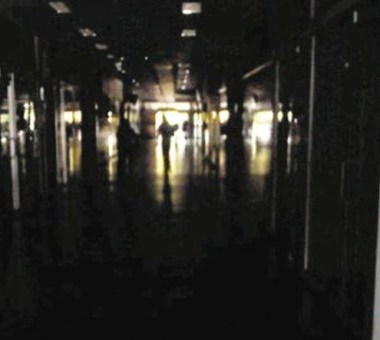
Maracaibo En La Noche last weekend and it has nothing to do with the song

The Venezuelan Government continued its attitude of not accepting responsibility for any of the problems of the country, but this time it went from the “Who me?” attitude of most problems to simply saying “It’s your fault!”, blaming the electric crisis on excess consumption and not on the inability and incapacity of the Chavez administration to tackle the problems.

The electric problem is not new. Last year the Government blamed El Niño for the crisis, but it quickly became clear that there was more to it, as it became evident that between the lack of maintenance, improvisation and bad decisions, what was a well run electrical network when Chavez took over as President, was run into the ground by the ignorant revoution. Despite this, the Government declared victory many times over the electrical crisis and blamed problems on sabotage and the weather. I still keep my time daily on announcements from Government officials and the flip-flopping continues. Clueless is the best way to describe them.

Then, after this weekend’s Zulia and neighboring states blackout, it was time to shift the blame and put it on “the people”

How irresponsible can you get?

The reality is different. The Chavez administration put a bunch of incompetent loyal military in front of the electric companies, slowly removing those that knew how to run the system and decide what to invest in and how to do it. Investment and maintenance was postponed, including that of the Guri dam that provides 70% of the electricity in the country.

But the crisis goes back to Minister Giordani deciding in 1999 to cancel five hydroelectric projects, a perfectly valid decision, but one that was not followed up by creating an alternate plan. This was followed by requesting the help from Cuban “experts” who went to a distributed system, like that of Cuba, from the interconnected one that Venezuela had (has?). They built power plants but forgot the transmission lines. Back to the 1930’s you all!

And while the Government blames consumption, which has definitely gone up, it is its actions that have created the current situation. Zulia’s consumption was not particularly high when the blackout took place last week. The five transformers that exploded did not explode because of demand. They exploded at night, when offices are closed, AC’s are off in these buildings and also many stores, it was not “peak” demand. Not even close to it.

But what can you expect from a Government that builds power plants that produces more electricity than nearby consumption but fails to build the required power lines to take power elsewhere? Or how about buying power plants for Sidor last year at the heart of Venezuela’s power consumption,  but failing to build power lines to take all of Guri’s power elsewhere?

So now the show is to make the people believe that it is not the Government’s fault. Blame the “companies” or the “big consumers”. Impose a penalty on anyone that does not reduce consumption by 10% and give discounts to those that do by more than 20%.

Funny, these are capitalistic solutions from a Government that froze rates 10 years ago, encouraging consumption and wants to give away a few million appliances to the “people” that it imported from China. As far as I know they don’t run on solar energy. Yes, making a consumer out of the last Venezuelan is a very desirable goal. But if you do it, you are going to have to generate all of the power required for them.And you better start charging for it.

But none of these connections exist in the Chavista mind. It is the giveaway that matters. The paternalistic, let’s give something for free to the masses so they vote for Hugo, the country be damned.

Let’s also screw the big corporation on the way, let’s force them to buy Diesel plants, which use … Diesel, that way we not only give gasoline away for free, but increase cheap Diesel use, so as to reduce exports at the same time. It’s called criollo Hara Kiri: Include PDVSA in the companies to be screwed. Tell it to buy all the power plants ready to be sold in the Western or Eastern world, overpay, but don’t solve the problem. Imagine the commissions in the middle!

I mean. Can these guys be this ignorant?

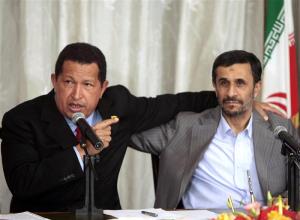
Seriously Ali (on the left, above), did you learn nothing in the guerrillas, Congress, Ministry of Foreign Relations, PDVSA, Ministry of Finance and now of Electricity?

Guess not, you also go to Cuba to get your medical treatment.


While The Government Thinks Big on Housing, It Leaves People Behind

June 13, 2011

While the Government wants to make a big electoral fuss about housing, the truth is that it can’t deal with even smaller problems, failing to solve the emergency of refugees fro last December’s floods, while spending all of the resources in a program that wil not yield results for years.

Basically, Ministers scramble to please the Venezuelan President, leaving behind and even ignoring the poor souls that lost their homes last December. Even worse, they occupy properties “temporarily” and these installations are shut down or deteriorate as the problem is not solved.

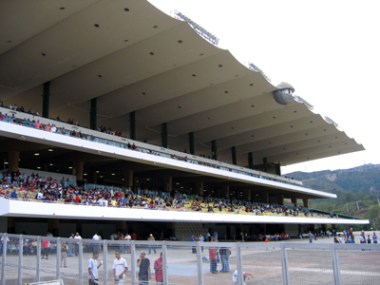
Case in point is fifty year old “Hipodromo La Rinconada”, as reported by El Nacional a while back, the Caracas horse racetrack that Chavez ordered shut down six or seven years ago. The once beautiful race track:

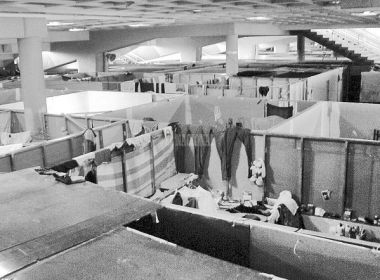
was turned into temporary housing for some 2,300 families, as you can see in the picture below:

The “homes” of the refugees are divisions made of cardboard along the hallways of the racetrack, except that the Government never even finished that part, thus residents use black garbage bags to complete the “walls” of their residences inside the race track. The residents were promised drywall, but other priorities took Government officials elsewhere.

The temporary housing violates all rules about refugees, from the type of walls and roofs, to the type of facilities, to sanitary conditions. There are flies, garbage and improvised wiring joins the units. Residents use the top of the bunk beds to store stuff. Meanwhile, the once spectacular bleachers of the racetrack are used by the people to dry their clothes, sheets and bedspreads:

while horses still tran down at the track.

It’s bizarro Venezuela at its best.


Hugo Chavez’ Health Becomes More Mysterious as he Undergoes Emergency Operation in Cuba

June 10, 2011

Tonight we get news that President Hugo Chavez underwent an emergency operation not of his knee, but of a pelvic abscess, an infection of the lowers intestine.

Nothing bizarre or unusual here. An emergency operation and the Venezuelan President was taken to Cuba of all places, just around the corner for an emergency. (Whatever happened to Barrio Adentro?)

Other than his knee problem, there has been no warning of the President having any other problems, other than his unusual silence the last couple of months. Chavez appeared to be better, went to Brazil and then all of a sudden this news. But I heard otherwise then, some debilitating disease, bone related. Pelvic problems, ummm…

Something is not being fully revealed, as I suggested a week or so ago.

Sunday June 12th.: To add to the confusion Hugo Chavez says “is not malignant”. Funny, nobody had talked about cancer or tumors. More like sepsis from the knee operation or osteomyelitis…


New Debt in 2011 to be Increased by 112% at President Chavez’ Request

June 7, 2011

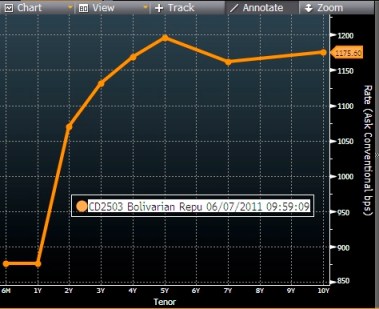
(Venezuela’s CDS curve this morning. It costs 12 % (1200 basis points) to insure against default in 5 years)

The big economic news last week in Venezuela was Chavez’ announcement that he needed another Bs. 45 billion (US$ 10.46 billion at the official rate of exchange of Bs. 4.3 per US$) in new debt this year. This amount is on top of the Bs. 40 billion (US$ 9.3 billion) in new debt contemplated originally in the 2011 budget. Thus, Chavez is asking fro an increase of “only” 112% in debt for the year.

Never mind that this is not even legal. Under the Venezuelan Budget Law, debt for the year has to be requested in December of the previous year and only in cases of emergency can it be increased. There is no emergency, other than Hugo wants to be reelected. The money is in fact earmarked for Mision Vivienda, Mision Trabajo and to pay interest in old debt. But Hugo cares little about legality, as he is above the law.

Initially, Government officials said that most of this new debt would be in local currency. However, this was later changed as the Government realized that if it was all issued locally, it would hurt local credit. So, unofficial sources say that it is likely to be half and half, with the Government issuing some US$ 5 billion in new debt abroad (plus whatever PDVSA issues in the rest of the year)

All of this happens as oil prices are still near the US$ 100 per barrel level as measured by Venezuelan oil basket last week. Go figure!

The problem is that Government officials continue to say that Venezuela can issue more debt as its debt to GDP ratio is small. This appears to reflect the assumption that Venezuela is a country with a credit rating of investment grade, which is not the case. In fact, Citibank suggests that the biggest danger now in the face of this news is that rating agencies downgrade Venezuela because of the increased debt.

Any debt issued abroad will be very expensive. In February, PDVSA had to issue bonds paying a coupon of 12.75% and credit conditions are very similar to what they were in February. Even worse, the total debt to be issued this year is close to 25% of the budget, an unheard of number in the country’s history.

The worst part is that some of this issuing will be made in order to maintain an artificially low exchange rate, which implies that it will be more expensive that it needs to be. Even worse, part of the money will be used to pay interest on all debt and most of it in discretionary Misiones, not on investment.

The rate of growth is unsustainable and Chavez is now accelerating it, either oil soars or Chavez stops this if gets reelected. PDVSA has issued US$ 9.1 billion in new debt since last August, while the Republic paid US$ 1.5 billion in the 2011 bond which matured in April. A PDVSA bond matures in July in the amount of US$ 2.4 billion. Analysts were expecting the Republic to issue at most US$ 3 billion in 2011 in foreign currency, it may now be as much as US$ 6.5 billion, but there has been no official announcement of the exact amount.

The problem is that Venezuelan bonds trade in a very specific market, which is quite limited. Since the country is below investment grade, only Emerging Market dedicated funds and hedge funds invest in the country’s and PDVSA’s debt. Since the bonds contained in the EMBI Index are about US$ 400 billion, Venezuela’s outstanding debt is a large fraction of that index, which would require that all funds overweight Venezuela. Thus, Venezuela’s debt yields a lot, not so much because of risk, but because of the excess supply in the markets. Every time a new bond comes to market, the supply increases which affects all bonds. This will only get worse in time as the country continues to issue. Thus, even at a constant rate, this would not be sustainable and certainly too expensive.

Below, Chavez’ request to the Assembly, not even one word about the justification for this new debt. It even says “the excess of oil revenues has to be distributed to the “people”, but this is not the excess, this is “extra”, it is not income, it is debt.  (double click twice to read).


Trying to do some tourism in revolutionary Venezuela

June 5, 2011

It is sort of strange that every time I come to Venezuela, I think of dozens of stories to write about, but actually write few of them, mostly because my visits are quite busy and never have the time to relax, think and write. By the time I get back “home”, other stories take precedence and the old stories are forgotten.

This week was busier than ever. At the end of it, I was going to the wedding of a friend in Margarita Island (which has a bizarre story and video in today’s New York Times) and the experience with my flights made it the trip from Hell. And I am not exaggerating. Given that tourism is such a cash cow, it is truly a pity that our flight and tourism services can be so terrible, that the beauty of Venezuela is wasted and tourism from abroad is so underdeveloped.

My adventure began two days before the trip. Having reserved my ticket for a 9PM flight to Porlamar with Aserca Airlines over three months ago, I had no worry in the world, until Aserca called…

They basically told me that they had cancelled the 9 PM flight, but I had nothing to worry about, because they had booked me in the 1 PM flight. I said this was impossible, I had to work and could not leave mid-morning to be able to catch the flight. I was willing to leave Saturday (no flights in any airline, I was told) or later on Friday (no flights on any airline either). Finally, Aserca must have bumped someone else, because they confirmed me in the 6:10 PM flight on Friday, a bit early for my taste but I could manage.

When I arrived at Maiquetia airport, the national departures terminal was its usual chaos. Having no luggage, I managed to find a counter that had no line and checked in efficiently. Nothing went right after that.

At about the appointed time, we went to Gate 1, where the flight was supposed to leave from and the monitor said Maracaibo. This suggested something was amiss and an agent quickly told us to go to Gate 3, where our flight was scheduled to depart from. And indeed the Monitor in gate 3 had our flight number and departure time. About a half hour before the fight was scheduled to depart, a plane arrived at the gate full of passengers that disembarked. It was looking good. We could even be on time. Imagine!

Except that about 6:20 PM, ten minutes “late” an agent stood and said: “please stay seated, we will soon board the flight to Puerto Ordaz, which was not our destination. I went up to the agent and she told me, as if I was stupid, that the Porlamar flight was leaving from gate 5, telling me in a very harsh and inpolite tone: “I made the change myself!”

Well, I certainly don’t read minds and Gate 3 still had our flight information on it!

So, since it was ten minutes after departure, I grabbed my boarding pass with Seat 27A stamped on it and ran for Gate 5.

This gate was more organized chaos than anything before. There were many lines (The gate has multiple doors) but none of the monitors said Porlamar. But we quickly determined that the door that said “Las Piedras” was the correct one.

We then stood there for quiet a while and were soon joined by a group of Germans. No idea how they determined this was the right gate. A Spanish lady said something like: “It is really like Hell traveling in Venezuela”

I could not argue with her.

About 7:15 PM, an agent stood in front of the Las Piedras sign and said “This way to Porlamar”. The line, which was quite uniform up to that point, dissolved into a crowd, as the Germans behind me ended up in front of half the people in no time.

We all went thru the door where a bus was waiting for us. It filled before I boarded it and there was no one around to tell us that another bus with the lights out was for us. Someone went back to find out and we boarded.

As we were boarding, the stewardess told everyone: “Free sitting after Row 2″.

I never figured out if there was a Row 1, but wondered what the Germans, used to order, thought about seat assignments that later became free seating. Or if they understood it at all…I still don’t get it.

Finally we all sat down and after like half an hour took off. They served some refreshments, I ordered a Coke, got a 7 Up, what else could you expect by then? The guy behind me was worse, the stewardess said did you order Seven Up? He said, no, I ordered water. She just handed over the glass and said: ” Why don’t you try it and tell me what it is..”

Great Service!

We finally landed over two hours late in Margarita, as determined visually through the window, but not via the loudspeakers, where the announcement was made that we had just landed at the “Aeropuerto Internacional Simon Bolivar de Maiquetia” which serves Caracas.

It was never corrected…

The way back was almost as bad. Fortunately, I showed up early and was told the flight had at least two hours of delay, but rumors were saying that it had been cancelled. My prize for arriving early was that me and eighteen other passenger were sent over to a different airline, Rutaca, which had empty spaces. The attitude at Rutaca seemed different, because the luggage of the Aserca-transferred passengers was not there, they almost left us, because the flight “could not leave late and it was already the time to leave”. Fortunately, they let us on and we were on our way to Caracas, a short 35 minute flight…

Just as we saw Maiquetia half an hour later, the pilot announces that we will go in a holding patter for about ten minutes as there is a “Presidential protocol ceremony” taking place at the airport. We held the holding pattern for about 40 minutes, more than doubling the flight time.

Thus, even Chavez got into my story, which had been written before I landed. For once, neither his Government nor himself was going to appear in this story, a true rarity, but found a way to do so…

(The only good part was that the wedding Saturday was great and when we checked into the Hotel Friday late we called Restaurant Mondeque run by my friend Sumito Estevez, the second seating that night was at 9:30 PM and we had a wonderful, all fish and seafood creative meal and the bride even came over to say hello to us)

Note added: A week after my post Aserca ground agents have fight with passengers at 2 AM after hours of delays of a Caracas-Maturin flight.


New Scientific Paper: Meniscus-Induced Verbal Constipation With Totally Silenced Venezuelan Media

May 29, 2011

For two to three weeks, the most loquacious President in the planet has been silent. But for his daily 140 character message in the novel medium called Twitter, whose authorship can not even be confirmed, there has been total silence from the All Mighty, even when given a brilliant chance to blast the big, bad enemy.

The cause of all this? The big guy has a knee ailment…

Yeap, sure, as the diagram above shows the brain is connected to the knee.

By the arrow…

But nobody says anything. The press is quiet. Muzzled, Fearful. TV? Not even you know who mentions it. We don’t seem to have the right to know. It appears we could go until January 2013 without seeing the guy and reading tweets from him explaining how bad that pain is. So bad, that he can’t even sit on a chair in front of a desk, like he usually does any way, to let his mouth go.

Sure…

Haven’t found the direct connection between meniscus and mouth, but I probably don’t understand medical terms sufficiently well.

But the pantomime goes on. Somebody must be running the country (Maybe not…), but in the era of transparency and openness, nobody asks who it is, nobody asks why and all we get are silly explanations.

Yeah, sure, knee problems cause verbal incontinence. A new ailment for science journals. maybe I should publish it.

Only in the revolution can this happen and we are so gullible and repressed, nobody even argues it.


The Perverse Gasoline Subsidy in Petrostates

May 27, 2011

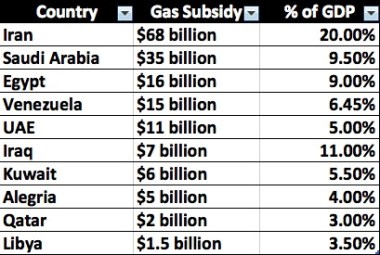
A reader was kind enough to send me this table he found on the size of the largest  gasoline  subsidies in the world by monetary value and its respective correspondence as a percentage of GDP.  As you can see oil is indeed the Devil Excrement in oil producing countries, as this subsidy always ends up being one to the rich, who are the ones that own cars and benefit the most from it. And who pays? The poor of course!

(Source IEA World Energy Outlook)

The subsidy in Venezuela is actually larger than the IEA estimates shown above. To begin with, these number come from official statistics on gasoline consumption by PDVSA and the Government which are really low compared to what gasoline consumption truly is, but that is a small correction on the scale of things. (Economist Angel Garcia Banchs estimates it to be US$ 19.9 billion or 8.5% of Venezuela’s GDP)

Of course, in Venezuela, much like what has happened in Iran, this subsidy has a compounding effect, as people use gasoline more and more, because it is so cheap and oil production is going down simultaneusly, so that you get hit twice, as more of the lower production has to be used internally.

What is amazing is that while nothing is done to remedy this problem by eliminating or reducing this perverse subsidy, other subsidies which are likely to be fairer (and even guaranteed by the Constitution) are eliminated or reduced, as the price of the subway is increased and tuition is no longer free “retroactively” at the Bolivarian University.

It is indeed the Devil Excrement at work in all of these Petrostates…


Chavez shakes up PDVSA’s Board

May 26, 2011

In a surprise move, President Chavez shook up the Board of Venezuela’s oil company PDVSA. Chavez removed half of the Board, including many long time members during Chavez. But the name that jumps out the most is that of PDVSA’s CFO Eudomario Carruyo, who was responsible for the Pension Funds that invested close to half a billion dollar in a fund that turned out to be a Ponzi scheme and was managed by a former consultant to PDVSA. Carruyo washed his hands in the matter and the company President said he will replace the missing funds.

Others removed from the Board were the internal Director for Production Luis Pulido, the Head of the Gas Division Carlos Vallejo, Planning Director Fadi Kabboul and Research Director Hercilio Rivas. Pulido and Kabboul had also been involved in scandals in the past, including the rotten food scandal, but appeared to be untouchable.The new internal members are Victor Aular, Jesus Luongo, Orlando Chacin, Ower Manrique and Willis Rangel (from the union)

Curiously, Gral. Aref Richany, President of the Government’s weapons manufacturer CAVIM, which was also included in the sanctions by the US State Department, was also removed from the Board. As I have suggested, the CAVIM sanction was a message to the Venezuelan Government and it was clearly understood.

As external members Chavez named Foreign Minister Nicolas Maduro and Planning and Finance Minister Jorge Giordani. This indicates that Giordani continues to have the ear of the President and he is likely to impose more control over the oil company’s finances and debt issuing now that he is on the Board.


US Government Sends Warning To Venezuelan Government

May 24, 2011

The sanctions announced today by the US Government against Venezuela’s oil company PDVSA and lesser known arms manufacturers CAVIM, represent a clear message of warning to the Venezuelan Government to watch the line they step over with Iran and other terrorist Nations.

The US had already sent a warning over PDVSA’s shipments on two tankers of a catalytic product used in the production of gasoline earlier this year.  However, the President of PDVSA said in February that it had not made such shipment. It is less clear in what way CAVIM violated the US sanctions against Iran, we just note that the President off CAVIM happens to be a Director of PDVSAand in my interpretation, including CAVIM might have an implied message of warning in itself.

That this is a warning can be seen by the weak sanctions, as PDVSA will not be able to:

“compete for U.S. government procurement contracts, secure financing from the Export-Import Bank of the United States, and obtain U.S. export licenses”

Moreover, PDVSA’s affiliates (read CITGO, based in the US) will not be subject to the sanctions. Of the sanctions in itself only the last one may be of consequence as it will likely get tougher to obtain export licenses to Venezuela of sophisticated technology unless the exporter/importer can show that PDVSA will not have access to it.

The sanctions imposed are really mild. Under US law, the Secretary of State had to impose at least three sanctions from the nine possible ones (see Setty’s post). People who took part in the conference call and others I talked to today, indicate the three were chosen such that would not block oil trading between the two countries. The ban on import licenses applies to future ones, not past ones, it may be bad for PDVSA long term, but basically irrelevant at this time. PDVSA does not have any contracts with the US Government and Citgo is exempt from the sanctions. Venezuela has had no access to Ex-Im bank financing for a few years.

What is clear from the sanctions and various conversations with people in DC, is that this mild application of the sanctions is a warning and that were PDVSA to once again collaborate with Iran in violation of the sanctions, the US Government would take a much tougher stance.

So far Venezuela’s response has been mixed. There was the usual rhetoric, “imperialistc”, “Illegal”, “no fear from more”, but no threat to stop shipping oil to the US (so much for the revolution that needs capitalism to function). PDVSA “officials” told Reuters that this was done by the Obama administration to appease Senate critics.

Surprisingly, Chavez did not speak, either by premeditation or because that morphine for the pain in his knee is really taking a toll.

Perhaps the main impact of the sanctions will be on the Government’s finances. Both PDVSA and the Government have been issuing bonds mostly to create the supply for the Central Bank’s SITME system, the only legal mechanism (other than the Central Bank) to move money in and out of the country. In January, for example, PDVSA reopened the 2017, 8.5% coupon bond to pay the Central Bank US$ 1.9 billion (Or was it US$ 2 billion? Or was it US$ 2.4 billion?) which the bank has been selling via SITME. Similarly, in February it sold US$ 3 billion of a PDVSA issue, of which US$ 1 billion was kept by the Government.

The problem is that these bonds were sold at Bs. 4.3 per US$, which means that if they are sold through the SITME, the price of the bond needs to be above 81% for these institutions to break even. With the news today, PDVSA’s and Venezuela’s bond fell and the PDVSA 2022 closed below 80%, increasing possible losses if they began selling it in the SITME system. We suspect these bonds will be under pressure for a while with the news.

The next few days are important, after the initial rhetoric settles down, Chavez is likely to forget the topic. All he wants and needs is to be reelected, Iran may be an ally, but is not worth the sacrifice.

Stay tuned!!!