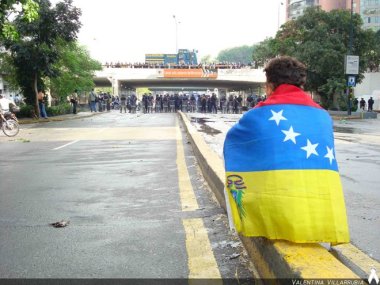
From Spain’s El Pais: It is a crime to protest in Venezuela
Protesting in the streets of Venezuela is, from now on, synonymous with crime. The Venezuelan Attorney General Luisa Ortega, has announced it will open proceedings against all those citizens who “protest for any reason” and that in hher opinion, only seek to “destabilize the constitutionally elected Government. “I wish that those who rise up in hostility against the constituted Government , should know what are now consequences,” Ortega said, while she moderated her owm radio program “in line with the Public Ministry”, which airs every Friday at a state broadcaster . Her opinion is that (these) behaviors fit perfectly into the crime of civil rebellion “that under Venezuelan law is punishable by 12 to 24 years in prison.
The aim is to establish that marches are civil rebellion
AIn early July, also through her program, Luisa Ortega also proposed that Parliament approve a controversial “crimes against media law” to punish the media for disseminating information that “incited hatred” or generated “anxiety” among the population.
The first “rebels” at the discretion of the prosecutor, are already behind bars. The prefect of the city and 11 workers from the office of Mayor of Caracas, governed by opposiont’s Antonio Ledezma, were arrested Wednesday for participating in the march which took place on Saturday 22 August against the recently adopted Education Bill, which removes some autonomy from universities and establishes a system to establish the “new consciousness” at socialist schools. . All were accused of “obstructing public roads”, “incitement to crime” against police and injuries. According to the prosecutor, this protest, which involved thousands of Venezuelans, was convened by the parties of opposition and civil society organizations to generate “a climate of violence” and “create a scenario similar to the 11 and 12 April 2002, when there was the coup in Venezuela that removed Hugo Chávez from power for 48 hours.
The statements by the Prosecutor has been nothing but another sign in the marked tendency of the government of Hugo Chávez for the criminalization of protest. Since 2007, at least 300 students have been arrested for participating in demonstrations against the closure of private TV channel Radio Caracas Television and against the constitutional reform proposed by Chavez to establish the indefinite re-election since then, 256 of them have to present themselves regulraly in fron of a judge regularly and are banned from leaving the country.
Both President Chavez and Prosecutor Diaz have criticized the union of journalists, who is also ready to protest against the growing threats to freedom of expression in Venezuela. Two weeks ago, 12 reporters were assaulted with sticks and stones by a group of Chavez’ supporters while distributing leaflets in downtown Caracas, against one of the articles of the new Education Bill which provides for the immediate closure of media to disseminate content generate “terror” in children.
Chavez justified the beating, saying that this protest was a “provocation” against the people, while the prosecutor said that the journalists involved in such acts cease to be journalists and become politicians. The person responsible for this aggression, only one worker was arrested Avila state TV channel, was released a week later.







 The Devil's Excrement