What’s With Maduro’s Plan To Allow People To Import Cars?

December 15, 2013

inventoryjpg-0602d3513692b365

Just before the election and completely out of the blue, the Maduro Government announced that it would allow both individuals and companies to import one car during the next 12 months. The only conditions for this would be that you open an account in dollars in a Venezuelan bank (mostly Government owned ones) and that you can not sell the cars for 36 months. Up to now, there has been no information on whether there will be limitations on what type of car you can bring. You simply have to bring your bucks, deposit them and pay all of the taxes, which will be in Bolivars at the official rate of exchange, i.e. they will be not be that large if you have greenbacks abroad.

The strange thing is that nobody asked for this, nor suggested it, it came as so many Chavista decisions are made, they decided to do it and announced it.

So, what gives? I have seen nobody to attempt to explain this decision, a sort of market friendly decision, very un-Chavista-like.

My theory is that the Government realizes that with the lack of foreign currency right now, the automotive sector is one in which it simply does not have the money to satisfy demand. After two years of 100,000 cars sold per year, in a market of at least 200,000 per year if no more, there was simply no way the Government would spend another billion and a half per year to satisfy demand. At the same time, not satisfying demand, continued to drive prices higher, cars are scarce and importing chimbo Chinese cars was not working, you still have go pay for them. And it was a huge racket anyway.

Enter a market friendly, screw the private sector solution: Let those that have savings in foreign currency bring the dollars and the cars. That way, have the wealthy finance the supply of cars, partially helping to solve the problem. At the same time, it would also ease the pressure on the Government to give foreign currency to local car manufacturers to build cars or import cars, bypassing the private sector and reducing their profits.

If implemented correctly, the plan will work. Many companies and individuals with foreign currency abroad will take advantage of this window of opportunity to solve their car problems. Others will simply take advantage of it to change the model they drive, the used car hitting the market. Others will turn this into a business, bringing cars under the name of everyone in their family and selling them via a private document without transferring the car until the 36 months are up. In fact, it has even been suggested that there could be a Sicad auction for importing cars, in which case you know someone will make a lot of money with this new policy by the Government.

A good pragmatic solution to a problem, even if for the wrong reasons.

The Details Of Sunday’s Venezuelan Municipal Election Results Are Ugly For The Opposition

December 12, 2013

totals

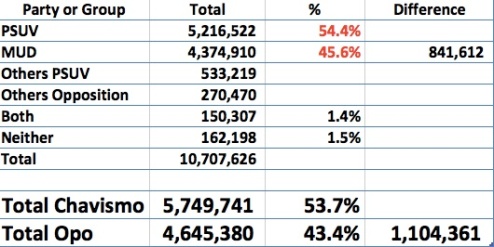
While people are still trying to show that the municipal elections were somehow a victory for the opposition, the more the results are analyzed, the worse it actually looks for the opposition. I had tried to analyze the results of the election to look at local parties which ran independent candidates and separate the votes according to the leanings of those parties. But since the CNE  site is blocked outside Venezuela, it is very difficult to do. Someone was helping me locally, but then today Eugenio Martinez did an even better (more precise) job in El Universal, as he even had two additional categories, candidates supported by both sides (bizarro country) and really independent candidates with no ties to either side.

The results are shown in the table above. The first two lines are the Lucena-style results, in which you only take into account the votes for PSUV and the votes for the MUD, which makes it look like PSUV got 54.4% of the vote and the MUD 45.6%. (Both in red).

The opposition had a different interpretation, which was to add ALL votes not for the MUD or PSUV to the opposition, which made it look fairly close, with a slight advantage to the opposition.

But the reality is that, as Martinez shows, of those additional votes, about 533,000 correspond to candidates who are part of Polo Patriotico, but were in municipalities where the votes were divided. Similarly, about 270,000 were for parties which are part of the opposition, but ran separate candidates from the MUD. Finally, about 300,000 votes can not be accredited to anyone, because the candidates were either supported by both sides or neither.

What the totals say is that the results up to yesterday, are quite close to the Lucena-style results with PSUV and its allies obtaining 53.7% of the total vote and the MUD and its allies 43.4% for a total difference of 1.1 million votes between the two sides.

This means that the results are even worse that they looked initially, as the opposition lost by about 8% of the vote, compared to the minimal difference (if any) of the April Presidential election. Thus, about the only positive thing you can say is that the opposition managed to win the more “emblematic” races, including most large cities, but losing Maracay, Distrito Libertador and Sotillo (Puerto la Cruz), as well as the “in your face” opposition victory in Barinas.

Chavismo on the other hand won the popular vote handily, won nineteen of twenty three states and only lost 26 cities when compared to the 2008 election. Maduro can also say that he is now more legitimate than he ever was and Capriles lost the plebiscite.

By now, even one Mayor elected within the MUD has already switched sides in Aragua, while the opposition lost one Deputy in the National Assembly because both the principal and his alternate were elected as Mayors in Zulia State.

Meanwhile, both sides are claiming victory with Maduro even saying his candidate won in Lagunillas (??). But what is true is that the Daka offensive, the so called “Cadakazo” worked, it changed public opinion overnight. And the opposition had no time or did not have time to react. Thus the loss. And it is a big loss.

And in the best Chavista (and Venezuelan!) fashion, to celebrate his victory, Maduro decides to give Venezuelan a “gift” by cancelling school all of next week with return to classes on Jan. 6th. Makes sense, the last thing Chavismo needs is an educated voter. Maybe they would start to understand what the populist game is all about.

Three I “forgots”: 1) I think we may have a referendum on the gasoline price increase, that would really divide the opposition, Capriles already came out against it.  2) Government discovers 40% of companies given CADIVI are fake, but it is someone else’s fault. 3) Apparently inflation in Novemeber was imaginary= i, because the number is already three days late.


Both Sides Lost In The Venezuelan Municipal Elections

December 9, 2013

460x

No matter how you look at it, no matter how you interpret it or want to interpret it, yesterday’s results in the Venezuelan Municipal election were not a victory for the opposition. Far from it. They may not have been a victory for Chavismo either, but the results were far from what the opposition had expected a few weeks ago and while there were some sweet victories like Valencia, Barinas (Triple sweet and Divine Justice on the day of Loyalty to Chávez), Barquisimeto, the Alcaldía Mayor and others, squeaking by in Maracaibo was not in the plans and can not be considered to be a victory. Neither can be narrowing margins in some of the large city municipalities where it has traditionally won.

Consider this: Maduro has been President for eight months. Eight months of absolute inaction. Maduro has little charisma, speaks badly, even if he has improved his delivery. During his brief tenure in office, inflation has double to 50%, the parallel rate has been allowed to double, shortages and lines have increased significantly and the opposition could not even increase its percentage of the votes from the April Presidential election…

Of course the opposition improved from the previous Municipal elections. Of course it had to do better, but this was no victory. It was not a victory for Chavismo either, but despite the deterioration of the country, the disappearance of the maximum leader and  a nebish President, all the opposition did was preserve its spaces, gaining very little.

Of course the Government abused its power over the media, used all sorts of tricks to buy votes, including a brilliant maneuver to make it look like inflation is the private sector’s fault. But prior to that, a maneuver which was actually badly timed, I saw little attack on the Government’s economic policies, little coordination on the part of the opposition in finding a topic and sticking to it. The opposition simply did not take advantage of the Government’s many weaknesses.

Both sides lost in these elections, but this means that Chavismo continues to have the upper hand. In fact, while I do not expect it to happen, it even has the chance to attempt to straighten out the economy. Imagine what would happen if the Government brought inflation down! It will not happen, Maduro is not going to see the light, but the virtual tie on Sunday gives the Maduro Government some range of action to devalue sharply, for example, or as suggested by the VP today, to increase the price of gasoline. Measures that are insufficient to fix all the problems, but that could help the sustainability of the Government long term.

Except that Chavismo is trapped in its ideology, as much as the opposition in its inability to mount an attack it. Thus, after a brief period of some rational policies, I expect Chavismo to step on the accelerator of its radicalization, just because it will be desperate. As desperate as it felt in October when it declared war on commerce. Just because it has no other plan. It will make up another war, a war that the “people” will sympathize with, catching the opposition flat footed once again.

And yes, things are going to deteriorate even further, but I think this election proves that it may not be enough to aid the opposition’s cause. The opposition can not be reactive, it has to proactive, have a plan, some form of ideology beyond wanting to get rid of Chavismo and the danger it represents to Venezuela’s economy and its people. It has to let its leaders lead and not have stale politicians telling people what they think.

About the only positive thing you can say about it is that the opposition continues to dominate the cities. In Venezuela, small cities decide elections, but big cities is where people organize against the Government when they are unhappy and disgruntled. The only question is whether the opposition will take advantage of it, or will someone else do it for them.

Maybe Maduro actually won yesterday, even if he expected more. He could have fumbled the whole thing…but he didn’t.


Announced Offcial Results Of Venezuelan Election at 10:06 PM

December 8, 2013

The “best” electoral system in the world can only give official results after 4 hours and six minutes after polls closed.

Tibisay is happy because abstention was 52% and can not read it well. She said 98% participation to begin with.

257 municipalities have so called “irreversible” results.

PSUV 196 municipalities

MUD 53 municipalities

Others 8 municipalities.

PSUV 4,584477 votes 44.16%, MUD 4,252,082 40.46%

PSYV and allies 5,106,336 votes 49,24%, MUD+ allies 4,435,097 42.72%, Others 8.03%

Municipio Bolivar, PSUV Anzoategui 52%

Municipio Apure PSUV 65%

Municipio Barinas MUD 51%

Municipio Heres PSUV 47%

Valencia MUD 55%

Cojedes PSUV 54%.6

Arismendi 51% MUD

Sucre, Sucre PSUV 54%

San Cristobal MUD 67%

Trujillo PSUV 53.4%

San Felipe PSUV 49.5%

Maracaibo MUD 51.8%

Metropolitano MUD 50.8%


Some Results, Looks Even, As Expected (Updated)

December 8, 2013

Not that many polls closed, but all indications are:

Update 9:56 PM: Opo looks like winning San Felipe

Update: 9:37 PM: Initial reports from Barinas gave Chavismo a victory, it is now very close

Opposition lost Libertador (double digits)

Opposition won the Metropolitan Mayor’s office +2%

Opposition won Sucre (+7%), Chacao, Baruta, El Hatillo

Opposition won Barcelona, Lecherias and Valencia (5%)

Chavismo won Maracay, Caroni (+12%), Barinas (very close), Apure, double digits

Opposition wins Maracaibo.

Opposition wins Guatire, loses Guarenas.

Good source of data

Of the three biggies up for grabs, opposition keeps Maracaibo, loses Libertador and Maracay

Chavismo seems to win total votes, but Unidad may beat Chavismo (PSUV)


Municipal Elections Report, With Irregular Updates

December 8, 2013

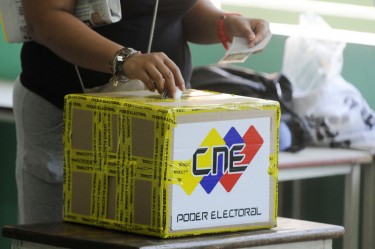
Ba-yCpmIgAImSr5One person, one vote, Not sure what this group voting is. The Commissars checking purity?

It is close to 6:30 PM in Caracas and the cat and mouse game of whether to close voting centers or not has begun. I was never clear whether this matters or not, but seems to be repeated every tie.

Once again, the Government violated the law all day, with Maduro openly campaigning for some of his candidates and using political slogans. The First Ladyness did the same. What else is new?

Abstention is high as expected, which creates uncertainty on both sides, as it becomes difficult to tell where your candidates are doing well, as abstention can be heterogeneous. However, abstention can also be asymmetrical , which is what both Chavismo and the opposition fear at this time. The MUD knows the numbers look good for them in their traditional areas, but where the races are up in the air, there is uncertainty.

Maduro suggested results would be “tight”, could this be a warning that results will not be available until late?

PSUV Motorcycle gangs begin to drive around some cities including Caracas. Not clear what is their plan.

Ba_wqVCCYAAVkMk

Stay tuned.


Venezuelans Go To The Polls. Will It Matter?

December 7, 2013

1957891-1-375x249

I am in Caracas and the excitement over the Mayoral elections is more or less that of an Iguana racing contest in a coastal town: Everybody goes, because there is nothing better to do. But nobody knows the iguana’s, so the betting is slow.

And in this case, Chavista candidates told Nicolas to please stay home and campaign, but don’t show up to raise my hand. So, the excitement is precisely that of whatever the local race may bring. In most places: who cares? How can one get excited about voting for Jorge Rodriguez, for example, the least simpatico and disagreable Chavista ever to hold office. He will likely win.

That is the type of election this is.

And polls claim that Nicolas’ strategy of declaring the war on commerce will work. Will work in that Chavistas that a month ago were thinking of staying home are now thinking of going to vote, as long as there are no lines and they can get something in return. Anything, but one carton of milk is not enough. Come on! We are a democracy! We have a price, but not that low…

So, gimme a break. I will go vote because I am a radical Chavista/opposition.The rest? The weather better be good, my candidate pretty and smart (sorry Potro, sorry Winston!) and I better be in a good mood to show up.  No threats please! And some giveaways are appreciated!

Which only means that the races will be close. Closer than the pollster say. They say that Chavismo has an edge. That Maracaibo and the Metropolitan area are in trouble for the opposition.

I say, that abstention will be the winner and will determine the winners. And that the opposition, Cadakazo or not, will come out on top in total votes. And I claim that rather than the 120 Mayors, an improvement over the less than 50 from the previous election, that the polls say, we will obtain around 140-150 cities, which still means Chavismo can claim a victory in the end with 175-178 cities.

So, the symbols are important. The Metropolitan Mayor, Libertador, Maracaibo, Maracay and Valencia will be the trophies that everyone will want to claim. And I think we lose Maracay and Libertador and that’s it.

But in the end it does not matter. The result will be “even” unless either side can win by 8% points and win some of the emblematic cities from the other side. Which I don’t think will happen, but abstention remains the wild card.

So, in the end it is likely to be a draw. Which implies Chavismo still has a level of support that the opposition can only wait for the Parliamentary elections of 2015 to try to do something about. Two long years from now, in which the revolution will try to press on its radical agenda, in the face of empty shelves, high inflation and Chavez’ weakling son as their leader.

Not a pretty picture, but in the end one that is not likely to change tomorrow even in the context of my predictions, which are considered to be on the very optimistic side locally.

But I call them as I see them. I don’t know whether to wish I am right, or wrong. That is how irrelevant Sunday’s results may be.


Maduro Now Set To Regulate Car (???) Sales

December 2, 2013

chery

President Maduro announced today that his war on inflation, prices and commerce will move over today…to cars. Yeap! For those of you that have been looking for a car to buy (or used for that matter) for the last two years and have not found one, you can rejoice, as, as of tomorrow, that non-existing car will actually go down in price, in another milestone for the revolution.

Maybe he should lower the price of toilet paper, while he is at it.

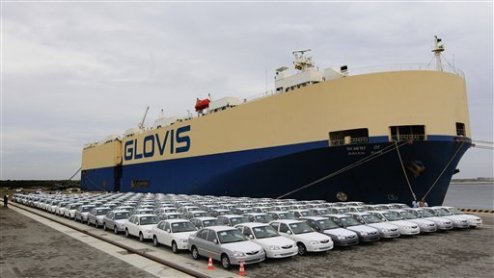
The story of the automotive sector is the same as that of most sectors of the the Venezuelan economy. The Government begins to squeeze out the private sector, destroying manufacturing capacity for the sake of socialism , favoring imports, particularly Government imports. The private sector gets fewer and fewer dollars and the Government gives out favors, charges commissions and uses the cars for political purposes. Of course, it is all sold as a big favor to the middle class, who supposedly will benefit from it. Maybe , like in the picture above, it will be the military middle class that gets the cheaper cars.

Car sales in Venezuela are down sharply in 2013. Total sales the first nine months of the year, according to Veneconomy were down 17.5% at 81,950 cars, but more importantly, sales of cars made in Venezuela were down 31.1% at 57, 236 units in the first nine months. For comparison, in 2007, car sales were 491,000, of which close to 200,000 were locally made.

Car makers in Venezuela are owed US$ 1. 8 billion today and find the flow of foreign currency spotty. Last June they had a big burst of  Cadivi payments, which by now have disappeared.

Meanwhile, cars imported by the Government are increasing. Veneconomy reports that while SEAT and Honda have not been given licenses to import cars for six years, independent importers related to the Government have been give licenses to import Chinese cars from distributors which are not even China based. They expect that 30,000 such cars will be imported this year. I wrote about some of these imports a couple of months ago.

Then there are the four car assembly projects which involve the Venezuelan Government, including the Chery project, which claims to be making 18,000 cars a year and will expand in the nationalized plant of another Chinese company called Great Wall. The other projects, including Venirauto, are seldom heard about. But are reportedly making some cars.

But the smoke and mirrors continue. The Government announced with great fanfare the Productive Venezuelan Automotive System, sort of like Gran Mision Vivienda for cars, and close to 400,000 people registered for it. About 3,800 people have so far received a car so far.

And today will be the crowning glory, as Maduro regulates car sales and sets car prices to go down. If you can ever find one.

Fortunately, as reported in Fausta’s blog, we have enough ambulances that they can be used for other purposes, such as electoral campaigns:

BaGHApnCUAAPULt

Maybe they should sell ambulances to the public.

You have to love socialism.


CITIC Mining Survey Agreement With Venezuela: Another Boondoggle?

November 29, 2013

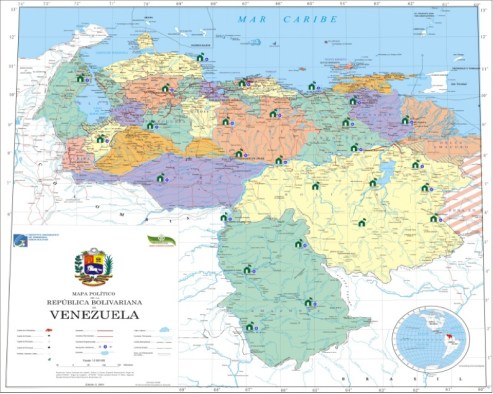
mapMaps of camps for mining projects

A while back, the Venezuelan Government signed a puzzling agreement with Chinese company CITIC to do a mining survey of all of Venezuela. Puzzling for a variety of reasons, including the fact that CITIC is at the end of the day an investment company, which was simply going to use the resources of the Chinese Government and academia to develop the project. But it was also puzzling, because of the price tag of US$ 600 million. US$ 600 million is an Apollo-size project in the context of Venezuelan science and technology, more so, for something that has essentially been done already, without the aid of the Chinese or the Americans for that matter. In fact, CVG, Tecmin, National Universities and the National Institute for Geology and Mining already have a digitized database. In the 80’s, when I used to work in related fields, I recall being given maps of where you could find Niobium and Tantalum in Venezuela, not exactly the most precious of minerals.

But even more puzzling is that the National Assembly has not approved the contract. You see, minerals and mining are considered to be of public utility and according to that piece of paper called the Constitution, contracts relating to it have to be approved by the National Assembly. But even more puzzling, the job that Citic was hired to do, is the mandate for the National Institute of Geology and Mining, Ingeomin, which according to the law has as on of its main purposes: “To create and maintain the inventory of the mineral resources of the country” among many other functions. And US$ 600 million is over 100 times the yearly budget of Ingeomin, which has yet to be contacted for the project.

And that is the biggest puzzle. The project supposedly has been mostly paid for. the work should have been started, Venezuelans trained, etc. But nobody has been trained, no camps as those shown in the map above (Xeroxed in a copy machine with a bent surfaced?) have been established. In fact, according to Deputy Americo de Grazia “The Chinese are doing absolutely nothing in Venezuela…but they are getting paid”

The Deputy even wonders if the Chinese ever meant to do anything, except get paid. With the available information and the digitized maps available in Venezuela and a couple of trips by technicians, you could “update” the information and that would be it. Hand it it, get paid US$ 600 million.

Another boondoggle by the revolution. More money thrown out the window, or down the toilet. Chavismo has a strange concept of sovereignty and a total lack of respect for local knowledge.

And, of course, the National Assembly refuses to hear the complaint that the contract should have been approved in that body. The Chinese may get mad…


Did Maduro Really Say That?

November 26, 2013

“…Those merchants that you know are as much victims of capitalism which speculate and steal like we do”

I used the words “rambling” and “incoherent” in my previous post. Other blamed the weed in the comments. Who knows!

Personally, I think it was a problem just with delivery, what he meant to say was that the merchants are as much victims as “us” Chavistas.

Which shows that he can’t concieve that any merchant can be a Chavista.