Archive for the 'Uncategorized' Category

Accountability Is A Dirty Word For Chavismo

September 1, 2013

NM

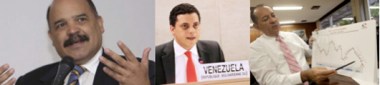
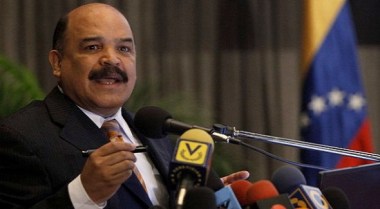
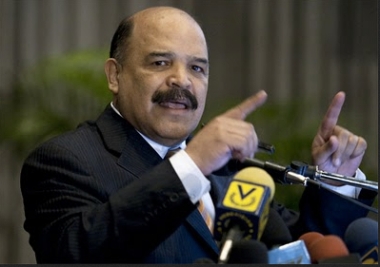
Accountability is simply a dirty word for Chavismo. There he was, Nelson Merentes, the current Minister of Finance talking on TV on what a mess the economy is, as if he had not been omnipresent in Chavez’ Cabinet and as if all of the things he was saying are not working, were not the creation of Chavez, aided by none other than Nelson Merentes, Jorge Giordani and others. Sadly, he also showed that he has no clue as to how to solve the problems anyway.

First, the clueless Mathematician says that the black market dollar “perturbs and gives anxiety” to Venezuelans. Thus, the wise man suggests that the Illicit Foreign Exchange Bill needs to be changed because it has not fulfilled its objectives. He also suggests that the Securities Markets Bill also needs to be modified.

Let’s see. The first Bill has been in existence for eight years and was passed when the National Assembly was 100% Chavista. It was modified once to make controls tighter, not softer, making it illegal to even mention what the exchange rate is and to make all foreign exchange transactions, except those made thru the Government, absoluetly illegal.

Even worse, up to 2010, there was a functioning parallel market in Venezuela, which the Government squashed because it did not like the ever increasing rate of exchange, killing Venezuela’s Capital markets in the process, jailing people and modifying a well-thought out (and widely consulted!) Capital Markets Law to satisfy the regime’s wishes at the time.

The result? That same parallel rate is now five times larger, barely three years later!

And Merentes apparently thinks that changing these laws will apparently solve the problems, the same way he thought SITME was the best foreign exchange market in the world (Will last 100 years! Nelson dixit) and silly SICAD would solve the scarcity problems)

Which shows that after eleven years practicing finance, which Merentes had never been interested in, he has yet to learn much about it. Moreover, things are what they are because of the absurd monetary and foreign exchange policies, which he helped implement at the Central Bank and are still in place today.

Because changing the laws, will not lower the black market rate. Creating a parallel market will not lower the black market rate. (I personally think it will increase it, not decrease it!) Because the problem is excess demand for foreign currency, generated in part by the artificial creation of money, while maintaining the official exchange rate constant.

It’s very simple: You start with pent up demand for foreign currency which has been building up over the years. Then, you increase restrictions on who can get the foreign currency. You follow it up, by having the Government increase its imports, which is not only inefficient, but full of “guisos”, overprices and empty containers and follow it up with keeping the official rate of exchange artificially low, while all this time the number of dollars you have to sell are constant, if not lower.

It is an equation that will never work, to put it in terms the Minister should understand.

Because the US$ 47 billion that Merentes magically mentions as what Venezuela imports, is not really that much. When the Government is directly importing US$ 34 billion, while “assigning” US$ 26 billion to the private sector using convoluted criteria at such a favorable rate, simply does not work. Even Jorge Giordani has admitted that as much as 40% of all that may be fake.

And then, the final and golden touch to his statements is when Merentes says: “We want to produce what Venezuelans consume”. Really? You could have fooled me Nelson, because you have spent fourteen years doing exactly the opposite, threatening, expropriating and making it very difficult for the private sector to grow. And just a hint, keeping a low official rate of exchange, with 20-30% inflation is exactly a recipe to kill local production, so start there.

Same with exports, where many of those same exports don’t exist today, because the plants and factories were expropriated and lie idle under Chavista management.

But Merentes speaks as if this is a new Government and he was never part of the previous one. As his predecessor in his current position, there is simply no accountability. It is as if these failed policies were implemented by extraterrestrials. In fact, It is as if he became Minister of Finance last week, not almost five months ago.

Accountability is a fifteen letter word, but for Chavismo it appears to be a four letter one.

We Interrupt Maduro’s Enabling Bill In Order To Defend Syria

August 30, 2013

20130830_NACI1_3_4_F1

All of a sudden Maduro’s PSUV party has lost one vote in the Venezuelan National Assembly, leaving it two short of the required 99 votes because, of all reasons, Deputy Adel el Zabayar, a Deputy from Bolivar State, has requested a leave of absence to go and fight for the Syrian Government.

El Zabayar was an alternate in the National Assembly, but became a Deputy when Rafael Gil was named President of the Corporación Venezolana de Guayana. Thus, El Zabayar has no alternate and PSUV has thus lost a vote. .

El Zabayar is of Syrian origin and is President of the Venezuelan Arab League and a former member of the Venezuelan Comunist party.

I guess that is what Maduro meant when he said that he would help Syria if the US attacked. El Zabayar said that he would return to Venezuela if Maduro asked him to. But I guess the Syrian fight is more important than anything happening in Venezuela. I hope other PSUV Deputies join him in this fight for authoritarianism. Maybe they will be further away from their quorum.

Metals Trader Calls Venezuelan Plan On Prices Crazy

August 27, 2013

crazy

Reuters today had this piece about Venezuela’s new plan to get a “fair price” for its metals under Maduro’s new “Sovereign marketing Plan”. The plan is simple, nobody is going to come and set the prices for Venezuela. Nobody is going to come from abroad and set the price of what belongs to all Venezuelans. We want fair prices.

WE will set the price, you hear!

This is really revolutionary, Venezuela from now on will sell all of its metals well above international prices, using their own proprietary formula for what fair prices is.

Comments so far by traders:

“The government has no idea what it’s doing … They put up so many obstacles that clients are losing faith in Venezuela”

“This is crazy, it’s never going to work,” said a metals merchant based in the United States. “People are leaving Venezuelan minerals in the ports”

What’s next? Venezuela will only sell oil at US$ 200 per barrel?

Now, that would be truly revolutionary, no?

Did The “Pragmatists” Win A Battle In Venezuela Today?

August 13, 2013

triadThe pragmatists “triad” Merentes, Porras and Tovar.

When you come down to it, about the only positive silver lining in the 100-plus days that Nicolas Maduro has been President of Venezuela has been the apparent (so far) more flexibility of PDVSA, in that Rafael Ramirez seems to be operating independently and trying to be more pragmatic about increasing the country’s oil production.

When Maduro first shuffled the Cabinet he inherited form Hugo, people were disappointed in that, while he named the more pragmatic Nelson Merentes to the Ministry of Finance, he split the Planning and finance Ministry into two, leaving the ever present and influential Jorge Giordani as Minister of Planning. Even worse, a Giordani ally, Edmee Betancourt, was named as President of the Venezuelan Central Bank, making everyone wonder whether the pragmatic side had any leverage to do what it wanted.

And the pragmatic side certainly has had a rough time so far, as there has been little change in economic policy, beyond a decree that should concentrate foreign currency in the Venezuelan Central Bank (but hasn’t) and a kluge of an foreign exchange auction system, named SICAD which has been as effective as aspirin for treating cancer.

But something funny happened today, when in a surprise move, the Venezuelan National Assembly approved Nicolas Maduro’s nomination of Eudomar Tovar to the Presidency of the Venezuelan Central Bank.  (Which had something to do with the fact that Bandes’ President, Temir Porras, last Friday went to the Prosecutors office to ask to investigate the bond trading rip off at Bandes, which the SEC had jailed people for. (Edmee Betancourt happened to be President of Bandes when all of that happened).

But, t start with, Tovar happens to be an economist, that rare avis, seldom seeing in the fourteen years of Chavismo in any position where economic matters are discussed or decided. Indeed, Eudomar happens to be a bona fide economist, who even has done graduate work on financial matters, earning a Masters degree and studying for an additional one. Given that I have a soft heart for qualified people, no matter what their ideology is, I can only applaud this.

But more importantly, Tovar is a Merentes ally and buddy, who accompanied him in the Venezuelan Central Bank and Merentes forced in as President of CADIVI, after Maduro assumed office for Chávez in January.

And to top it all off, another economist (did you really think Chavismo had only three?) Jose Khan, was named as the new President of the foreign exchange office CADIVI.

Thus, in one apparent swoop, the “pragmatists” seemed to have wrestled control from the “ideologues”, including Jorge Giordani and, in my mind , that can only be positive for Venezuela.

Then, the Merentes, Porras and Tovar triad now represents a new powerful force on economic matters and it certainly seems as if Giordani’s influence is diminishing. That can only be good for Venezuela.

Maybe I am completely wrong, but I certainly hope that this means that Merentes will now have more autonomy to establish more rational and economically sound policies, within the bizarro world of Chavismo/Madurismo. Because so far, deciion making has not only been slow, but has been dismal in its execution.

Hope I am right. Watch international reserves in the next few days, if parallel funds move their money there in the next couple of weeks, that would be a great sign and a confirmation that I have some basis for being somewhat positive.

Venezuelan Government Fails To Pay Sidetur Bonds

August 6, 2013

For fourteen years, President Hugo Chavez said and boasted that despite everything, his Government had always paid its bonds on time and honored all international debts. And he was right, even after the 2002-2003 strike, when oil production went down and when oil prices dropped, Venezuela continued paying its bond obligations.

This is no longer the case, as of July 20th. Sidetur, a company whose assets were expropriated by the Venezuelan Government last year, failed to make payment for both interest and capital on its 2016 bond, which has a 10% coupon. Remarkably, the amount owed is peanuts in the context of the country’s debt, as the amount owed today is only US$ 73.75 million plus one quarter of interest payments.

The Venezuelan Government expropriated all of Sidetur’s assets, including its offices and bank accounts, as well as absorbing  all of the liabilities of the company, except for the bond. This was all transferred into the Complejo Siderurgico Nacional, in fact, the website under use is nothing more than the old Sidetur website “refurbished” for the Complejo Nacional Siderurgico, but even the documents in pictures, tags on products and the Sidetur “S” in the search function, are derived from the Sidetur website that the Government took over when it forcefully expropriated the Sidetur’s offices, as can be seen below:

Sidetur


While the formal default of the Sidetur bonds took place on July 20th., the reality is that the problem started last January, when the Venezuelan Government failed to make payment into a trust in Deutsche Bank, which is supposed to have two quarterly payments accumulated at all times. Investors sort of assumed that payment would be made before July 20th., as it makes no sense for Venezuela to default on such a small amount of debt, given what is outstanding and that apparently Venezuela and PDVSA plan to issue debt in the future.

What the Government argues is that there is a legal opinion that says that the bonds are the responsibility of the shareholders of Sidetur, or at least that is what was said by the Minister of Industry when the Government first suggested that it had no plans to pay Sidetur’s debt. This is a surprising argument, even if I have not seen the opinion. First of all, shareholders do not issue debt, nor are they responsible for debt issued by the company they own. Second, when company’s fail to pay their debts, bondholders go after the assets, the cash or the cash flow of the company, all of which, in Sidetur’s case, are in the hands of the Venezuelan Government, so that it would be impossible for the shareholders to use them to pay. Third, the Government has not compensated Sidetur’s shareholders for the expropriation. If it had, it would have to take the debt into account and either pay it directly to the bond holders or pay to the the Sidetur shareholders who would the be able to honor the company’s debt. (Technically, the Government expropriated all of Sidetur, but not the company)

But the most surprising thing is that this case is no different than those of Cerro Negro, Petrozuata or Fertinitro, where it was the Government or PDVSA who paid the bondholders, even though it had not compensated the shareholders. Thus, it seems difficult to justify legally in the case of Sidetur that there is any difference.

What is most surprising is the somewhat nonchalant attitude that the Government has assumed on this problem. In the other three cases mentioned above, the Government met with bondholders and a solution was worked out in all cases. In fact, Cerro Negro and Petrozuata never even reached the point of default. However, in the case of Sidetur, there has been no response by the Government to any of the letters of the Steering Committee of the bondholders, nor any answer to their calls.

The only reaction so far by Minister Merentes is that he said that there is a technical opinion that the Government is not responsible for this debt and that he had created a trust to guarantee payment, which in itself seems to be a contradiction.  But to the mostly institutional investors in Sidetur bonds, the creation of this trust is mostly irrelevant, as they have clients who will only benefit if the Government actually made payment, not if it makes some vague promise of guaranteeing what it says can not pay.

Investors believed that Minister Merentes would find a more practical solution, given the fact that he is ideologically less rigid and has always looked for not only practical solutions, but also to protect that same image that Venezuela will honor its debts. The simplest such practical solution would be to either pay the bond in full, as the indenture of the bond says should be done if any part of Sidetur changes hands or is sold, or simply pay the quarterly interest and capital payments until the problem can be resolved in full from a practical and legal point of view. Any amount paid to the bondholders could be later subtracted from the compensation given to Sidetur’s shareholders.

It may be that Merentes and his team feel that the default has had no impact on the country’s debt. But they are wrong. Most of the institutional investors that own Sidetur, have much larger positions in Venezuela and PDVSA bonds and are unlikely to buy any more bonds until the matter is resolved. In fact, if they perceive that the Government will not find a solution with Sidetur, they are likely to become sellers of their current Venezuelan positions. This is the last thing the Government wants if it plans to sell new international debt, more so when the existing long term debt has yield to maturity between 10.5% and 12%. The fewer buyers, the higher the cost will be. In fact, some of these investors have begun granting public interviews to express their frustrations with the situation and this is likely to occur more and more in the future. As Ray Zucaro of SW Management says in that interview, there are lots of doubts about the will to pay of the Venezuelan Government.

The bondholders have so far tried to reach out to the Government to find a solution, but they have received no answers. They have done that in the belief in the promise that Venezuela will honor its debts. But as time goes by without anything happening, the bondholders may decide to resort to legal means to obtain payment. And that process can be extremely noisy and negative for the Government, as Argentina has seen with its default and restructuring, which is still creating problems for that country eleven years later. The size of the problem may be smaller, but the legal means would not be too different, which only would be an unnecessary hassle for the Venezuelan Government and PDVSA.

Whatever the future may bring, one thing is for sure, for the first time since Hugo Chavez took over the Government, there has been a default of the Venezuelan Government’s debt, that in itself is a blemish in the country’s record which can not be erased and will have a cost in the future.

Disclaimer: The author of this post has owned Sidetur’s debt since it was first issued in 2006 and thus has an interest in the resolution of the problem :-).

I guess on the eleventh anniversary of the blog, I can write a post out of sheer self interest.

Maduro’s New Gaffe Places Raises Doubts About His Capabilities

August 4, 2013

You have to wonder about Maduro’s intellectual capabilities. He goes from gaffe to gaffe, insulting countries, showing he does not even know Venezuelan states and the like. For a man that was Foreign Minister for six years, you have to wonder how he did not even learn much in that time.

But his latest gaffe really makes you question his intellectual abilities. Maduro after all, lived in Cuba for over a year, then goes on onto this tirade praising Cuba and its supposed independence and sacrifice to be independent, getting all sentimental, grabbing the flag, joining it with the Venezuelan flag in a symbolic gesture, almost tear eyed, except…

The flag is Puerto Rico’s flag, not Cuba’s.

I know they are similar, but the colors are all inverted, Maduro should know, that flag (the Cuban one) is sadly present in too many Venezuelan Government and military facilities.

Venezuelan Government Websites Hacked, Government Silent

July 26, 2013

BP56QprCEAA7hyW.jpg_large

Except for a brief report in Tal Cual and an article  in the Miami Herald which has the link broken, there is little in the Venezuelan press about the fact that a group of hackers claims to have hacked a large number of Venezuelan Government websites. as shown above for the webpage of the Venezuelan Army (ejercito.mil.ve), the group managed to take over many webpages.

The webpages hacked include Ministries, State Universities, the Army, the Public Stock Market, the National Guard and many more. So far, the Government has been silent about it, but what we find most curious is the silence of the local press on the matter.

The group doing the hacking is reportedly Anonymous Venezuela and they are demanding Maduro’s resignation.

According to the hacker’s twitter account (@VenezuelanH), the CADIVI website was also hacked, but the page was restored because people got “hysterical”. Last time I checked, some sites are back, but others remain offline at the time of this post.

Tales From The Upside Down Country: Venezuela Doubles Interest Payments To Petrocaribe

July 24, 2013

venezuela

Bloomberg is reporting that Venezuela advised all countries which are members of Petrocaribe on May 16th, that it would double interest payments on the oil loans that are provided to the members of the group.

Yes, doubling it!

From 1% to 2%!

For those that don’t know it, Venezuela sends oil to Petrocaribe nations, to the tune of 212,000 barrels a day, for which the countries have to pay 40% in cash or stuff (which has included pants, for example) and the remainder gets paid at a 1% interest rate for the next 25 years. Effectively, Venezuela loses on this simply because of the fact that international inflation is higher than that.

But wait! Venezuela issues debt paying double digit interest rates too! So that, while we pay through the nose, Petrocaribe nations, which include some well-off Caribbean islands with GDP per capital much higher than Venezuela’s, receive a huge subsidy so that their citizens can go to the beach or simply become beach bums. For example, if Venezuela were to issue a 20 year bond today, it would have to pay around 12% in interest for international investors to be interested.

Now, 212,000 barrels of oil per day is US$ 7.738 billion per year at US$ 100 per barrel. Of this, 40% is supposedly paid (See it to believe it!), leaving new debt of US$ 4.6 billion a year to be paid in 25 years. Thus, the increase means that Venezuela will receive barely US$ 46 million per year from this increase from 1% to 2% on the oil sold in 2013. Not enough to pay two Maduro trips abroad, but even worse, Venezuela will likely issue about U$ 4 billion in bonds this year, or borrow US$ 5 billion more from the Chinese.

Get the picture of the upside down world we are in this country? We borrow at 12% and lend at 2% to other countries, many of which are better off than Venezuela.

The ironic (or amazing) thing, is that Guatemala is considering leaving Petrocaribe due to the increase in interest by Venezuela, as Venezuela has apparently indicated that it may increase rates as high as 4%.

Yeap, I would be offended too. This is no way to buy your friends. I mean, to treat your friends. Sorry!

Venezuelan Housing Minister Breaks The Law, Man Who Taped Him Detained

July 23, 2013

This video of Minister of Housing Ricardo Molina has been going around a while, showing the type of fascist hordes the Government is breeding, as the Minister is hailed by the people for saying he does not give a damn about what Labor Laws say, he will not accept anyone that supports the opposition (he also shows he does not understand what the word belligerence means)

But what is interesting is not the video, is the fact that Fernando Bello, a worker at the Minister for Housing, who taped the video, has been detained tonight for taping it. He is reportedly being charged with “informatic crimes”, as the CIPCC has been investigating him and determined that he made the video, which he readily admits.

Thus, Mr. Bello is detained for taping a Minister saying that he does not care about the law, or people’s rights, but the Minister is the hero and he is the criminal.This is the upside down revolution in Venezuela.

How I wish Snowden had come to Venezuela! That way international reporters would all see this stuff. Will they notice now?

Well, at least now everyone will see the infamous video

Note added: Guy was released today (day after), which does not change the story very much, he was held overnight, the Minister slept at home.

Venezuela Is Going Well…

July 17, 2013

58177merentes

After announcing the results of the first “modified” Sicad auction, where the Government sold some US$ 180 million dollars at an exchange rate probably close to three two times the official rate and around half one third of the unmentionable black rate, Minister of Finance Nelosn Merentes announced two more upcoming auctions and said:

The country is going well.

Yeap. As the Government formalized another devaluation, introducing a “second” official exchange rate (or third for that matter, the rate is secret), the Minister said things are going well, as inflation has soared and shortages are still out there. Even more boldly, the man who has so often predicted single digit inflation and economic growth and who has no clue as to what an econometric model is, said confidently that inflation will go down in the second half of the year and growth will be stronger. He even challenged those that do know economics, to wait until the year is over to see who is right.

Unfortunately, Dr (in Math). Merentes does not even appear to understand that growth in the next two quarters will not be compared to the last quarter, but that economists have this quirk, that it is measured with respect to the same quarter a year ago. Given that the economy has likely shrank for the first six months of the year, it will have to make up the loss and then show a gain for the third and fourth quarters to show growth, something that looks difficult right now. Additionally, given that the growth last year was driven by Government spending and that spending is down by double digits so far in 2013, it seems unlikely that growth will be positive for all of 2013.

But the real trouble is inflation. As recently as October Merentes was “questioning” predictions of 28% in 2013 and inflation is up 25% in the first six months of 2013 alone. In fact, a month after saying that, he said it was “feasible” to achieve 14-16% inflation in 2013. Jeez, Nelson, you will be off by 100% at least in that econometric prediction.At least as a Mathematician, you should be able to understand how bad that is.

But the real problem is that the Government has built in continued inflation into the system with its policies. By holding back price increases, there is a guarantee that there will be shortages and later more inflation as goods get scarce. In fact, inflation for controlled goods was 21% in the first six months of the year, another sign the whole system does not work. Reportedly, Vice-President Arreaza has presented Maduro with a list of 10 items whose prices need to be increased, which will do little to slow down inflation.

Neither will the fact that what used to be imported at the SITME rate of Bs. 5.3, will now be purchased at Bs. 16 or so. Yes, some of that stuff was being bought at the black rate, but the truth is that much of that stuff, like auto parts, was simply not being imported, as importers were not willing to buy parts at the black rate with the scant dollars they could find in that market.

Meanwhile, the black rate is likely to slow down for a while, until people realize that they will get little from Sicad. Individuals only got half of what they asked for in today’s Sicad auction and despite estimates that there were requests for US$ 800 million, the Government mysteriously sold US$ 20 million less than expected in the auction.

But Merentes was not alone this week in making statements that make you wonder if these people are brain dead or what. Maduro said, even before the auction, that the new Sicad auction “had generated great positive expectations”. Somehow it seems par for the course that this Government accomplishes so little that it boasts about expectations that simply can’t and will not be satisfied.

And Central Bank Director Armando Leon, he of the Bolivar Fuerte creation, dared say that inflation in the second half will be significantly lower and that this new auction does not imply a devaluation. Sure Armando, and the Bolivar Fuerte is your most important creation.

And then, of course, is the price-Nazi, Eduardo Saman, who not only said that the institution he runs is “a repressive institution of the State”, which reveals a very definite state of mind and attitude towards the citizens of Venezuela, which seems to have permeated the Government. Most institutions of the Government are run as repressive institutions, with little regard and concern for the people.

But Saman’s crowning glory was to suggest that if a company is losing money because of price controls, it should just go borrow money from a bank, which will help “capitalize” the company. Mr. Saman clearly has no understanding of how a productive system or the economy works, he seems to believe loans are free, banks are charitable institutions and has no understanding about how a loan really works or what it is.

And so it goes… Venezuelan is going well in the mind of the guy in charge of the Minsitry of Finance. Maybe he should go and ask the opinion of his friend at Merril Lynch who is talking about a deep reecession. Speaking of ML: Whatever happened to Merentes’ visit to New York in the first half of July?

I guess since things are going so well, he no longer needs it…