Archive for the 'Uncategorized' Category

Chavez “Vetoes” His Own University Bill That He had The Assembly Approve

January 4, 2011

In a very interesting about face, President Hugo Chavez “vetoed” the same University Bill he sent to the National Assembly he controlled. Despite the staunch defense of the Bill by his Ministers and supporters, President Chavez showed up on TV tonight and vetoed the Bill in the name of “discussion” and being “open”

Of course, he can’t even veto it…but the new Assembly is not about to ratify it either.

It appears as if the protests almost up to Christmas Day by the students unnerved the Government, which knows it’s losing support. Vetoing the Bill tonight is a slap in the face of the outgoing National assembly, which leaves today, and implies that it will be impossible to approve a new one in the new National Assembly, where Chavez does not have the two thirds super majority necessary. He could approve it within the Enabling Bill, but the reaction may be tough from the students.

Chavez also backtracked on the increase of the Value Added Tax, saying that the “funding” for the emergency caused by the flooding had been found. This must be the only poor country in the world, where a Government “finds” a couple of billion dollars lying around just like that.

But for now, Hugo “reculo“, a sign that the Dictator does not feel as strong as many think.

And that, my friends, is good news. But don’t believe we have won much…just temporary…

Happy New Year to everyone!

December 31, 2010

Well, I am certainly glad 2010 is going away. It was truly a bad year for me personally, a story that remains to be told one day. So, I am happy 2011 is coming and hope there is some change both in Venezuela and around me. Writing is in part an escape, an opportunity to verbalize feelings, organize thoughts. I do benefit from your input as it allows me to keep the important things in focus. So, many, many thanks from me to you.

And drinking a nice wine, celebrating with family is the way to wait for the new year. For the third or fourth year in a row, I will be going to Plaza Altamira to wait for the New Year. There is something very warm and cozy about saying Happy New Year with thousands of people around you. This year, I will go with more family including my 85 year old mother, which should make it even warmer.

To everyone of you, that your most important wishes become true in 2011 and that the new year brings you health, love and peace of mind, the three most important things there are and the ones that truly matter.

As we say here: !Un abrazo!

Venezuelan Minister of Finance announces sharp devaluation of currency

December 30, 2010

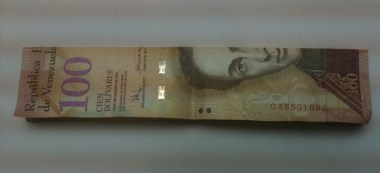
Jorge Giordani, Venezuela’s Minister of Finance announced the devaluation of the “lower” official exchange rate of Bs. 2.6 per US$ to unify it with the Bs. 4.3 rate, essentially devaluing the exchange rate for all essential items by 65%. This decision affects the whole structure of subsidies (except energy) created by the Chavez Government in the last seven years, which was based on direct imports of food and pharmaceuticals at the lower rate, which was kept at Bs. 2.15 per US$ since 2005, increased to Bs. 2.6 per US$ in January 2010 and now increased again to Bs. 4.3 per US$.

The move is, in my opinion, a political one, it is a brutal devaluation which will have a huge inflationary impact in 2011, but whose effects will dissipate in 2012 and by making it so large now, removes the need for an additional devaluation before the 2012 elections. It removes partially the distortion that the multiple exchange rates cause, but it only goes half way and does not include additional measures.

The move does nothing for exports, all exports (except PDVSA changing its foreign currency, part of it had to be exchanged at Bs. 2.6) had been receiving Bs. 4.3 per US$ since January of 2010.

In terms of inflation, this will certainly contract demand and the Government is likely to postpone price increases until shortages appear, but the overall impact in the next few months is certainly going to be quite dramatic, particularly for the poor.

The announcement does signal that Minister Giordani is in charge, despite the terrible performance of the economy under his guidance. Perhaps nothing exemplifies his ability for deceit as saying that “this measure is adopted to place the citizens at the center of economic decisions”.

What he did not say is that he is aiming at them with a fully loaded inflationary gun.

Carlos Andres Perez dead at 88

December 26, 2010

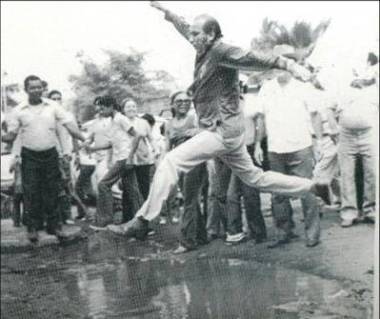
Carlos Andres Perez, twice Venezuela’s President in 1974 and 1989 died yesterday at 88. A controversial figure, CAP, as he was known, was twice in exile as a young Adeco activist in 1948 and the 1950’s and was in charge of the fight against guerrillas during Romulo Betancourt’s presidency from 1959 to 1964, first as a Director General of the Ministry of Interior and Justice and later as Minister. He developed an image of being tough during this time. When the 1973 Presidential campaign arrived, Romulo Betancourt quickly said he would not be a candidate, leaving the field open for CAP. It was the first multimedia electoral campaign in Venezuela’s history with CAP projecting an energetic image (he was a tireless worker), visiting all corners of the country and defeating Lorenzo Fernandez of the incumbent COPEI party.

Once elected, CAP was dramatic the first few months of his presidency, nationalizing oil and iron his first day in power, benefiting from the sharp rise in oil prices. But CAP, like most Venezuelan Presidents, had no economic knowledge and his Government was a hodge podge of Cepal-like recipes and the conception that the Government could do it all. But he dazzled the population, in the first month in power, he cleaned up Caracas, froze the prize of arepas (which made areperas disappear in short order) and decreed that all elevators had to have an operator, as a way of creating employment (Pleno empleo, full employment, was his motto).

The economy boomed, thanks to the oil windfall, but the same windfall hid all of the problems as CAP developed his vision of the “Gran Venezuela”. Money was thrown at steel, aluminum and technology projects in which the Government was the owner or provided the financing, but there was little control and/or know how to make it successful. He did try to protect some of the windfall, creating the Fondo de Inversiones de Venezuela, reduced oil production because so much money was not needed and maintained the structure of the oil industry before it was nationalized, creating PDVSA and naming General Ravard to preside it.

The boom was so huge that everyone benefited, poverty reached the lowest levels in Venezuela’s history, he created the Mariscal de Ayacucho program that sent 10,000 Venezuelans abroad for mostly graduate degrees, protected wild areas in National Parks, he created the oil research institute INTEVEP, he built important hydroelectric projects.

He was a democrat and he was a populist, a bit of megalomaniac, worried about his image and his legacy. He gave a boat to Bolivia which has no ports, as a symbol of its fight to have access to the sea. He reached out to Fidel Castro, while shunning the Dictators from the South, while making it attractive and facilitating for thousands of highly educated people from the latter countries to move to Venezuela to help in his push to increase the number of university students.

But his economic policies had as their central theme the intervention by the State. He removed the independence of the Venezuelan Central Bank, while increasing salaries periodically, which debased the currency leading to inflation. Venezuela was not ready for the huge inflows and there were lots of corrupt people ready to make a lot of money off the Government. By the end of his term, corruption charges, including the infamous Sierra Nevada refrigerated boat scandal, tarnished his image. He was brought to trial because of that case, curiously, it was Jose Vicente Rangel who cast the deciding vote to exonerate CAP. That was CAP, he was capable of talking to everyone and anyone, even his staunchest enemies felt that he was someone he could talk to.

His last year in power, oil prices dropped, forcing CAP to lower the budget by 10%, Venezuelans had the feeling that things were worse for the first time in many years (little did they know!) and his party lost.

CAP spent the ten years required by law between terms, traveling around the world, involving himself with the South commission and talking to world leaders. This changed his ideas, but still, he had little economic knowledge and as he ran for President in 1988, he promisedĀ  to return to the hey day years of his first term.

But it was not be. CAP reached out to a group of well educated non-adecos, including those that were involved in studies on how to change the state. It was not until they began talking to the people of the Lusinchi Government, after CAP was elected. that they realized how dire the situation was. International reserves were less than US$400 million. After a lavish “crowning” with all of the pomposity that was simply out of place, the CAP Government realized that they needed help form the IMF and imposed an adjustment program, a “shock” program that included increasing gasoline prices by 100%, interest rate increases, the increase of public tariffs, freeing of prices that had been frozen for years, eliminating tariffs and allow the currency to float.

One month after taking power, having won with 56% of the popular vote, riots started the “Caracazo” four days of rioting and protests against the gasoline price increase that cast a shadow over CAP’s Presidency. He believed people had the right to protest, doing little the first two days and the protests and the looting go out of hand. In the end an estimated 276 people died and the looting was in the millions. His Government was a lame duck Government even before he started.

But he pressed on. His intuition was right, that he was very good at. He implemented or began to implement many of the reforms suggested by the Commission for the Reform of the State, including the election of Governors, tax reform and the general decentralization of the Government. He was changing things very fast.

But his own party AD felt it had been replaced by these “technocrats” and he had opposition from within. His cabinet was composed of very knowledgable, very well prepared people, most of which had no political experience. CAP was supposed to take care of the politics, but he did not, it was an ego thing and that was what doomed him. Policies were working, the economy grew by over 9% in 1991 after all the adjustments, CAP thought he had no worries.

A group of people the self called “Notables”, mostly intellectuals, who had always opposed CAP and envied his popularity, began calling for his removal. Chavez followed this with his coup in February 1992 (which had been in the works for a decade!), weakening the Government further. When it was discovered that CAP had used funds from the secret slush fund to provide security to Violate Chamorro in Nicaragua and exchanged it at a preferential rate when the Government was ready to devalue, he was accused and impeached. He was later sentenced to 28 months in prison and charged with other crimes. He was elected Senator in 1998, which gave him immunity, but the 2000 Constitution eliminated the Senate and this rule, removing the protection he had. He never returned to Venezuela.

He was in the end, a true democrat, too ignorant on economic matters to have a coherent plan, but smart enough to follow his instincts with his collaborators, he allowed corruption to flourish around him, there was so much money to be made. But he did many positive things, implementing changes in his second Government that were very important. Some of them even took power away from him! He was willing to change, but sadly he did not sell the change the same way he sold himself. On a relative scale, he was not that bad, better than Caldera, who would never change, better than Luis Herrera, who had no program on how to change the country, better than Lusinchi, who had no clue. Betancourt was better, because he understood economics, oil and what the country needed, he had a program. Leoni simply followed Betancourt’s plans with honesty and surrounded by many of the same people.

And of course, he was much better than Hugo, who is not a democrat and has failed at all of his economic initiatives, allowing the largest corruption levels in Venezuela’s history and failing to leverage the biggest oil boom in the country;s history for the benefit of the people.

May Carlos Andres Perez rest in peace!

Merry Chistmas to all and Thanks for Reading the Devil

December 24, 2010

Even the Devil celebrates Christmas. Soon my family will arrive, we will have some nice drinks and then we will dig into our hallacas and pernil like most Venezuelans do. The group is getting smaller, as not only people leave for Christmas, but they also leave the country all together. We even know who will be next. At this rate, Christmas will soon be celebrated elsewhere.

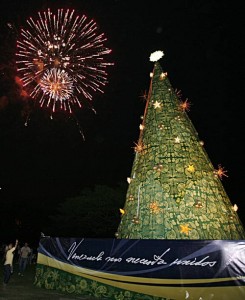
But it will be a fine night, we will exchange presents, we will talk, laugh and we will try to ignore our surroundings for a few hours, we will stay up late, watch the impromptu fireworks and go to bed late for no other reason that we are happy to be together and we are all healthy.

And to you all, I wish that you have as much fun as I plan to have and get all your wishes tonight or tomorrow whichever you celebrate in your family.

Thanks for reading!

As the Government tries to spin him away, Mr. Melean refuses to dissapear.

December 22, 2010

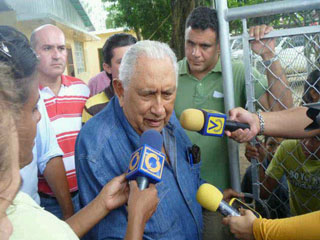
Once the Government realized that it had a serious resistance problem in Santa Barbara del Zulia after Chavez announced the expropriation of 47 farms in that area, it began trying to spin it all away. Chavez’ threat to use “guns against guns” were just that, a threat. He did not even trust or want Minister Loyos, gun in his holster, to talk to Melean. Instead he sent Vice-President Jaua, the great spinner. Jaua must have learned something about talking and spinning in the 22 years he spent as an undergraduate.That appears to be the only thing he is competent at.

Jaua bowed down and went to the El Peonio farm and met with its owners and later said that the Government would not back down. But that is exactly what it is doing. In some of the other farms, people left, packed up after the authorities showed up. Mr, Melean and the inhabitants of El Peonio are still there.

The farmers in the area have seen expropriation after expropriation. The Government takes over a farm, it does not compensate, invaders come in, invaders leave after the cattle and crops have been eaten. From day one. Chucho Melean was clear: “If they pay, I will leave”. Jaua may say what he wants, but it is not true that the Government has valued and compensated hundreds of properties.

Ask Franklin Brito, ask the Spanish farmers, all of whom have not been paid despite the pressure by their Government, ask the Portuguese farmers. And so on.

And the spin was, Mr. Melean lost, he was not ready to fight, this is a tough Government.

But Mr. Melean comes back today and says again: “If they pay me what it costs, I leave, if not, I stay”. There is no deadline. He stays, the Government will have to evaluate how much to pay, come back with an offer.It better be good.

In the end, it is a defeat for the Government. The timing was meant to beĀ  like that the slew of Bills passed by the National Assembly, to take care of the Sur del Lago farms near Christmas, so that people would not notice as they shot fireworks and opened Christmas presents. Now, the problem does not go away. It will either be forgotten or the whole issue will ignite in a few months at a more inconvenient time.

And Chucho Melean may be on TV again, despite all of the spinning.

The never ending Bandagro story comes back to haunt Chavez

December 20, 2010


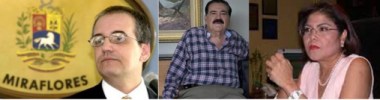
(Tobias Nobrega, Waldemar Cordero and Marisol Plaza)

This weekend, once again, the Bandagro bond story came back to haunt the Chavez administration, when a badly written report by the New York Post, gave the impression that the Chavez administration would have to start paying up US$ 8 billion in Bandagro promisory notes, because an Appeals Court had ruled against the Venezuelan Government.

But this is just another step in a long series of a story that is remarkable. In the end you can say: Only in Venezuela! But the truth is that this story has been complex and what is amazing is that it has managed to survive this long.

Bandagro was a Government bank that went bankrupt in 1980. While it was in the middle of its bankruptcy process, the bank considered issuing some promisory notes that would guarantee a loan with a US bank. According to the then President of Bandagro Waldemar Cordero, he never signed them, as the deal was never completed.

Here it is important to note something. Today, bond trading and payment is electronic. At the time, bonds were issued in special paper that need to have the correct signatures and seals to be valid, they were also numbered.Well, in the 80’s the Venezuelan investigative police caught some people leaving the country with unsigned Bandagro bonds and accompanying seals. Everyone thought the issue would die there.

The promisory notes, which are issued at a discount but don’t pay interest, were supposedly issued in 1981 and were supposed to be paid in ten years. During Carlos Andres Perez’ Presidency the Comptroller researched the issue and determined that the Notes were never issued and once again that seemed to be the end of the story.

I first heard about the notes in the late nineties when some people asked me to check their veracity, it would be the first of dozens of such requests. By the end of it, people were surprised that I knew the details of the great deal they were being offered, even before they told me what they had. Finance Ministry officials in the late nineties during the Caldera Government ratified, once again, that they were fake and they had never been issued.

But when a racket has so many zeroes attached to it, lots of people are attracted by it, particularly in the land of “The Deal”, Venezuela. These fake bonds were being offered so much all over the place, particularly Italy, Panama and Switzerland, that then Minister of Finance during Caldera’s Government Maritza Izaguirre had to publish and ad in the paper telling the world (or trying to) that they were fake.

And here it is important to make a second stop about history. Venezuela defaulted in its debt in the 80’s during the first Mexican crisis. Earlier, it had stopped making foreign currency payments on debt after the 1982 devaluation. These Bandagro bonds were never part of any of the negotiations that followed in either case. In fact, Venezuela’s debt during Lusinchi’s Government defaulted and was renegotiated asĀ  a package with the aid of the US Government when Nicholas Brady was Secretary of the Treasury. Brady bonds were issued to replace the country’s debt, guaranteed by US zero coupon bonds, the so called Brady bonds. The Bandagro bonds were not included in that, nor did anyone ask that they be included. Just think, you have US$ 50 million of a note from a Government that defaulted and there is a restructuring backed by US Treasuries and you don’t show up to be included!

Sure!

But even worse, when Venezuela returns to markets in the second half of the nineties, both with multilaterals with Caldera’s IMF agreement in 1996, as well as with the issuing of the Venezuela 2018 bond with a 13.25% coupon (1997?), Venezuela agrees to cross default clauses with both and the Bandagro notes are never mentioned.

After Chavez takes over, the notes began resurfacing and sometime in 2001-2002, then Minister of Finance Rojas publishes another ad in the papers telling people the Notes are fake.

How much money are we talking about? Nobody knows. I have heard that originally there were 55 Promisory notes, each for US$ 50 million. The suit in Ohio is for two Notes, worth US$ 100 million, the one in Switzerland is for US$ 1.075 billion, but they are all asking for interest since 1991.

In 2002, a lawyer representing a group from Panama, called Triad, sent a letter to Chavez asking that US$ 600 million of the Notes be paid. And that is when things began to unravel.

Things start to get tricky here, according to pro-Chavez webpage aporrea, the investigation began at the Ministry of Finance, but in their effort to protect Hugo, they forget that Chavez asked the Finance Committee of the National Assembly and the Ministry of Finance if the Notes were legit.

It is then that Minister Tobias Nobrega asks his legal counsel Oscar Guzman to look into the matter. He sent experts to banks in Miami and Switzerland and they said the Notes were authentic, concluding that the claim was legitimate. That report is sent to Marisol Plaza the “Procuradora” (Government’s lawyer), she then issues a report saying that the Notes are valid and should be paid. Here I differ in my memory from aporrea. I recall the Procuradora saying that that first report was an internal one that was leaked, while she later reversed her opinion. Aporrea says that the Minister of Finance asked her to reverse her position and she refused.

In the middle of all this, Waldemar Cordero signed an affidavit, upon learning that the Notes could be paid, saying that they were false and he had never signed them. Nobrega reopens the case and Marisol Plaza reverses then her decision.

By then the Skye Group had introduced a suit in an Ohio Court andĀ  separate suit was filed in Switzerland.

In a decision that I can’t find, on Sep. 13th. 2006, Judge John Holschuh ruled that the decision that matters is not whether the Notes are fake or not, but whether the opinion by Marisol Plaza was legal or not. Basically, if Skye purchased the Notes in good faith based on the opinion of Marisol Plaza, then Skye had the right to demand payment, at which point according to this document, the issue became one of jurisdiction and the Sixth Court in the US began investigating whether there was jurisdiction or not on the issue by a US Court.

And that my friends, is what the ruling last week was about. It is not about whether the Notes are fake or legit, it is whether Venezuela or Notes issued by a Sovereign country are immune or not from being issued in US Courts. The Court rejected the immunity agreement in September and on appeal, it rejected it again last week. The only document I have found was this one and all it says that the petition to review the case was denied.

Thus, now the case (I am not a lawyer) goes back to that Court for sentencing and that decision in itself I am sure can be appealed many times. All the Appeals Court said this week is that Venezuela’s argument that it was immune to US Courts were invalid. And even thatĀ  am sure can be appealed to the Supreme Court.

But what do I know. All I knows is that Venezuela’s bonds dropped today because of the article that said the payment could be as much as US$ 8 billion. But if Chavez refused to pay it, nobody could argue cross defaults, it is clear the bonds magically appeared at some point and haveĀ  a dubious history. If I were Hugo, or he asked me I would say: Don’t Pay!

If you ask me, they are fake, but the mishandling of the case has come back to haunt Chavez, that is what happened when you appoint political hacks to important positions like that of the Procurador.

Rebellion in Santa Barbara del Zulia, Venezuela

December 18, 2010

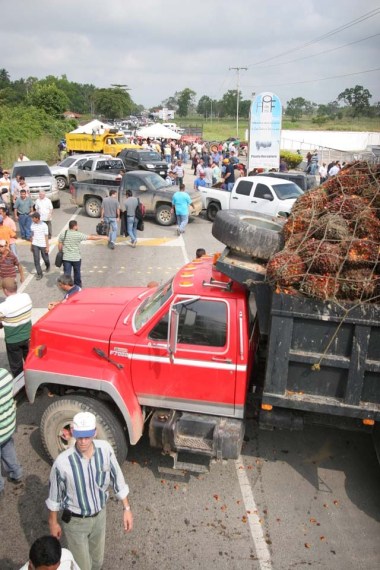
Yesterday, the Minister of Agriculture showed up with the military in the area south of Lake Maracaibo known as Santa Barbara del Zulia to take over 47 farms, most of which are devoted to milk or meat production, giving a harangue against the farmers, attacking the “oligarchs” that own the farms. It appeared to be another take over of land in the Chavez Dictatorship.

Except that the farmers and cattlemen and their workers have decided this time to fight and began blocking the road, demanding the presence of the authorities, blocking the National Guard from going through and saying that they would stay there until the measure was revoked. The workers of one farm, named Los Peonios, stopped the National Guard from taking over the farm they work and live at. (It is unclear what their plans are, some leaders say it is a 24 hour protest, others that they will not leave until the measure is revoked)

This confrontation is a strong challenge to the Dictator, however, these people have everything to lose as they face the power of the Venezuelan Army. At the same time, this is also a challenge for Dictator Chavez and his Government as the people of the area are well armed, are used to confrontation and any bloodshed could create a backlash both in Venezuela and internationally against the Venezuelan Government.

For now, this remains the most important challenge to Chavez’ arbitrariness in quiet a while and if this were to continue, people from other parts of Zulia State may decide to join the farmers, creating a significant challenge and a potential trouble spot for the Dictator.

The New Icons of Venezuela’s “Socialist Science”

December 16, 2010

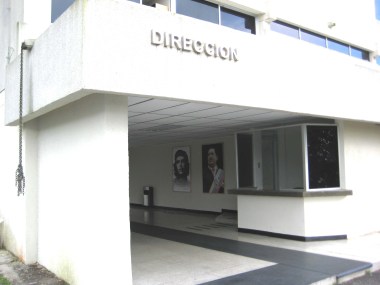
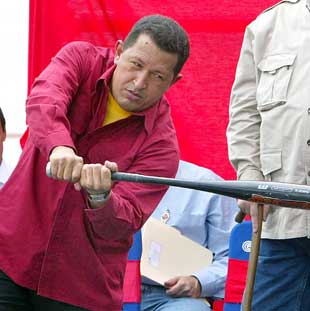
As part of the destruction of Venezuela’s scientific infrastructure and community, the current authorities of Venezuela’s former premier scientific research institute IVIC, have decided to change the icons of knowledge and creativity by those of ideology and destruction:

Chavez’ Enabling Bill beyond Jan. 5th. is a Constitutional Coup

December 14, 2010

To all those that always say that Venezuela is a democracy under Chavez, the President’s proposal that the Enabling Bill extend for up to 18 months is simply a Constitutional coup and a disregard for the mandate given by the people to the new National Assembly that will be sworn in on Jan. 5th. In fact, the length is irrelevant, the President should wait for all new legislation to be approved by the new Assembly, which was democratically elected on Sept. 28th. and in which Chavez did not get the two thirds super majority he wanted in order to continue legislating at will.

Thus, democracy will be dead in Venezuela when this Bill is approved and if it is not stopped.

While this is more of the same, the President is stepping over a very clear threshold that violates democratic rules and I don’t see the opposition doing much. In fact, I don’t see the same Deputies whose rights are being violated doing or saying much. I think they should all go to the National Assembly and demand that the Enabling Bill not be approved. But I don’t expect much from them, they have been largely silent and passive in the face of Chavez’ decision to trample over democracy, free speech and the electoral mandate given by the people

To me it is clear that if Chavez loses in 2012 he will not hand over power, which in the end may be the best outcome as this will signify the beginning of his demise. But there will be a lot suffering before that and a lot of confrontation. Chavez was never a democrat and the upcoming months will show that. He backed two coups in 1992, he is taking ever increasing undemocratic steps as 2012 draws near.

Depressing